A fence between neighbors? Under the new rules, it might not be just yours anymore. And what if you don’t even need one in your yard?
A fence is almost an automatic part of the property when building a new house. But does it have to be there? And does it have to be tall, opaque, and surround the entire garden?
The topic of fences is particularly relevant today due to the upcoming new Civil Code, which introduces changes to neighborly relations and proposes new regulations for shared fences. However, the draft is not yet law.
For us, another question is more interesting: What should a property line look like so that it protects the garden but doesn’t close it off?
A garden without a fence? Sometimes, yes.
Imagine a plot of land with a view of a meadow, a forest, or the countryside. Now picture a two-meter-high, opaque fence standing between you and that view.
The view disappears.
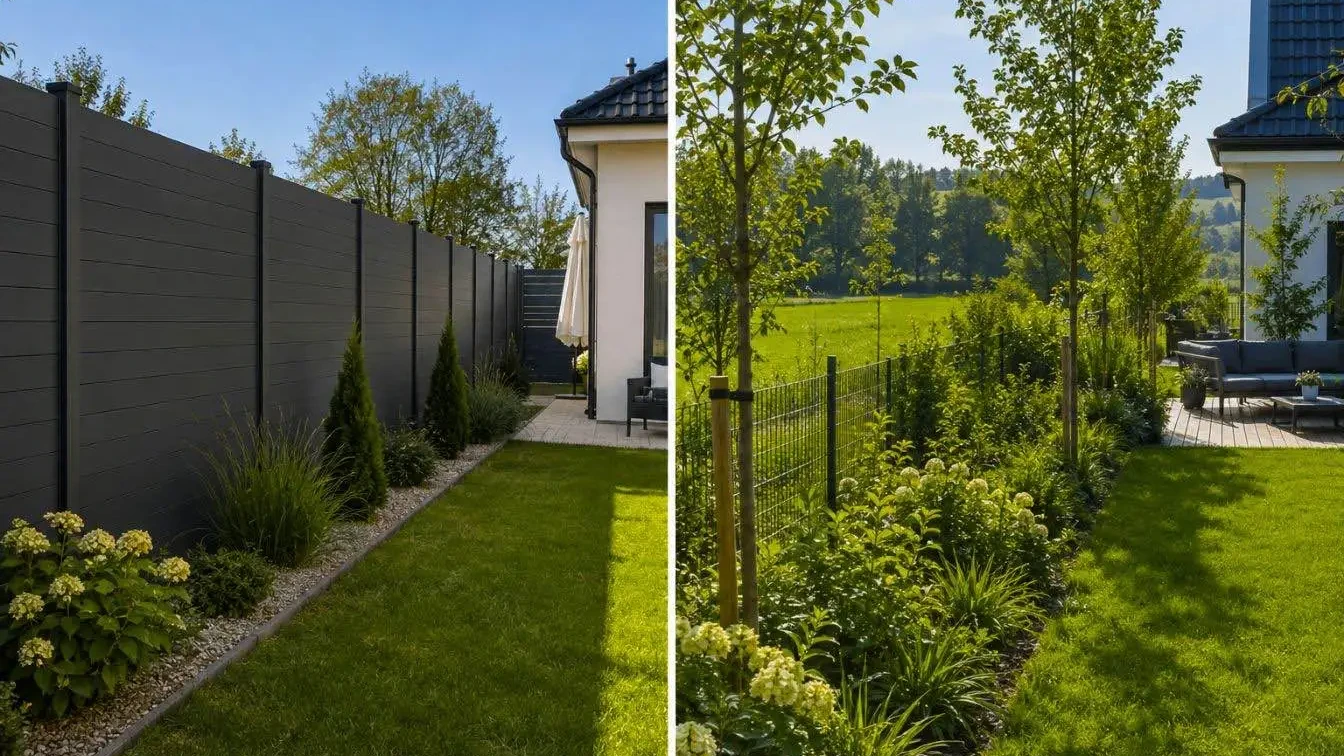
It is precisely with plots like these that a garden without a prominent fence can work. The boundary can be created, for example, by plantings, trees, a hedge, or a combination of low fencing and greenery.
The result is a space that doesn’t feel like a closed-off plot, but rather continues naturally into the surroundings.
When does a fence between neighbors make sense?
Of course, not every yard can remain open. A fence is important, for example, when you need:
- privacy from neighbors,
- safety for children or a dog,
- separation from a busy road,
- a clear property line,
- protection from prying eyes.
So the question isn’t “fence or no fence?” Rather: “Where do we really need it?”
You don’t have to fence the entire garden the same way
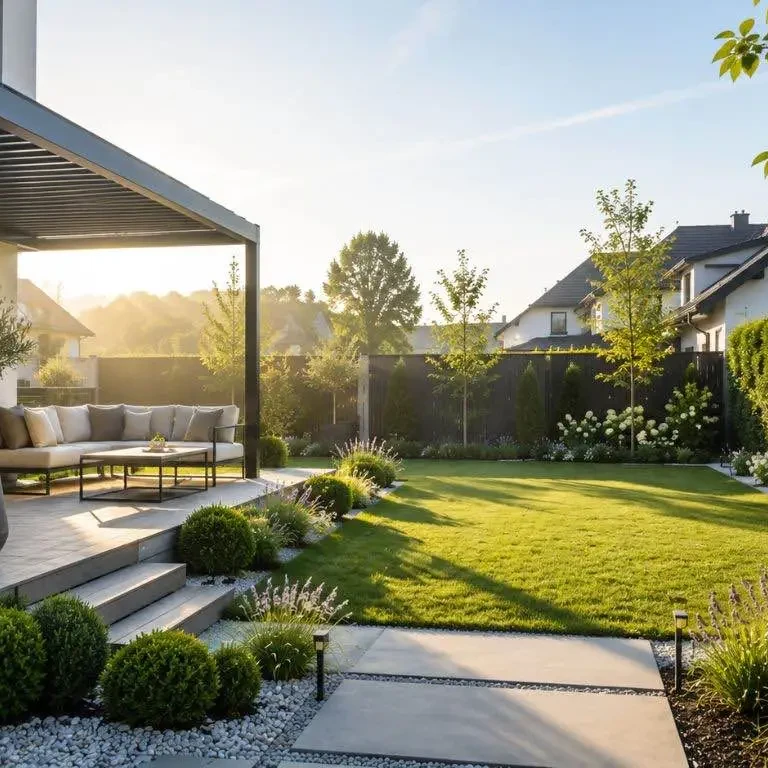
This is often a much more interesting solution when designing a garden. Near the patio, you can create more privacy using a hedge or trees. In the area facing the countryside, you can leave the space more open. And along the street, on the other hand, a clearer boundary may be necessary.
A single garden can thus have several different fencing solutions.
And that’s precisely why a fence isn’t a standalone element. It’s part of the overall garden design.
What about the new Civil Code?
The draft of the new Civil Code also includes provisions regarding shared fences between neighboring properties. Under the proposed provisions, a shared fence would belong to both neighbors, and both would be responsible for maintaining it.
However, it is important to note that the new Civil Code is not yet in effect. After being approved by the government in May 2026, the draft moved to its second reading in June, and its wording may still change.
Therefore, when dealing with a specific fence, one must always base decisions on the currently applicable rules and the specific circumstances of the property.
A fence or greenery?
In our view, the answer doesn’t always have to be one or the other. A fence combined with greenery often works better than a fence alone.
A fence creates a boundary. Greenery softens it.
The result can be a private garden that still feels natural and airy.
That’s why, when designing a garden, we don’t start with the question:
“What kind of fence should we put up?”
But first:
“What do we want this boundary to do?”
Is it meant to protect our privacy?
Preserve the view?
Separate the garden from the street?
Or simply mark the property line discreetly?
Once we know the answer, we can look for the right solution.
A garden without a fence isn’t for everyone
And that’s exactly the point. Some properties need a fence. Others would look better without one.
The important thing is that a fence shouldn’t be built just because “that’s what people do.” Because a well-designed garden isn’t about how many elements you add to it.
It’s about how they work together.
Často kladené otázky
Not always. It depends on the specific situation, the purpose of the land, and the current building and legal regulations.
Yes. A hedge, trees, shrubs, the natural terrain, or a combination of fencing and greenery can help.
Neither one is universally better. Often, a combination of the two works best.
No. As of August 2026, it is still a legislative proposal.