


A fence between neighbors? Under the new rules, it might not be just yours anymore. And what if you don't even need one in your yard?
Garden design and planning
A fence is almost an automatic part of the property when building a new house. But does it have to be there? And does it have to be tall, opaque, and surround the entire garden?
The topic of fences is particularly relevant today due to the upcoming new Civil Code, which introduces changes to neighborly relations and proposes new regulations for shared fences. However, the draft is not yet law.
For us, another question is more interesting: What should a property line look like so that it protects the garden but doesn’t close it off?
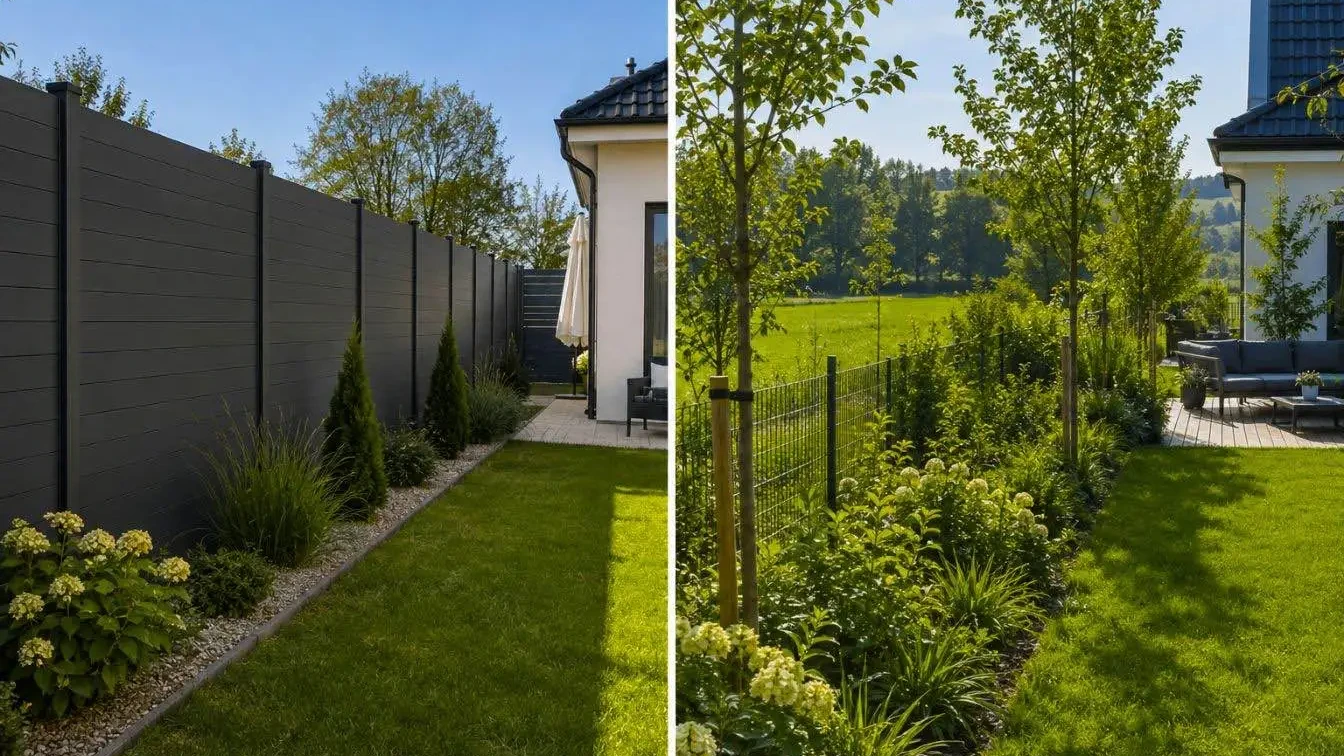
A garden without a fence? Sometimes, yes.
Imagine a plot of land with a view of a meadow, a forest, or the countryside. Now picture a two-meter-high, opaque fence standing between you and that view.
The view disappears.
It is precisely with plots like these that a garden without a prominent fence can work. The boundary can be created, for example, by plantings, trees, a hedge, or a combination of low fencing and greenery.
The result is a space that doesn’t feel like a closed-off plot, but rather continues naturally into the surroundings.
When does a fence between neighbors make sense?
Of course, not every yard can remain open. A fence is important, for example, when you need:
- privacy from neighbors,
- safety for children or a dog,
- separation from a busy road,
- a clear property line,
- protection from prying eyes.
So the question isn’t “fence or no fence?” Rather: “Where do we really need it?”
You don’t have to fence the entire garden the same way
This is often a much more interesting solution when designing a garden. Near the patio, you can create more privacy using a hedge or trees. In the area facing the countryside, you can leave the space more open. And along the street, on the other hand, a clearer boundary may be necessary.
A single garden can thus have several different fencing solutions.
And that’s precisely why a fence isn’t a standalone element. It’s part of the overall garden design.
What about the new Civil Code?
The draft of the new Civil Code also includes provisions regarding shared fences between neighboring properties. Under the proposed provisions, a shared fence would belong to both neighbors, and both would be responsible for maintaining it.
However, it is important to note that the new Civil Code is not yet in effect. After being approved by the government in May 2026, the draft moved to its second reading in June, and its wording may still change.
Therefore, when dealing with a specific fence, one must always base decisions on the currently applicable rules and the specific circumstances of the property.
A fence or greenery?
In our view, the answer doesn’t always have to be one or the other. A fence combined with greenery often works better than a fence alone.
A fence creates a boundary. Greenery softens it.
The result can be a private garden that still feels natural and airy.
That’s why, when designing a garden, we don’t start with the question:
“What kind of fence should we put up?”
But first:
“What do we want this boundary to do?”
Is it meant to protect our privacy?
Preserve the view?
Separate the garden from the street?
Or simply mark the property line discreetly?
Once we know the answer, we can look for the right solution.
A garden without a fence isn’t for everyone
And that’s exactly the point. Some properties need a fence. Others would look better without one.
The important thing is that a fence shouldn’t be built just because “that’s what people do.” Because a well-designed garden isn’t about how many elements you add to it.
It’s about how they work together.
Často kladené otázky
Not always. It depends on the specific situation, the purpose of the land, and the current building and legal regulations.
Yes. A hedge, trees, shrubs, the natural terrain, or a combination of fencing and greenery can help.
Neither one is universally better. Often, a combination of the two works best.
No. As of August 2026, it is still a legislative proposal.
Similar posts

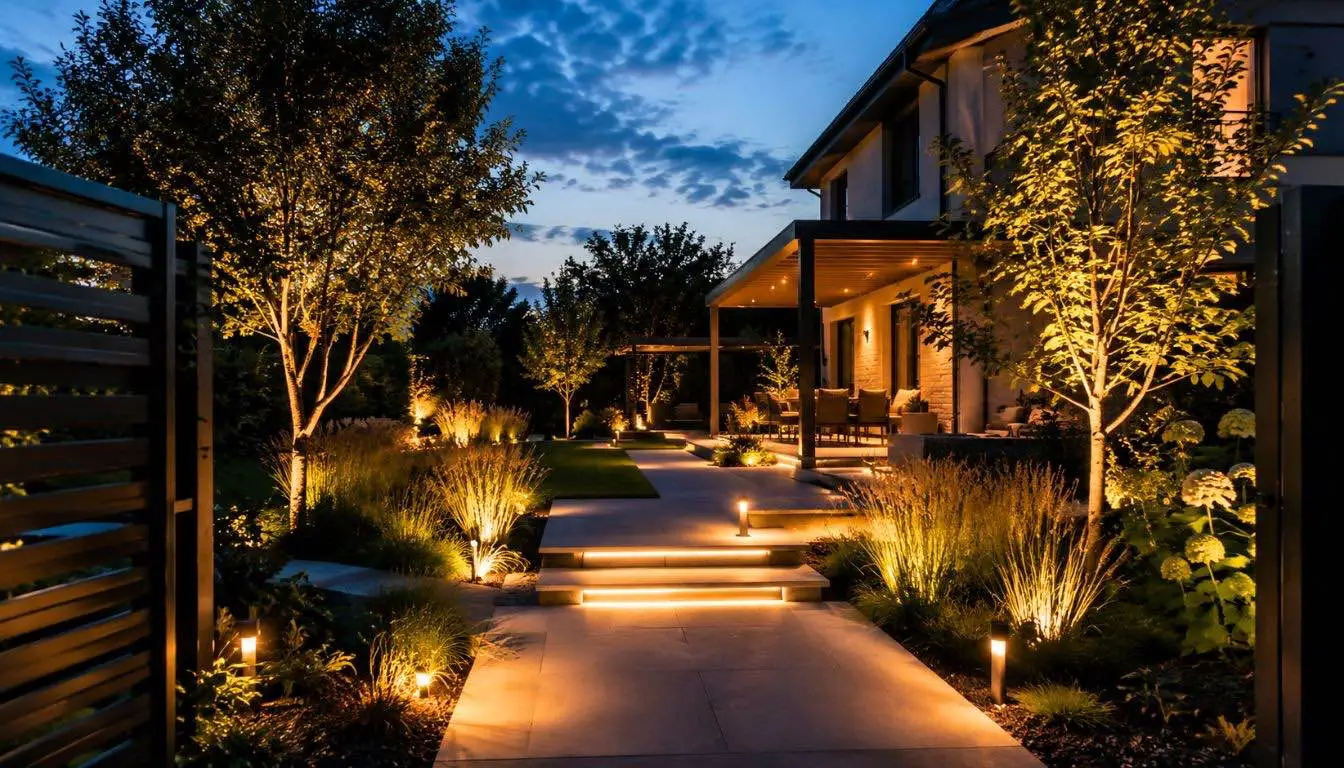
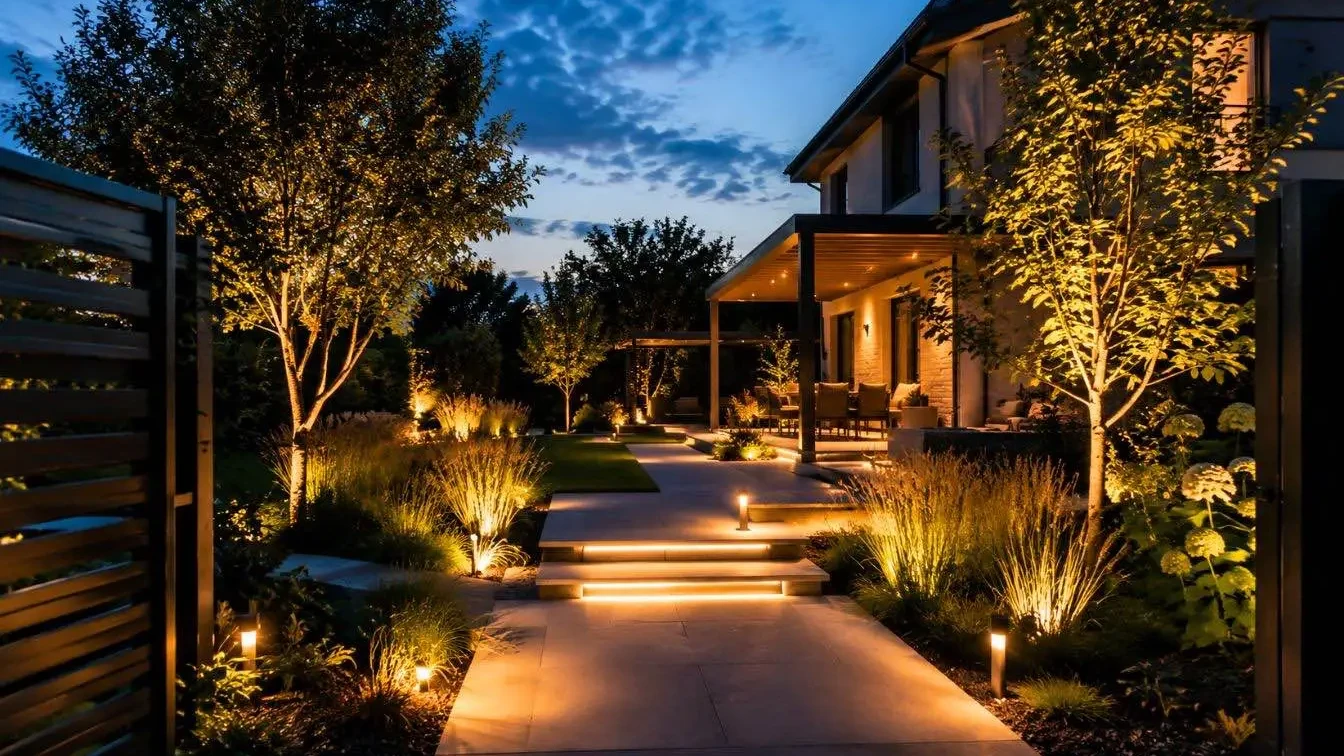
Do you walk home after dark? Let an illuminated garden welcome you
Garden design and planning
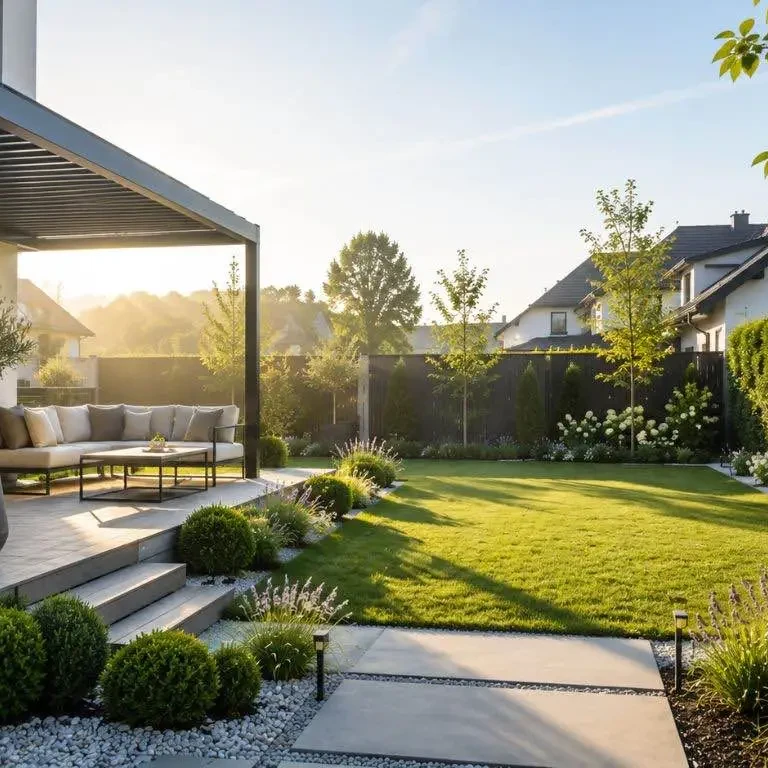
You come home in the evening, open the gate, and the garden lights up before you. Gently illuminated trees, a safely lit walkway, and a patio that feels cozy even after sunset.
That is exactly how a well-designed garden should work.
Many homeowners devote a lot of attention to the house itself, but they don’t address exterior lighting until the very end. The result is often bright spotlights, cheap solar lamps, or mismatched fixtures that, while they provide light, fail to create a pleasant atmosphere.
That is precisely why garden lighting should be part of the process that begins with a high-quality garden design.
Why is lighting an important part of a garden?
Well-designed lighting serves many more purposes than simply providing visibility after dark.
It helps create an atmosphere, improves safety when moving around the garden, and highlights the most beautiful features of the outdoor space. Thanks to it, you can enjoy your garden even in the evening and extend the time you spend outdoors.
If lighting is carefully planned during the design process, it can naturally integrate with the landscaping, patio, walkways, and water features.
How to light stairs and walkways?
One of the most common questions when planning an exterior is how to safely light areas where people walk.
For stairs and walkways, recessed LED lights or under-stair lighting work best. This solution is unobtrusive, does not cause glare, and creates an elegant visual effect.
The result is safe movement around the garden even during late evening hours.
How to illuminate trees in the garden?
Trees are among the most striking features of any garden, and they can create a unique atmosphere, especially in the evening.
We recommend using ground-mounted spotlights with warm light to illuminate them. When placed at the right distance from the trunk, they can beautifully highlight both the tree’s structure and its crown.
This gives the garden a whole new dimension in the evening.
How much light does a patio need?
Less than most people think.
When it comes to relaxation areas, the most common mistake is using lighting that’s too bright. While bright ceiling lights illuminate the entire space, they often create an uninviting atmosphere.
Soft ambient lighting works much better. LED strips, wall sconces, or indirect lighting on a pergola create a pleasant setting for evening gatherings with family or friends.
What kind of lighting should you choose for a pool or pond?
The color of the light plays a major role when it comes to water features.
Lighting that is too warm or distinctly yellow can alter the natural color of the water. That is why neutral or softly warm light is most commonly used for pools and ponds, as it preserves the natural appearance while creating an elegant evening effect.
The most beautiful gardens aren’t the ones with the brightest lights at night
When looking at luxurious garden designs, many people think the secret lies in the number of lights.
In reality, it’s exactly the opposite.
The most beautiful exteriors don’t stand out because of how much light they use, but because of what they highlight with that light. Well-designed lighting creates contrasts, works with shadows, and draws attention to the most important elements of the space.
Less light often creates a much more luxurious effect than an overlit garden.
When should you plan the lighting when designing a garden?
Ideally, right from the start.
In a professional design, we consider cable routing, the placement of light fixtures, future plantings, and the use of individual zones even before construction begins.
That is precisely why a well-designed garden is much more than just planting flowers or laying sod. It is about creating a space that works throughout the day and into the evening.
A turnkey garden also takes the evening hours into account
A well-designed outdoor space doesn’t end at sunset. On the contrary, it’s in the evening that it can truly show its most beautiful side.
If you’re planning a new garden or renovating an existing space, we recommend incorporating lighting into the design process from the very beginning. Only then can you create a harmonious space that is beautiful, functional, and pleasant to use all year round.
At Dream Garden, we have been designing and building gardens for over 20 years. We help clients create turnkey gardens that not only function during the day but also create a unique atmosphere after dark.
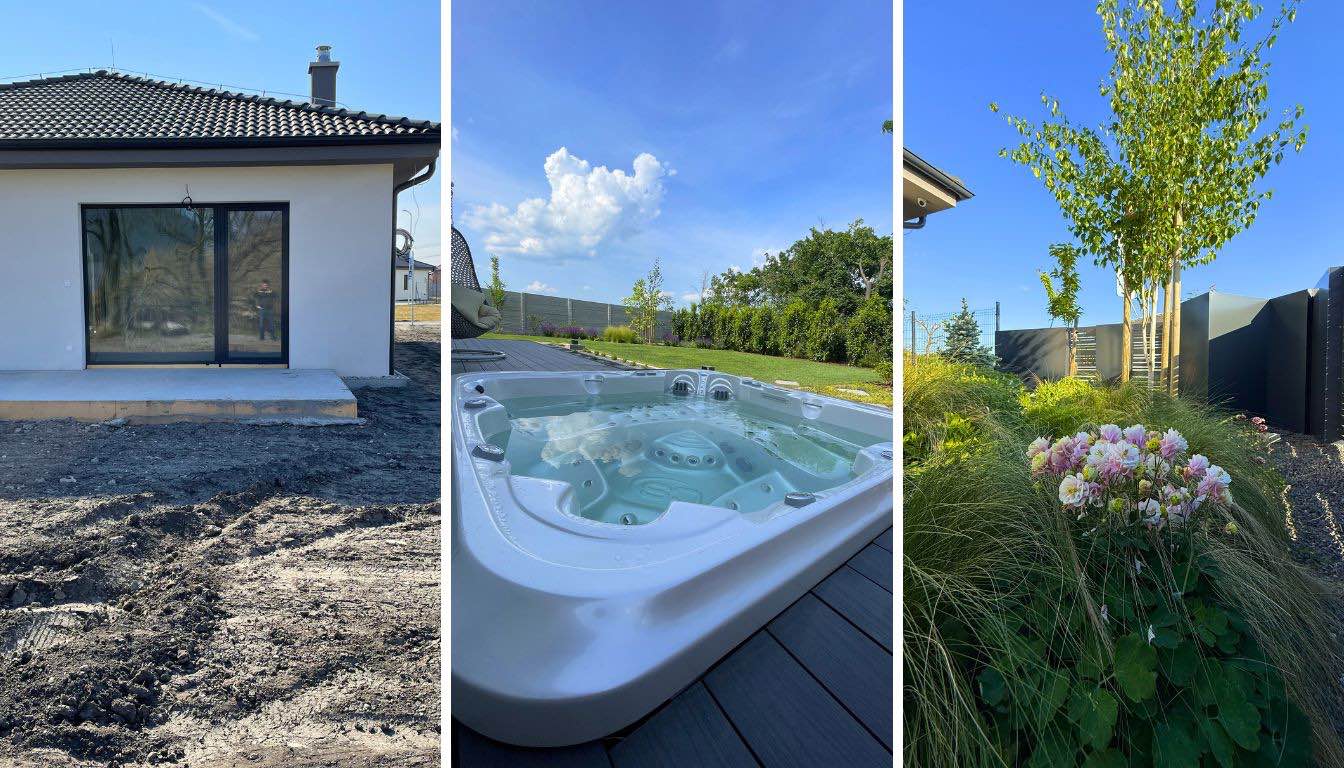
When should you start planning the garden for a new home?
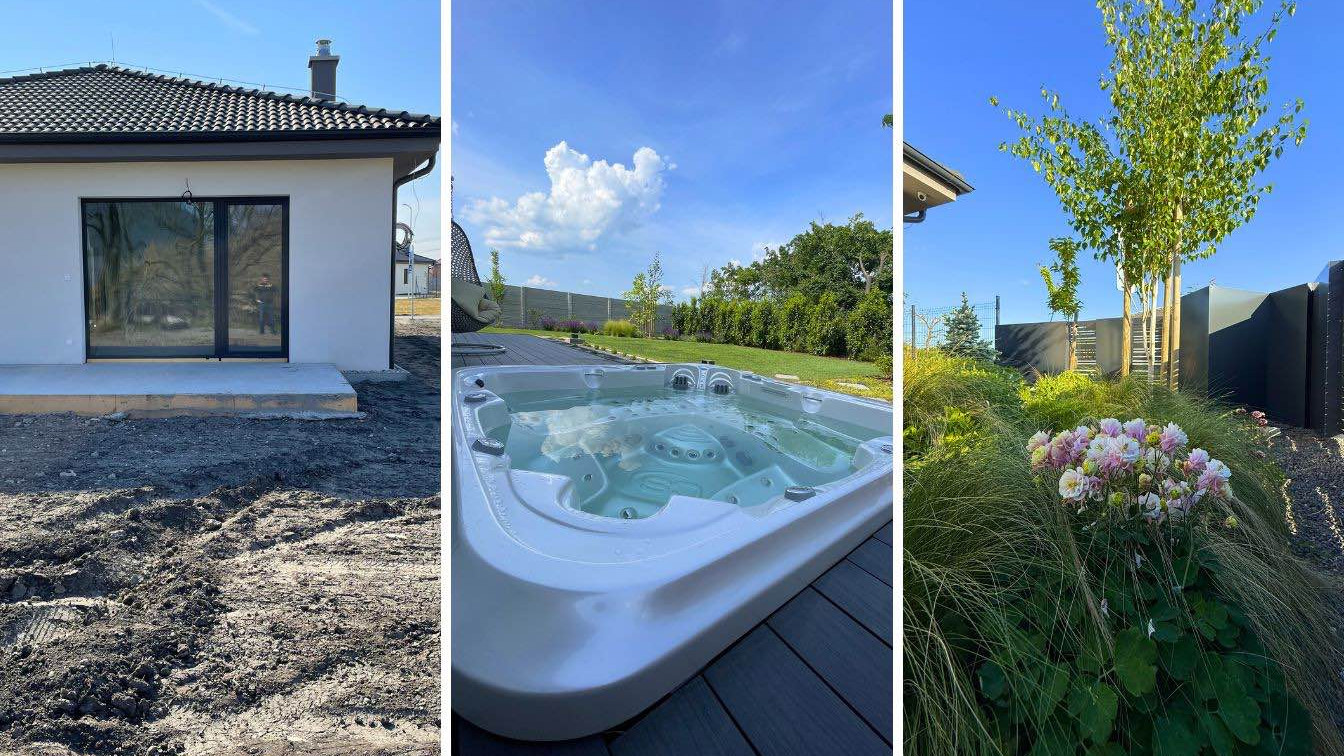
Garden design and planning
When building a house, people naturally focus primarily on the interior—the kitchen, floors, bathrooms, lighting, and facade. The exterior is very often put off “until later.”
And that is often one of the biggest mistakes.
After all, the garden isn’t the final step after the house is finished. If you want the entire space to function as a single cohesive whole, a high-quality garden plan and design should be addressed much earlier—ideally during the construction of the new home.
When is the ideal time to start planning your garden?
The best time to plan your garden is when the house design is being finalized or construction is about to begin.
Why?
Because that is when you can properly plan all the technical and practical aspects:
- ground levels
- land drainage
- irrigation preparation
- outdoor lighting
- patio
- pergola
- pool or pond
- planting large trees
- garden pathways
If these matters are addressed only after the house is completed, unnecessary complications, rework, and higher costs often arise.
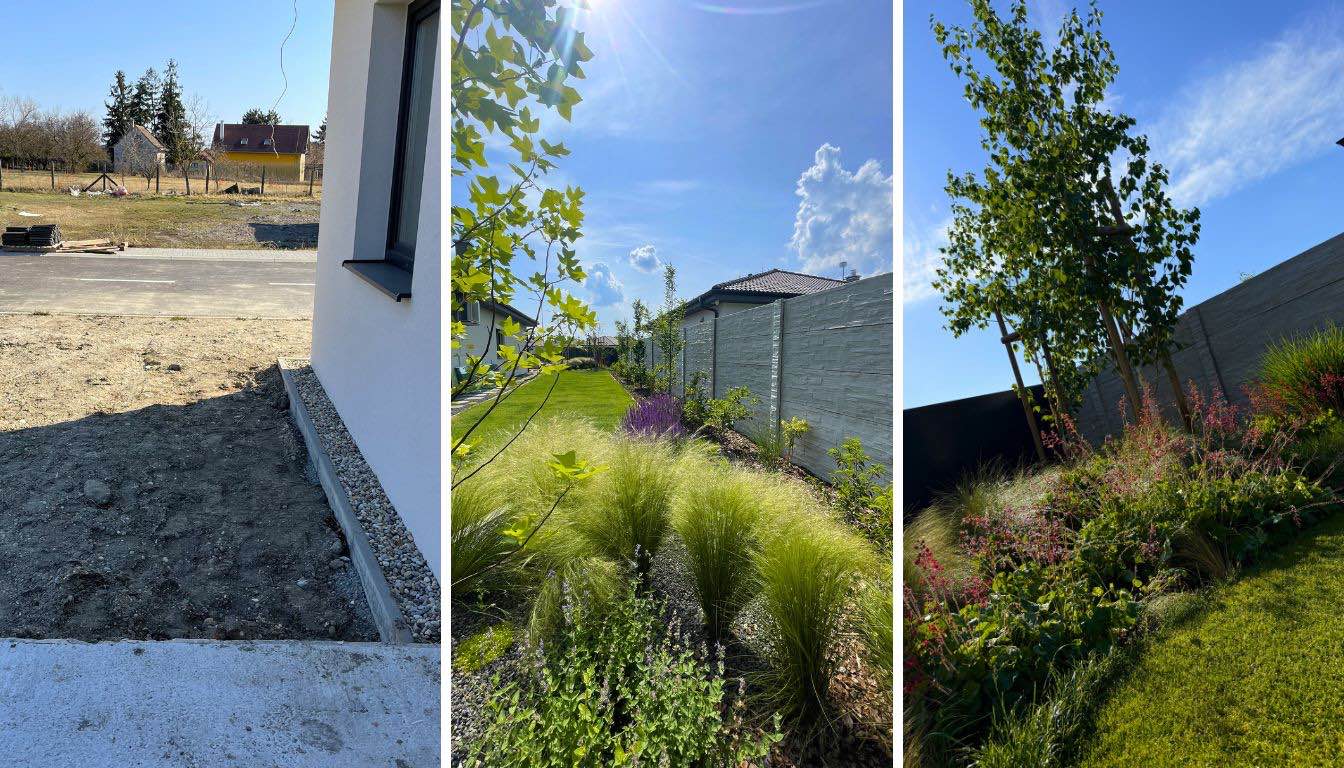
The biggest mistake when building a new home?
“We’ll do the garden later”
This is one of the most common phrases we hear.
However, the reality is often that:
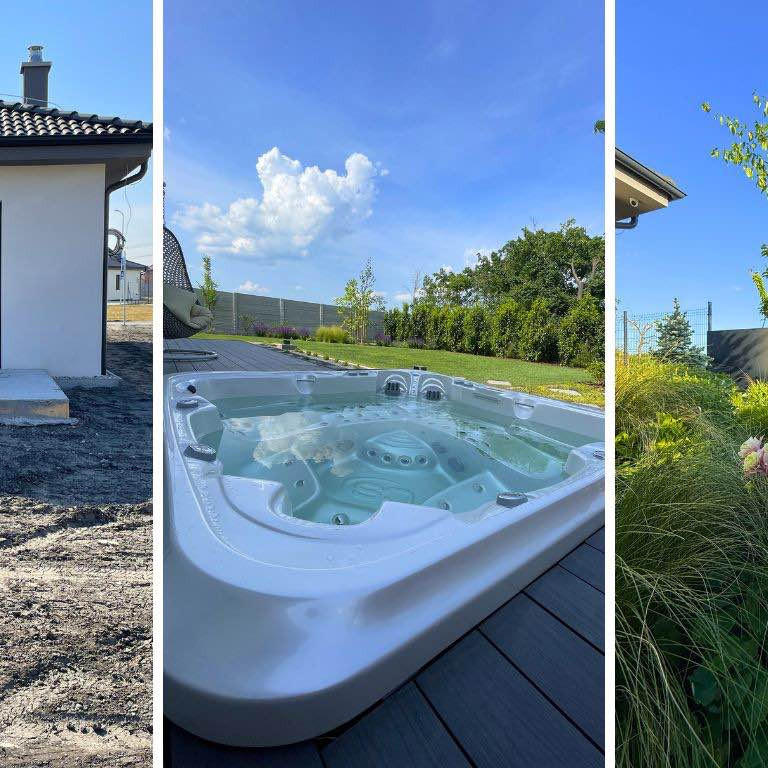
- the property remains dug up for months
- problems with mud and drainage arise
- the technical plans have to be redone
- the patio or walkways are added later
- the entire exterior looks unfinished
And that is precisely why professional garden design is an important part of the entire house project, not just an “afterthought.”
Why start with garden design as early as possible?
A good garden design isn’t just about plants. It considers how you will use the space every day.
During planning, we address, for example:
- where the morning sun and evening shade will fall
- where to create privacy
- how to connect the interior with the exterior
- where the patio or relaxation area will be
- how movement through the garden will flow
- which materials complement each other
The result is a space that doesn’t feel haphazard but naturally complements the architecture of the house.
A turnkey garden saves both time and money
Many people think that planning a garden in advance means a higher budget. In practice, however, it’s often exactly the opposite.
If the exterior is planned from the start, the individual tasks flow naturally into one another. There is no need to redo finished work, technical preparations are handled in advance, and the entire implementation process is much more efficient.
This is one reason why turnkey gardens are becoming increasingly popular today, where both the design and implementation are handled comprehensively and with a clear vision from the start.
What should a modern garden for a new home include?
A modern garden is no longer just about a lawn and a few plants. People want to create a space that will be a natural part of their home.
A high-quality exterior therefore typically includes a patio, a relaxation area, thoughtful planting, lighting, automatic irrigation, and space for family and daily life.
The goal isn’t just to “have a finished garden.” The goal is to create a place where you’ll want to spend time.
How long does it take to complete a garden?
The duration of the project depends on the size of the project and the scope of work. However, many outdoor spaces can be completed relatively quickly, especially if everything is well-planned in advance.
The biggest delays usually don’t arise during the actual construction, but rather from chaotic, last-minute decisions.
That’s why it’s best to start planning your garden well in advance—the whole process will then be smoother, more efficient, and free of unnecessary complications.
The garden is part of your home, not an afterthought
Your home doesn’t end at the patio door.
It is the exterior that significantly influences how you feel at home and how much time you’ll spend outdoors. A well-designed garden can transform the way you live every day.
And that’s why it’s worth planning it from the start, not just when all that’s left around the house is dug-up dirt.
Tip from Dream Garden
At Dream Garden, we’ve been designing and building gardens for over 20 years. We help clients create functional and timeless exteriors that naturally complement the home’s architecture and the owners’ lifestyle.
If you’re planning a new build and wondering when to start thinking about the exterior, the answer is simple:
👉 the sooner, the better.
We’d be happy to help you with both the design and the complete turnkey implementation of your garden.
Similar posts

The most expensive thing about a house isn't the mortgage. It's the space you don't use
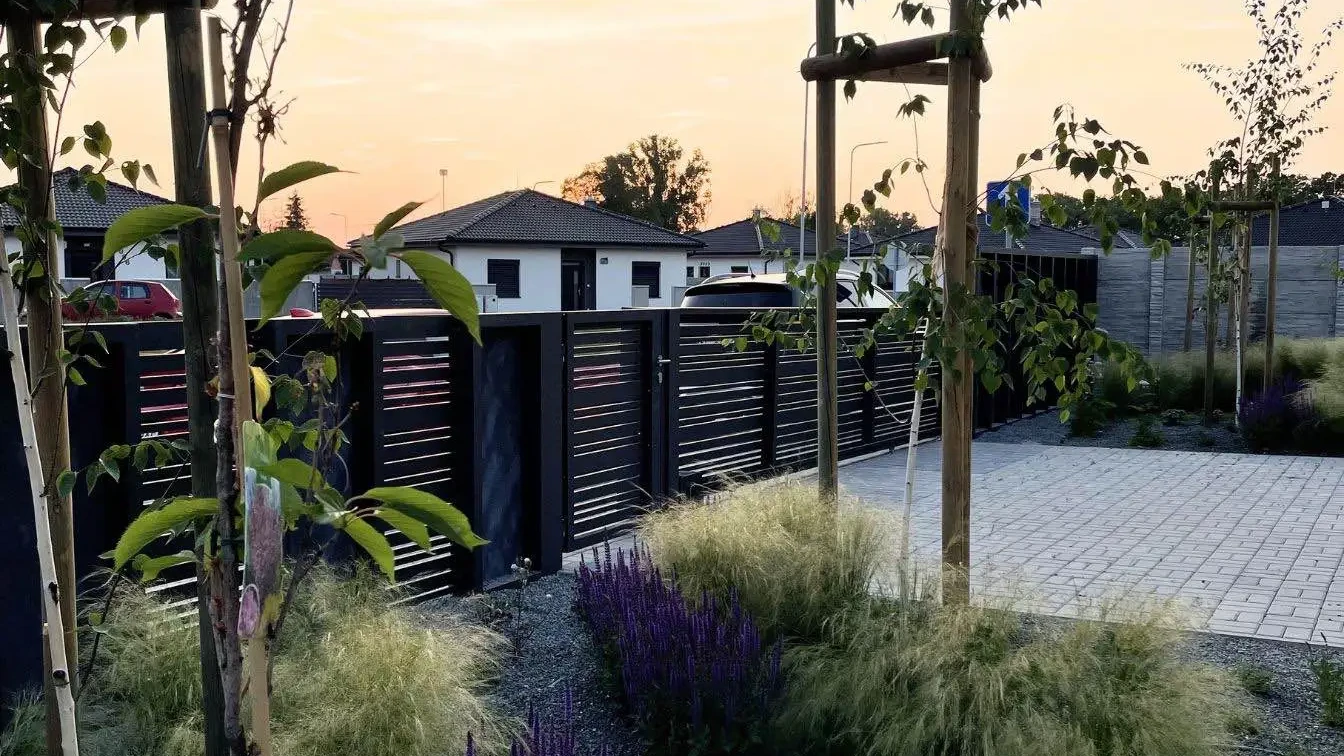
Garden design and planning
90% of people have a garden.
But most of them don’t actually spend time there.
And yet, the outdoor space is often one of the main reasons people choose a house over an apartment. The idea of having your own terrace, peace and quiet, greenery, or summer evenings outdoors sounds ideal. The reality, however, often looks completely different.
The garden exists, but it isn’t lived in.
It’s not that people don’t want to spend time outside. Often, the problem is that the space was never designed for everyday life. It was created “somehow”—without a concept, without a function, and without a well-thought-out use.
A mortgage isn’t enough for the perfect home. Find out why a well-executed garden is the key to a space you’ll actually use.
That’s exactly why a high-quality garden plan and design are far more important than most people realize.
If I could turn back time
Garden design and planning
7 things I would do differently when starting a garden
Starting a garden is an exciting process. You imagine your dream garden—a place of relaxation, peace, and beauty. But it’s right at the beginning that most mistakes are made, and these can cost you time, money, and often lead to disappointment.
If we had the chance to start over, we would definitely avoid these things when creating our garden.
1. I would start with a design, not planting
The most common mistake? Starting without a plan.
Many people buy plants one by one without having a well-thought-out garden design. The result is chaos, an impractical space, and frequent rework.
Solution:
Every high-quality turnkey garden starts with a design. It determines the layout of the space, its functions, and the selection of plants.
2. Don’t underestimate the size of the plants
Small plants are cheaper, but…you’ll have to wait years before your garden starts to look good. Professional garden designs often use larger, mature plants that create an immediate impact.
Solution:
Combine smaller and larger plants so that the garden looks “finished” right from the start.
3. I wouldn’t skimp on materials
Cheap pavers, unsuitable curbs, or low-quality elements can ruin the entire look.
Solution:
Choose timeless, high-quality materials that complement both the house and the surrounding area.
4. I shouldn’t feel the need to have everything in there
A pergola, a pond, flower beds, a playground… all at once? The result is often a cluttered, disorganized space
Solution:
Good garden design works with the space. Fewer elements = more peace and quiet.
5. I would give more thought to maintenance
A garden should be a joy, not a second full-time job. Overly demanding plants = frustration
Solution:
When designing your garden, consider how much time you want to devote to it. A modern turnkey garden is both beautiful and practical.
6. I would design the garden as a whole, not in parts
“We’ll do the lawn now, the patio next year, then the flower beds…”
Solution:
The garden should be designed as a single cohesive whole—from the very beginning. That’s the only way to create a true dream garden.
7. I would consult experts sooner
Many clients only come to us after going through a process of trial and error.
Solution:
Working with experts on garden design and implementation will save you time, money, and energy.
A good garden doesn’t start with the work
It starts with decisions.
If those decisions are right, the result is a space that:
- stands the test of time
- looks harmonious
- and brings joy every day
Tip from Dream Garden
If you’re planning to create a garden and want the result to be worth it, the most important thing is a high-quality garden design.
That is what determines whether your garden will last for years.
Do you want to create your dream garden?
We’d be happy to help you with both the design and implementation—from the initial idea to a complete, turnkey garden.

A garden design is not just an item. It is the basis for the entire implementation.

Garden design and planning
Many homeowners view a garden project as just another item on the budget. Something that must be “had” in order to begin implementation.
Often with the question: “How much will it cost?”
But it is precisely this view that is the reason why many gardens never function as well as they could.
A garden project is not an item. It is the foundation of the entire implementation.
It is a decisive moment that will influence the entire implementation of the garden, its maintenance, functionality, and how you will feel in it in 5 or 10 years.
Why gardens fail even before they are implemented
In practice, we encounter the same scenario:
- the garden is created in parts
- solutions are chosen gradually, according to the current budget
- individual elements do not communicate with each other
- maintenance is difficult and the result looks chaotic
Not because the wrong materials were used. But because there was no high-quality design for the garden as a whole.
Without a clear concept, the implementation of a garden turns into a series of improvisations.
And improvisation is always more expensive than a well-thought-out design when it comes to exteriors.
Garden design vs. garden implementation
(and why they cannot be separated)
A garden design is not a “picture according to which something will be built.” It is a strategic document that addresses:
- the division of the garden into functional zones
- the relationship between the house and the exterior
- the selection of plants with regard to maintenance and microclimate
- technical solutions (irrigation, lighting, paved areas)
- long-term development of the garden
If the design is created without experience in garden implementation, problems arise:
- solutions that are beautiful but unbuildable
- undersized technologies
- unrealistic budgets
Therefore, a turnkey garden only makes sense if the design and implementation are covered by one team.
A turnkey garden is not a shortcut. It is a system.
We often encounter the perception that a turnkey garden is a quick fix. In reality, it is the exact opposite. A turnkey garden means:
- one concept
- one decision
- clear responsibility
- continuity from design to maintenance
Thanks to this:
- there are no unnecessary compromises
- the garden is implemented smoothly
- the budget is transparent
- the garden functions as a whole
Why garden design also determines future costs
Paradoxically, trying to “save money” on garden design often leads to higher costs during implementation. Without a high-quality design:
- solutions change during construction
- finished parts are modified
- work is repeated
- the price and implementation time increase
A good garden design:
- eliminates unnecessary interventions
- allows for phased implementation
- saves costs in the long term
- simplifies garden maintenance
It is not an expense. It is an investment in functionality and peace of mind.
A garden as a process, not a one-time result
A garden is not finished on the day it is handed over. It matures. It grows. It changes. That is why it should be approached as a process:
- the project sets the direction
- the implementation creates the foundation
- garden maintenance ensures long-term quality
When these steps make sense together, the result is a dream garden that functions naturally – without constant problem solving.
Who is this approach intended for?
Not for everyone. It is for people who:
- don’t want to constantly deal with their garden
- perceive the exterior as part of their life
- are looking for a long-term solution, not a quick fix
- want clarity from the outset
If a garden is to be a place of peace, not a lifelong project, it all starts with the right design.
A garden design is not an item in the budget. It is a decision that will influence every subsequent step – from the implementation of the garden, through the turnkey garden, to its daily functioning.
And that is precisely why it is worth approaching it as a foundation, not as an accessory.