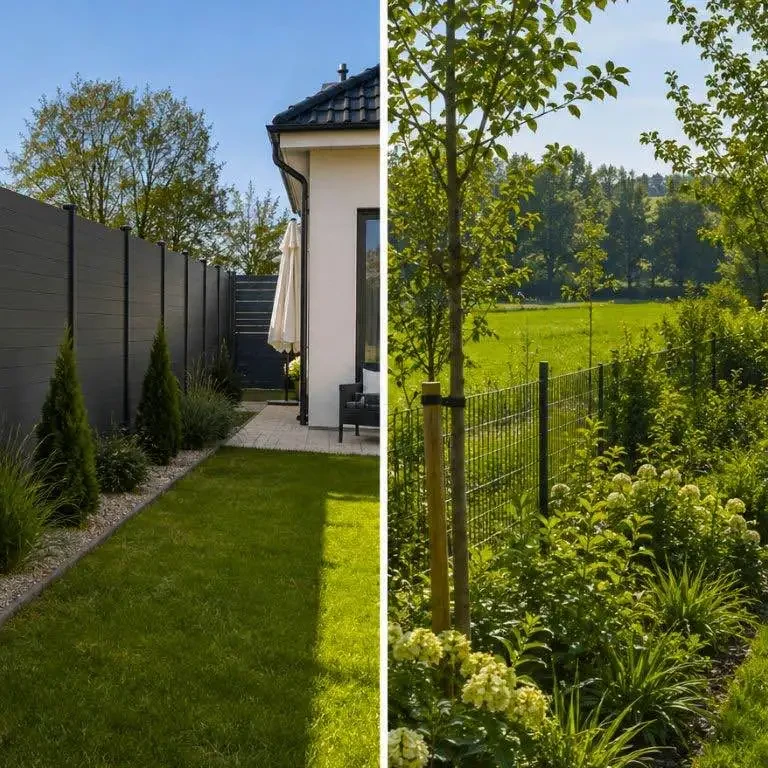
A garden design is not just an item. It is the basis for the entire implementation.
Many homeowners view a garden project as just another item on the budget. Something that must be “had” in order to begin implementation.
Often with the question: “How much will it cost?”
But it is precisely this view that is the reason why many gardens never function as well as they could.
A garden project is not an item. It is the foundation of the entire implementation.
It is a decisive moment that will influence the entire implementation of the garden, its maintenance, functionality, and how you will feel in it in 5 or 10 years.
Why gardens fail even before they are implemented
In practice, we encounter the same scenario:
- the garden is created in parts
- solutions are chosen gradually, according to the current budget
- individual elements do not communicate with each other
- maintenance is difficult and the result looks chaotic
Not because the wrong materials were used. But because there was no high-quality design for the garden as a whole.
Without a clear concept, the implementation of a garden turns into a series of improvisations.
And improvisation is always more expensive than a well-thought-out design when it comes to exteriors.
Garden design vs. garden implementation
(and why they cannot be separated)
A garden design is not a “picture according to which something will be built.” It is a strategic document that addresses:
- the division of the garden into functional zones
- the relationship between the house and the exterior
- the selection of plants with regard to maintenance and microclimate
- technical solutions (irrigation, lighting, paved areas)
- long-term development of the garden
If the design is created without experience in garden implementation, problems arise:
- solutions that are beautiful but unbuildable
- undersized technologies
- unrealistic budgets
Therefore, a turnkey garden only makes sense if the design and implementation are covered by one team.
A turnkey garden is not a shortcut. It is a system.
We often encounter the perception that a turnkey garden is a quick fix. In reality, it is the exact opposite. A turnkey garden means:
- one concept
- one decision
- clear responsibility
- continuity from design to maintenance
Thanks to this:
- there are no unnecessary compromises
- the garden is implemented smoothly
- the budget is transparent
- the garden functions as a whole
Why garden design also determines future costs
Paradoxically, trying to “save money” on garden design often leads to higher costs during implementation. Without a high-quality design:
- solutions change during construction
- finished parts are modified
- work is repeated
- the price and implementation time increase
A good garden design:
- eliminates unnecessary interventions
- allows for phased implementation
- saves costs in the long term
- simplifies garden maintenance
It is not an expense. It is an investment in functionality and peace of mind.
A garden as a process, not a one-time result
A garden is not finished on the day it is handed over. It matures. It grows. It changes. That is why it should be approached as a process:
- the project sets the direction
- the implementation creates the foundation
- garden maintenance ensures long-term quality
When these steps make sense together, the result is a dream garden that functions naturally – without constant problem solving.
Who is this approach intended for?
Not for everyone. It is for people who:
- don’t want to constantly deal with their garden
- perceive the exterior as part of their life
- are looking for a long-term solution, not a quick fix
- want clarity from the outset
If a garden is to be a place of peace, not a lifelong project, it all starts with the right design.
A garden design is not an item in the budget. It is a decision that will influence every subsequent step – from the implementation of the garden, through the turnkey garden, to its daily functioning.
And that is precisely why it is worth approaching it as a foundation, not as an accessory.