A fence between neighbors? Under the new rules, it might not be just yours anymore. And what if you don't even need one in your yard?
Dominika
A fence is almost an automatic part of the property when building a new house. But does it have to be there? And does it have to be tall, opaque, and surround the entire garden?
The topic of fences is particularly relevant today due to the upcoming new Civil Code, which introduces changes to neighborly relations and proposes new regulations for shared fences. However, the draft is not yet law.
For us, another question is more interesting: What should a property line look like so that it protects the garden but doesn’t close it off?
A garden without a fence? Sometimes, yes.
Imagine a plot of land with a view of a meadow, a forest, or the countryside. Now picture a two-meter-high, opaque fence standing between you and that view.
The view disappears.
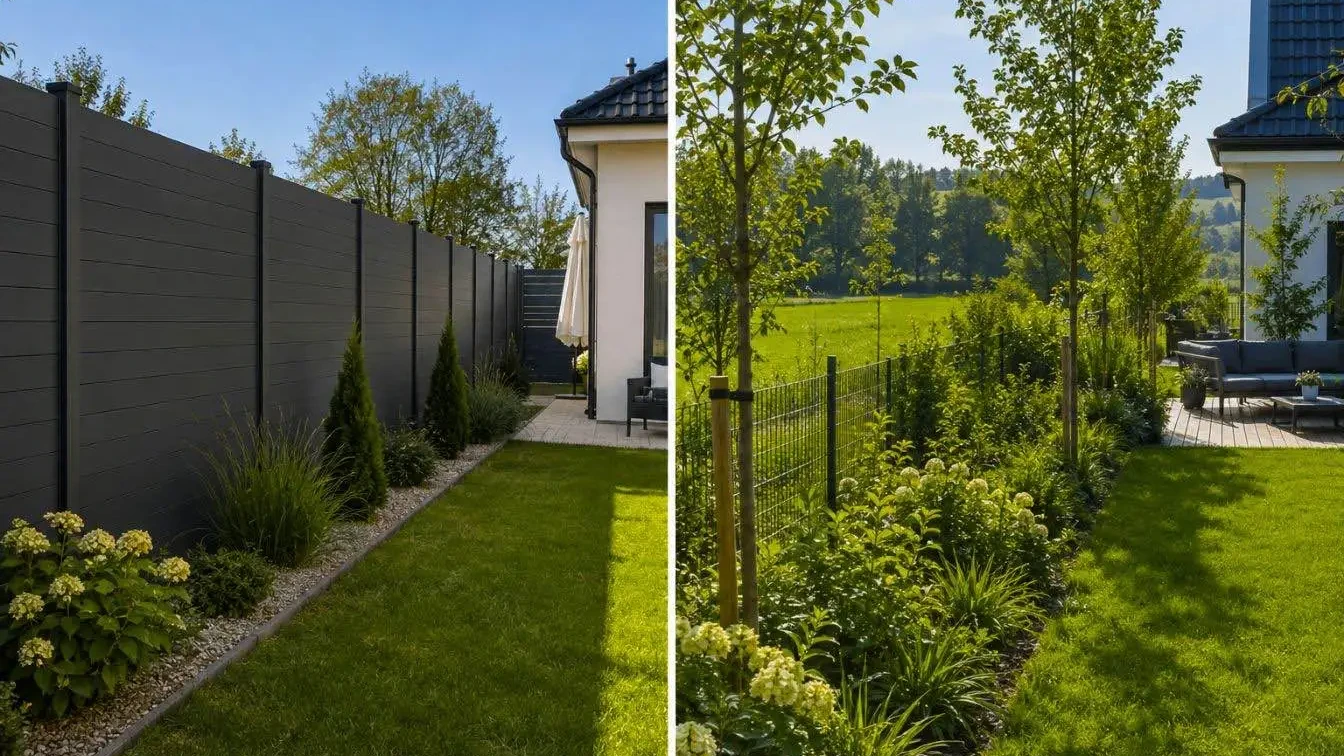
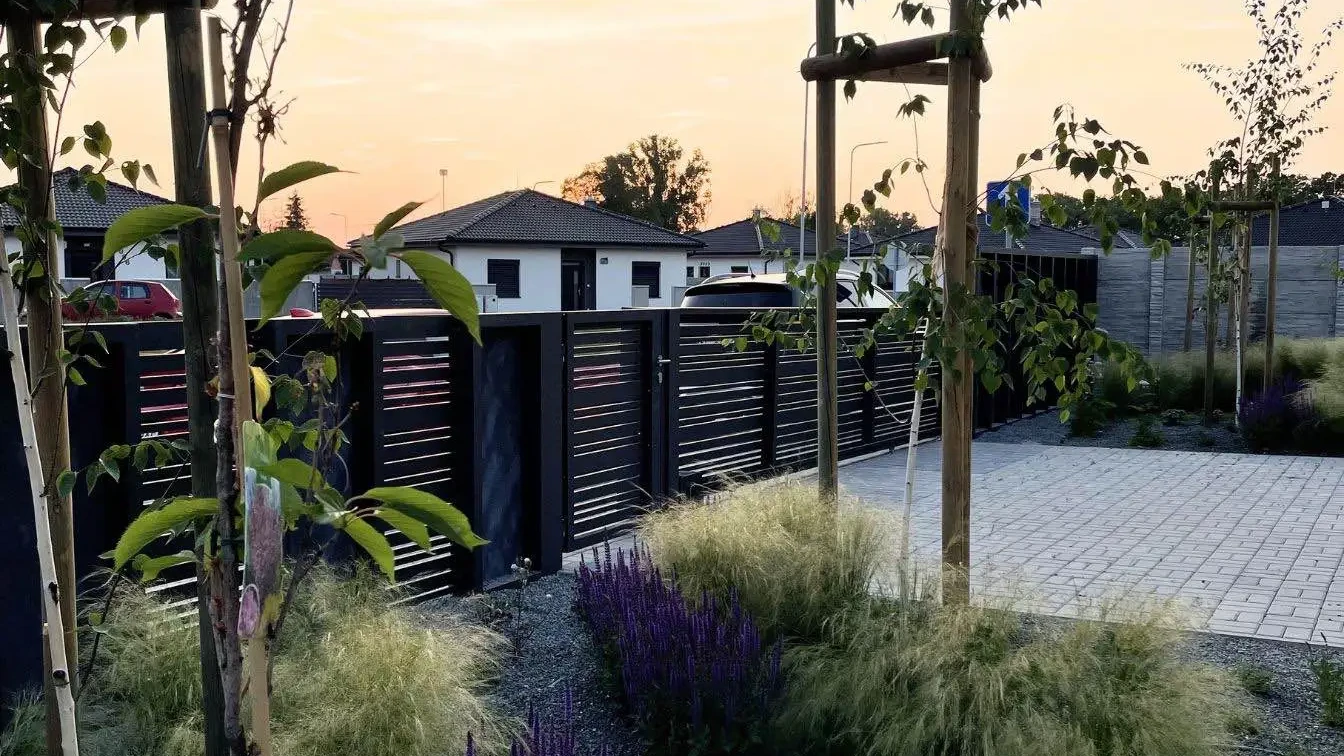
It is precisely with plots like these that a garden without a prominent fence can work. The boundary can be created, for example, by plantings, trees, a hedge, or a combination of low fencing and greenery.
The result is a space that doesn’t feel like a closed-off plot, but rather continues naturally into the surroundings.
When does a fence between neighbors make sense?
Of course, not every yard can remain open. A fence is important, for example, when you need:
- privacy from neighbors,
- safety for children or a dog,
- separation from a busy road,
- a clear property line,
- protection from prying eyes.
So the question isn’t “fence or no fence?” Rather: “Where do we really need it?”
You don’t have to fence the entire garden the same way
This is often a much more interesting solution when designing a garden. Near the patio, you can create more privacy using a hedge or trees. In the area facing the countryside, you can leave the space more open. And along the street, on the other hand, a clearer boundary may be necessary.
A single garden can thus have several different fencing solutions.
And that’s precisely why a fence isn’t a standalone element. It’s part of the overall garden design.
What about the new Civil Code?
The draft of the new Civil Code also includes provisions regarding shared fences between neighboring properties. Under the proposed provisions, a shared fence would belong to both neighbors, and both would be responsible for maintaining it.
However, it is important to note that the new Civil Code is not yet in effect. After being approved by the government in May 2026, the draft moved to its second reading in June, and its wording may still change.
Therefore, when dealing with a specific fence, one must always base decisions on the currently applicable rules and the specific circumstances of the property.
A fence or greenery?
In our view, the answer doesn’t always have to be one or the other. A fence combined with greenery often works better than a fence alone.
A fence creates a boundary. Greenery softens it.
The result can be a private garden that still feels natural and airy.
That’s why, when designing a garden, we don’t start with the question:
“What kind of fence should we put up?”
But first:
“What do we want this boundary to do?”
Is it meant to protect our privacy?
Preserve the view?
Separate the garden from the street?
Or simply mark the property line discreetly?
Once we know the answer, we can look for the right solution.
A garden without a fence isn’t for everyone
And that’s exactly the point. Some properties need a fence. Others would look better without one.
The important thing is that a fence shouldn’t be built just because “that’s what people do.” Because a well-designed garden isn’t about how many elements you add to it.
It’s about how they work together.
Často kladené otázky
Not always. It depends on the specific situation, the purpose of the land, and the current building and legal regulations.
Yes. A hedge, trees, shrubs, the natural terrain, or a combination of fencing and greenery can help.
Neither one is universally better. Often, a combination of the two works best.
No. As of August 2026, it is still a legislative proposal.
Similar posts

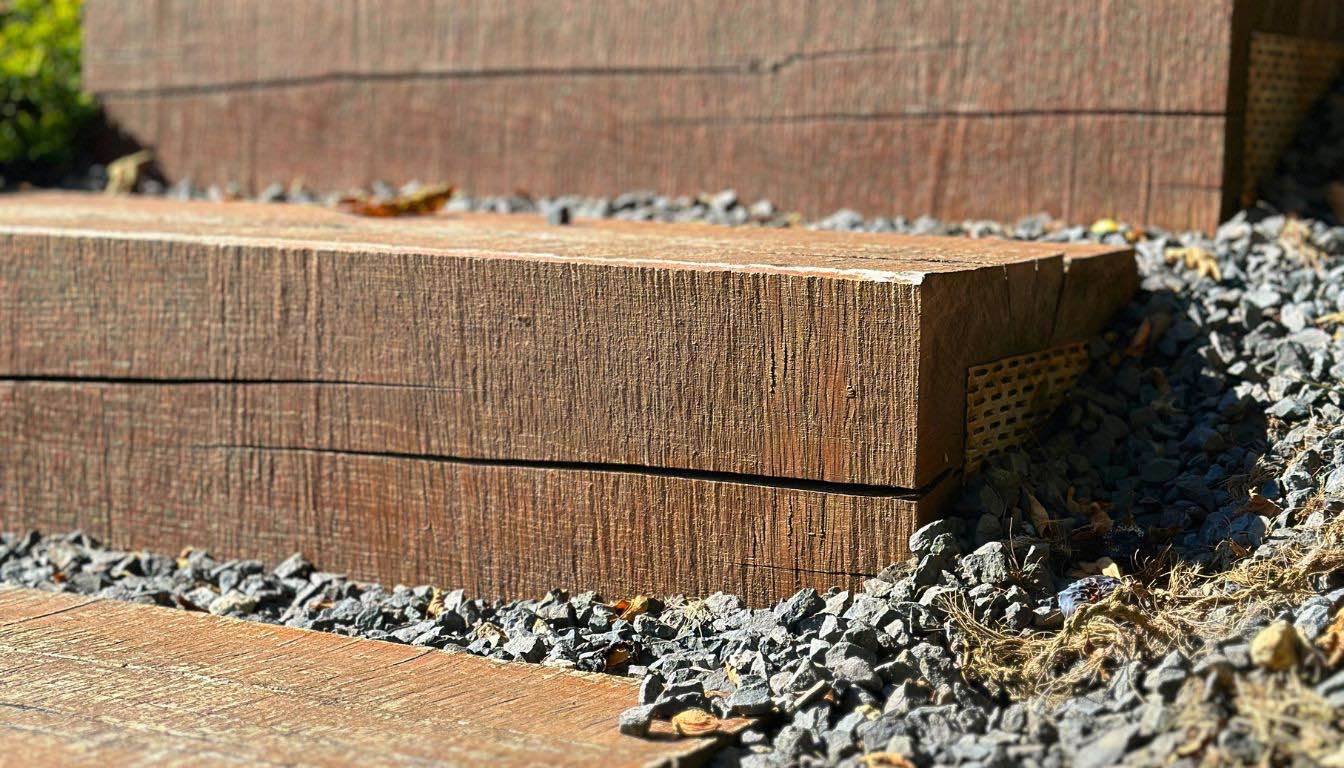
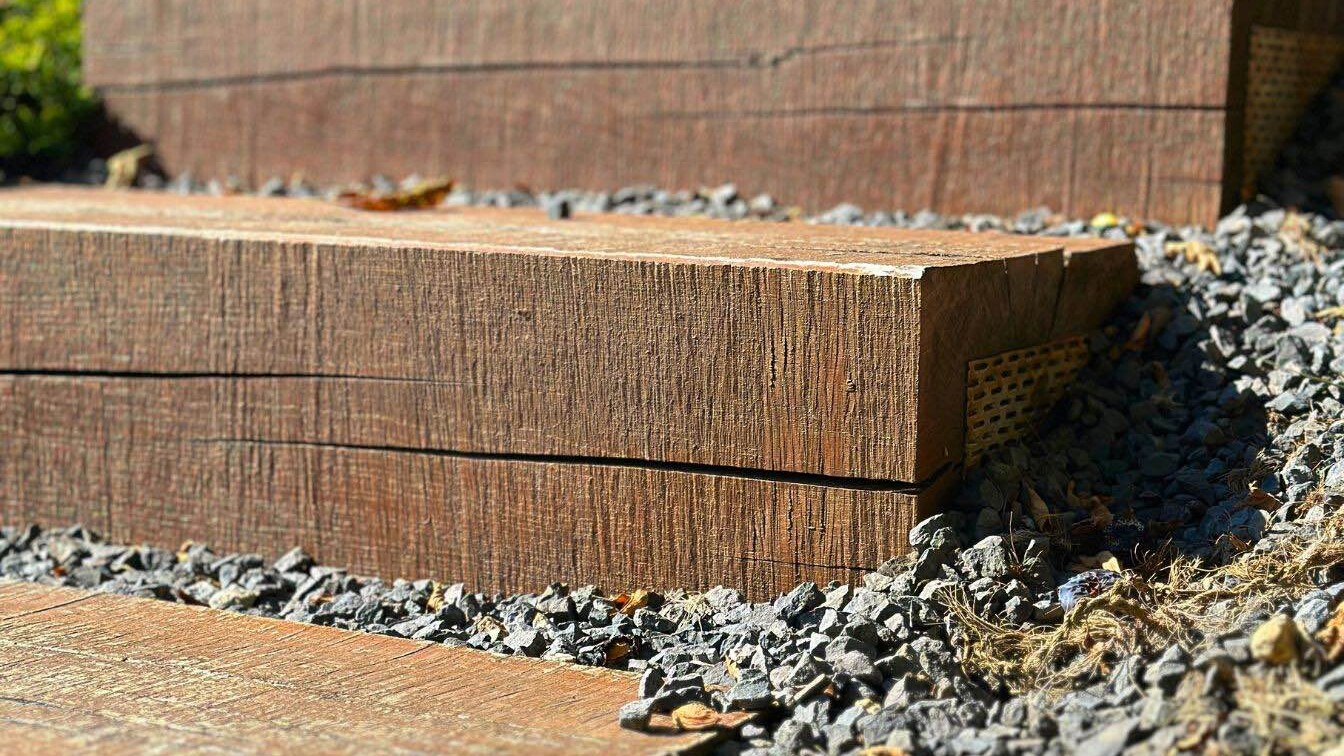
What makes a garden truly timeless? It's not the most expensive material.
Dominika
When you ask people what makes a garden luxurious, the answers tend to be similar.
Natural stone.
Exotic wood.
Large-format pavers.
A designer pergola.
But the truth is much simpler.
A timeless garden isn’t defined by how much individual materials cost. It’s defined by how they work together.
That’s exactly why you can visit two gardens with similar budgets and leave with completely different impressions. One feels peaceful, harmonious, and elegant. The other may feature high-quality materials, but as a whole, it doesn’t feel natural.
The difference isn’t in the price.
The difference is in the design.
Fewer materials create a better result
The most beautiful modern gardens share one common trait: they aren’t overloaded with materials.
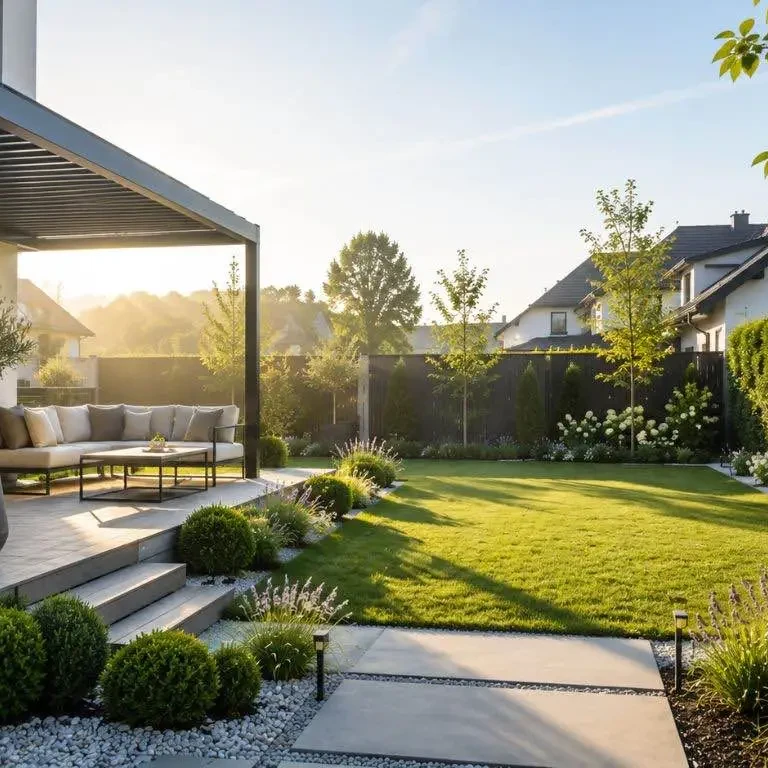
They use two or three main surfaces that are naturally repeated throughout the outdoor space.
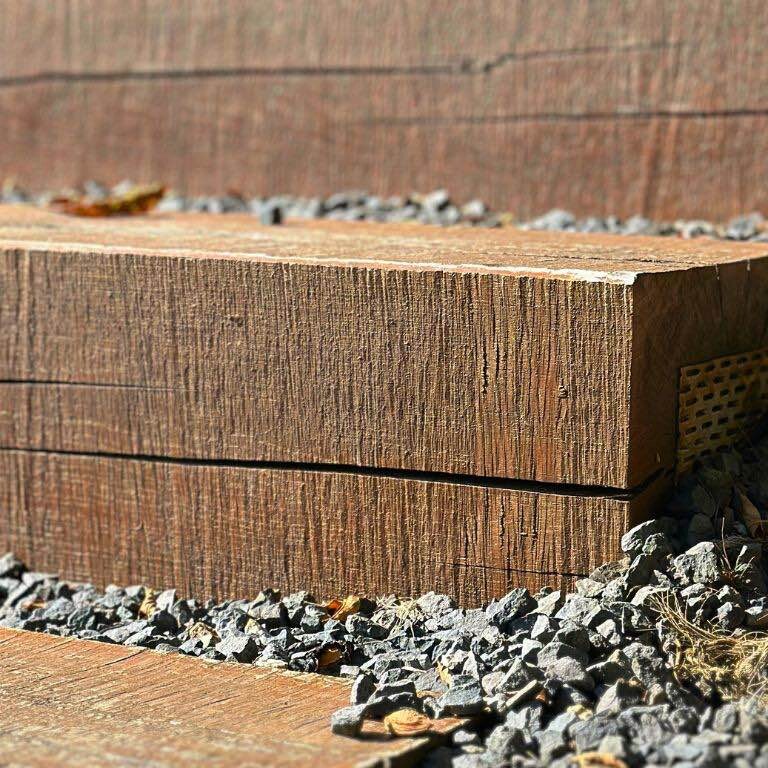
The same material appears on the patio, stairs, walkways, and retaining walls.
Wood is repeated on the pergola, bench, or raised flower beds.
This gives the entire space a calm and harmonious feel.
It is precisely this simplicity that makes the garden timeless.
How to Combine Materials in a Modern Garden?
The right combination of materials doesn’t start with choosing pavers. It starts with the architecture of the house. Each material should blend naturally with the facade, windows, roof, and the surrounding environment.
Among the most popular combinations are:
Concrete and wood
A minimalist combination that blends a modern look with natural warmth.
Large-format concrete pavers paired with a wooden deck or pergola create an elegant and timeless look.
Natural stone and Corten steel
An excellent choice for gardens that aim to look both natural and modern.
Stone provides stability, while Corten steel adds character.
Wood and gravel
The ideal solution for nature-inspired gardens.
Gravel creates contrast, while wood softens the space.
Concrete and ornamental grasses
One of the most popular combinations in contemporary landscape architecture.
The simple lines of concrete beautifully complement the soft shapes of the plants.
Materials shouldn’t be the main attraction
In a well-designed exterior, most people don’t even notice what materials were used.
They perceive the atmosphere. The space. The feeling. And that is precisely the goal of quality garden design.
If you notice the materials, the garden isn’t well-designed yet.
If you notice the atmosphere, the materials have done their job.
Why is garden design more important than the choice of materials?
Many people ask themselves, “What kind of pavers should we choose?”
But the right question is, “How do we want to use our garden?”
A high-quality garden design addresses much more than just the choice of materials.
Think about it:
- where you’ll relax,
- how you’ll move around the garden,
- where to create privacy,
- how to connect the house to the outdoors,
- and which materials will work well together naturally.
Only then does the actual creation of the garden begin.
Ten years from now, you probably won’t remember the name of the pavers or the brand of wood you used.
You’ll remember how you felt in your garden.
That’s why luxury doesn’t start with more expensive materials.
It begins with everything coming together to make sense.
At Dream Garden, we’ve been designing and building gardens for over 20 years. We create each garden design so that the materials, plants, the home’s architecture, and the owners’ lifestyle all form a single, natural whole. Because the most beautiful garden isn’t the one with the biggest
Frequently Asked Questions About Garden Materials
The best results come from combining two to three main materials that are repeated throughout the exterior. This gives the garden a harmonious and timeless look.
Among the most popular options are wood, wood-plastic composite, large-format ceramic or concrete pavers, and natural stone. The choice depends on the architecture of the house and how the patio will be used.
No single material is universally better. Natural stone offers a unique look, while concrete pavers offer clean lines and a wide range of sizes. The key factor is how well they fit into the overall garden design.
In most cases, two or three main materials are sufficient. Repeating them creates a cohesive look and reduces visual clutter.
Similar posts

Why do you spend the whole summer sitting on the patio when you have a garden?
Dominika
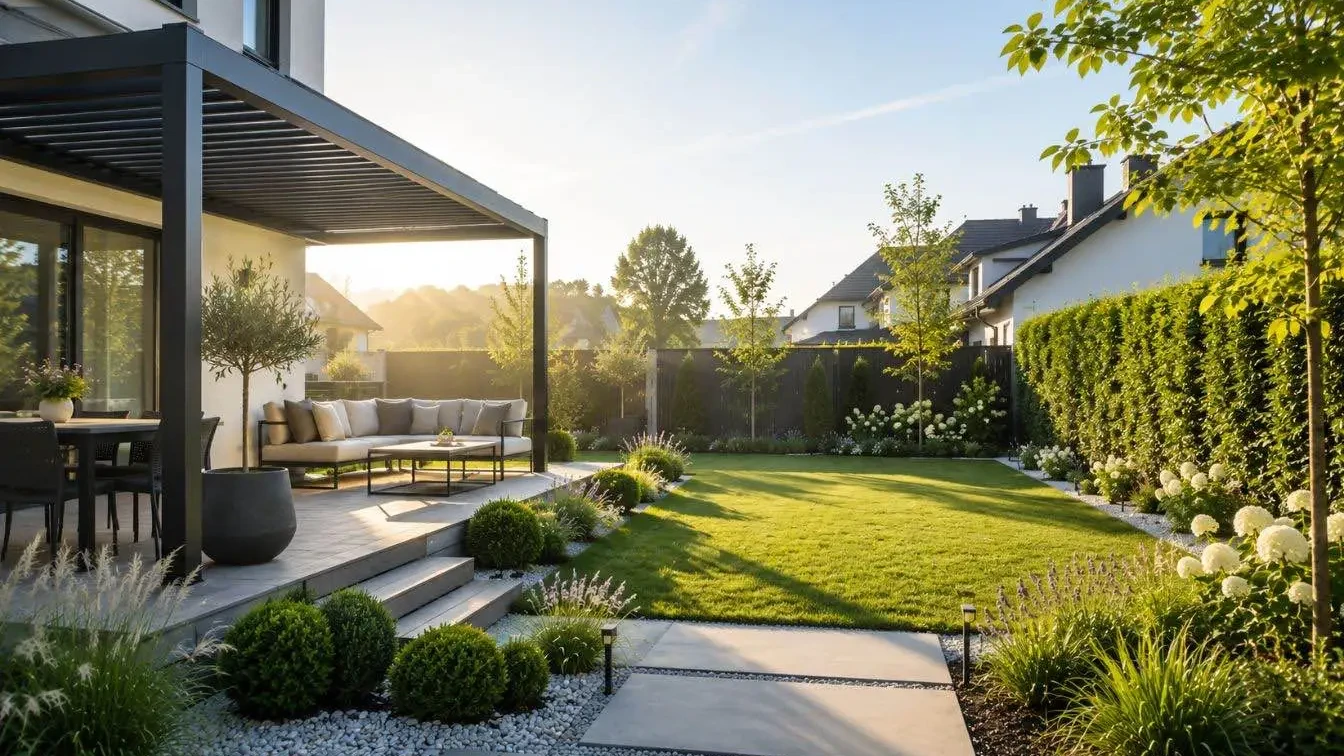
Take a walk through any new suburban neighborhood and you’ll notice one thing.
Today’s suburban gardens all look suspiciously alike.
A lawn. A patio. A concrete pathway. A fence. A few plants around the house.
And that’s often where the story ends.
At first glance, they look neat and well maintained. But if you take a closer look, you’ll realize they aren’t really lived in. Most of everyday life happens on the patio, while the rest of the garden is simply a patch of grass that needs mowing every weekend.
A garden shouldn’t be a green carpet that you mow once a week. It should be a space you enjoy every single day.
Or, to put it another way:
The most expensive lawn is the one you never walk across barefoot.
This is where most suburban gardens make the same mistake.
People often believe the problem is that their plot is too small.
In reality, they usually have:
- around 250 m² (2,700 sq ft) of lawn,
- a 30 m² (320 sq ft) patio,
- and only one place where they actually spend their time.
That’s the real problem. Not the size of the garden. But its design.
The problem with most suburban gardens isn’t their size
Smaller plots have become the norm in modern residential developments. But that doesn’t mean a suburban garden has to feel cramped or uninspiring.
The biggest mistake isn’t the lack of space.
The biggest mistake is that the garden has only one purpose.
You sit on the patio.
You look at the lawn.
And that’s where your experience of the garden ends.
A well-designed garden should naturally invite you to explore. Every path, every corner, every feature should have a purpose.
That’s why a thoughtful garden design is far more important than simply laying turf or planting shrubs.
What makes a small garden feel bigger?
The size of your property isn’t what matters most.
What matters is how many experiences your garden offers.
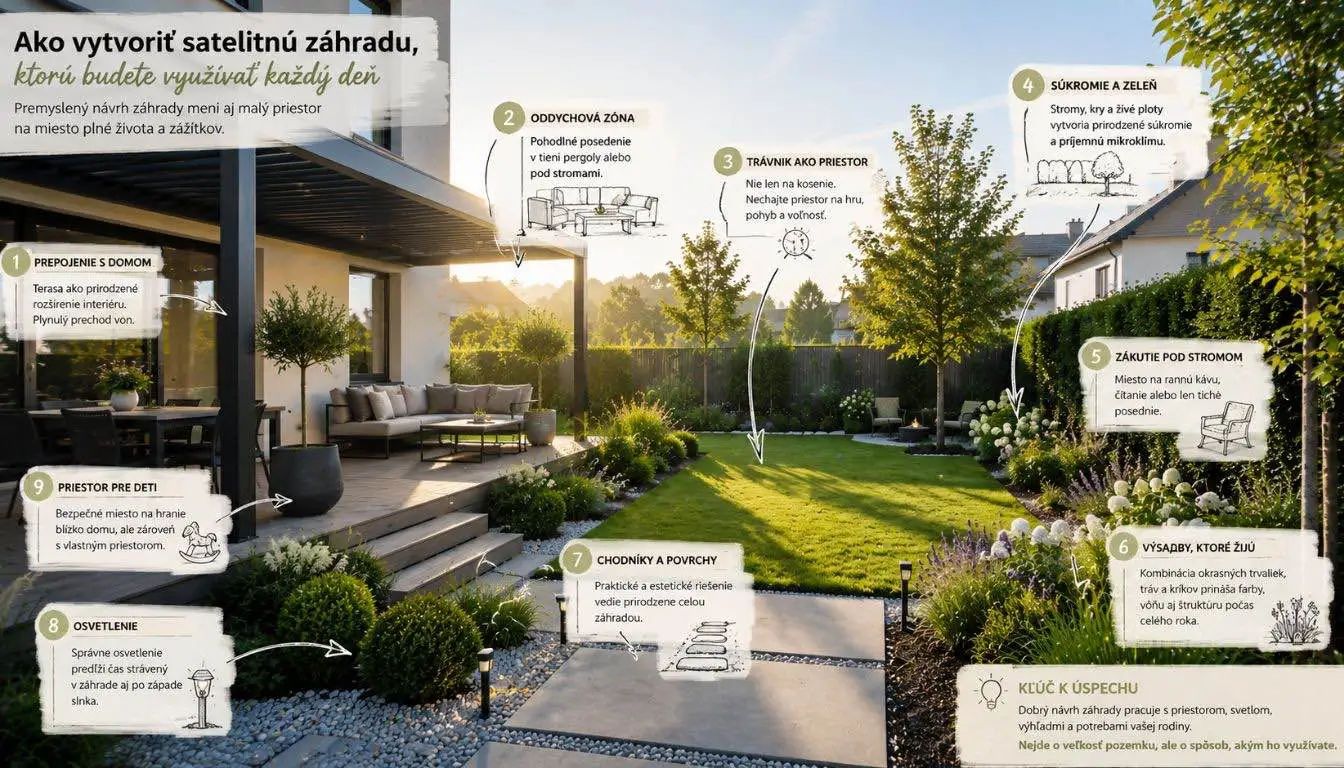
Even a compact suburban garden can include several distinct spaces:
- a spot for your morning coffee,
- shade beneath a tree on hot summer afternoons,
- a cozy area for evening gatherings,
- a quiet reading corner,
- a play space for children,
- raised planting beds,
- ornamental planting that creates privacy.
When designed well, the garden no longer feels like one large open space. Instead, it becomes a place you want to explore and enjoy.
Why do so many garden projects start in the wrong place?
Many homeowners build their gardens step by step.
First comes the lawn.
Then the patio.
A pergola the following year.
A few trees later on.
Finally, outdoor lighting.
The result often looks finished, but it doesn’t function as one harmonious space.
Professional garden landscaping doesn’t begin with laying turf.
It begins with understanding how you want to live in your garden.
That’s why garden design is the foundation of every successful landscaping project.
What does a garden that people actually use look like?
A garden designed for everyday living doesn’t have to be large or expensive.
It simply needs to be thoughtfully planned.
A well-designed garden naturally gives you more reasons to step outside.
Your morning coffee happens in one place.
Your evening glass of wine in another.
Children have their own space to play.
As the sun sets, the garden invites you to stay outside just a little longer.
That’s the difference between a garden that simply looks beautiful and one that’s truly lived in.
Why is garden design more important than landscaping?
Many people believe that construction and installation are the most important parts of creating a garden.
In reality, it’s the garden design that determines whether you’ll still love and use your outdoor space five or ten years from now.
During the design process, every important detail is considered:
- functional garden zones,
- circulation and movement,
- views from the house,
- privacy,
- shade,
- outdoor lighting,
- planting design,
- the connection between the house and the garden.
Once these elements are carefully planned, the landscaping simply brings the vision to life.
A turnkey garden is about more than plants
When people hear the phrase turnkey garden, they often imagine a finished lawn, newly planted trees and an automatic irrigation system.
All of these are important.
But a truly great turnkey garden offers something much more valuable.
A place where you genuinely want to spend your time.
A place that works beautifully in the morning, throughout the afternoon and long into the evening.
A place that becomes a natural extension of your home.
If you feel like your garden ends at the patio, the problem probably isn’t the size of your plot.
Perhaps it simply never had the opportunity to become a place where life happens.
At Dream Garden, we’ve been designing and building gardens for more than 20 years. Every project begins with one goal: creating outdoor spaces that are not only beautiful to look at, but become a natural part of everyday life.
Because the best garden isn’t the one that looks the most impressive.
It’s the one you’ll want to use every single day.
Frequently asked questions about the design and implementation of a satellite garden
The most important thing is not to view the garden as a single large area. Even a smaller plot can feel spacious if it’s divided into several functional zones. A well-designed garden creates a place to relax, a space for children, a cozy corner for morning coffee or evening gatherings, and ensures that you’ll make use of the entire garden, not just the patio.
A turnkey garden is a comprehensive service that includes garden design, planning, selection of suitable materials, planting, and the installation of walkways, patios, irrigation systems, lighting, and other features. The result is a harmonious outdoor space ready for everyday use, without the need to coordinate multiple contractors.
A small garden doesn’t have to feel cramped. Dividing the space into several zones, planting trees and taller plants, creating visual axes, working with varying ground levels, and using well-placed lighting can all help. A well-designed satellite garden often appears larger than it actually is.
The simple answer is that you want to naturally want to spend time there. If you spend most of your time just on the patio and the rest of the property is only used for mowing, your garden is probably not living up to its potential. A well-designed garden naturally encourages you to make use of the entire space throughout the year.
Similar posts
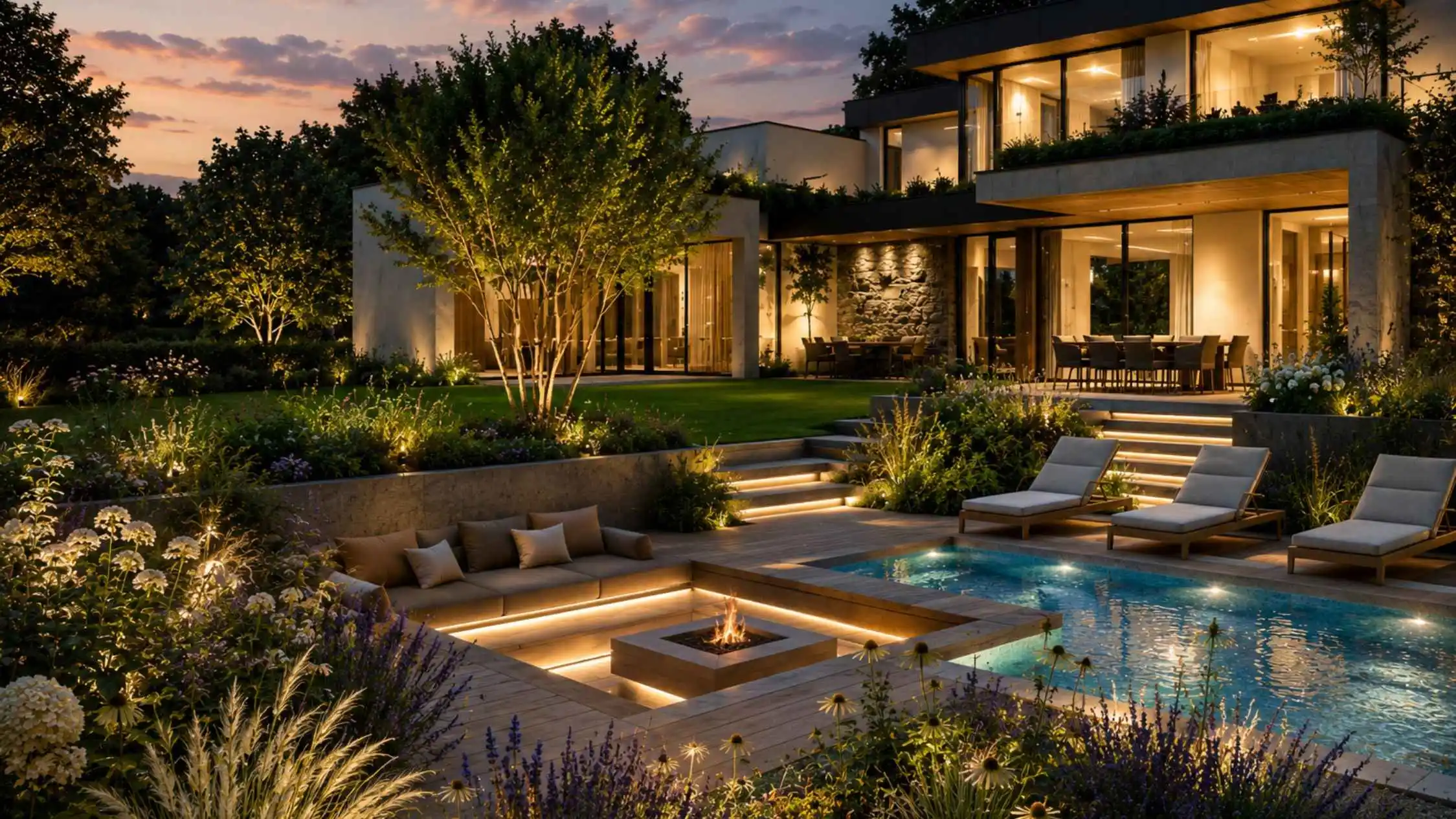
Why is it beneficial to have a single partner for the entire project? The advantages of a general contractor
Dominika
Building a house is one of the biggest investments in life. Despite this, many investors handle the individual parts of the project separately—an architect prepares the house design, a construction company handles the build, another contractor supplies the pool, and the garden design isn’t addressed until after construction is complete.
This often results in unnecessary complications, overpriced modifications, and an exterior that does not come across as a single, harmonious whole.
That is precisely why more and more investors are seeking out a general contractor who can oversee the entire process, from the house design to the turnkey completion of the garden.
Who is the general contractor for the construction project?
The general contractor is the partner who coordinates the entire project from start to finish, through to the handover of the completed work.
Instead of communicating with multiple contractors, you have a single point of contact who handles:
- house design,
- house construction,
- coordination of trades,
- garden design,
- turnkey garden construction,
- swimming pool,
- patio,
- lighting,
- irrigation,
- planting, and ongoing garden maintenance.
You communicate with a single team. We coordinate everything else.
Why do problems arise when the house and garden are planned separately?
A major mistake is when the construction of the house is completed and only then does work on the exterior begin.
In practice, we often encounter problems such as:
- inappropriate terrace elevation,
- complicated pool connections,
- insufficient space for planting,
- unresolved site drainage,
- additional demolition work,
- higher construction costs.
Many of these problems could be eliminated as early as the design phase.
The design of the house and the garden should be developed together
The house and the garden are not two separate projects.
They form a single whole.
A well-designed exterior complements the architecture of the house, respects the views from the interior, and naturally connects the living space with its surroundings.
That is why the garden design should be developed during the initial planning stages of the house. Read more about when to start planning the garden for a new build.
This allows you to properly plan:
- the location of the patio,
- the pool,
- walkways,
- lighting,
- utility lines,
- the irrigation system,
- and the planting of trees and plants.
Having your home and garden built under one roof saves both time and money
One of the biggest advantages of working with a general contractor is the coordination of all trades.
The investor doesn’t have to worry about:
- the schedules of individual contractors,
- communication between trades,
- technical details of the project,
- complaints and liability.
Everything is handled by a single partner.
This results in:
- less stress,
- greater control over the budget,
- a smoother construction process,
- and faster project completion.
Turnkey garden design is not just about plants
Many people think of planting trees and a lawn when they hear the term “garden design.”
However, a modern outdoor space involves much more.
The project may include:
- a patio,
- a pool,
- a pergola,
- garden lighting,
- an automatic irrigation system,
- retaining walls,
- sidewalks,
- tree planting,
- perennial beds,
- and a lawn.
That is why it is important for all elements to be designed according to a single vision.
Frequently Asked Questions
When should you start planning your garden?
Ideally, during the house design phase. This allows the entire property to be designed as a single functional unit.
Is it worth hiring a general contractor for the project?
Yes. Especially for projects where the house, pool, patio, and garden are being built simultaneously. A single partner ensures coordination and takes responsibility for the entire project.
What does a turnkey garden project include?
Everything from landscaping to irrigation, lighting, and planting, right through to the final finishing touches on the exterior. You can read more on our website in the Services section.
Do you also provide garden maintenance?
Yes. Our services also include professional garden maintenance to ensure your outdoor space looks perfect even years down the line. You can find more information about our services on our website.
One partner. The entire project.
From the house through garden design, construction, and maintenance to the pool, patio, and lighting.
We design and build exteriors as a single, well-thought-out whole, in which the house, garden, and every detail work together naturally.
You communicate with one team. We coordinate everything else.
Similar posts

Do you walk home after dark? Let an illuminated garden welcome you
Dominika
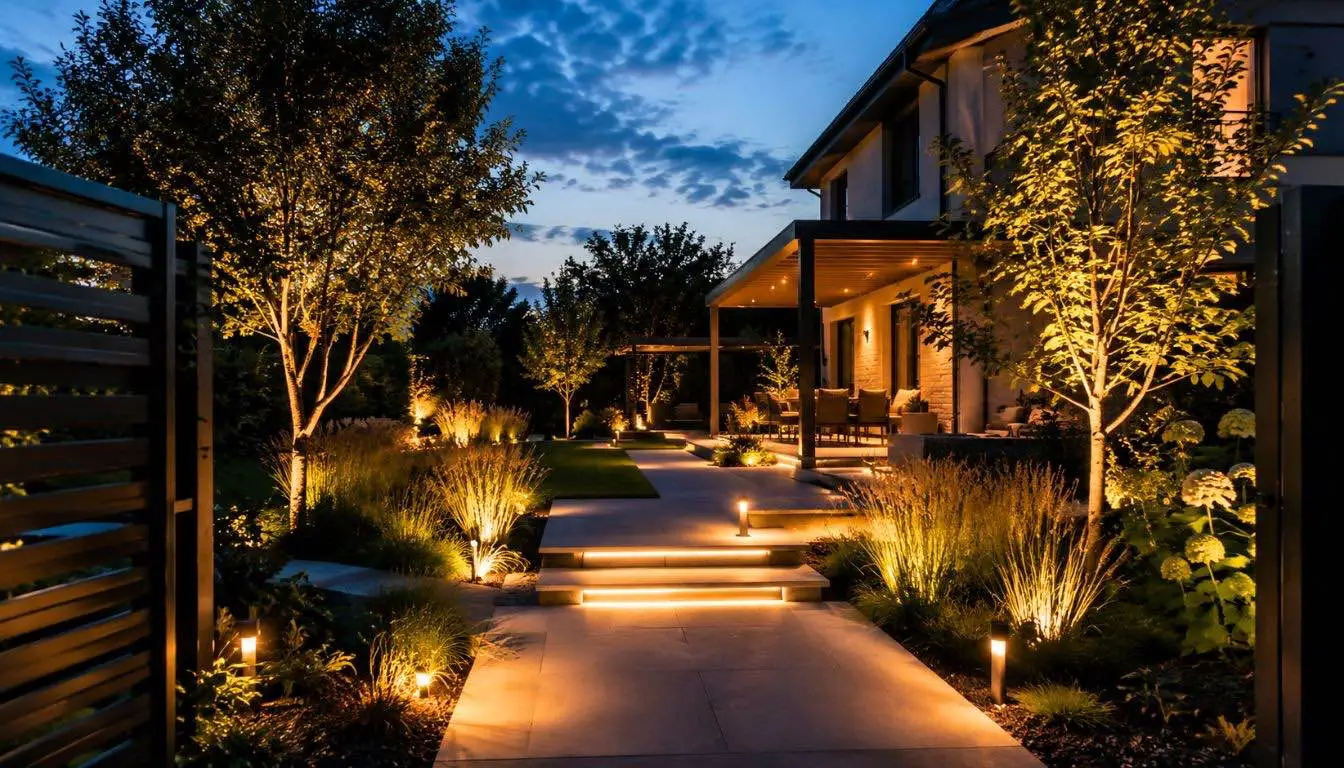
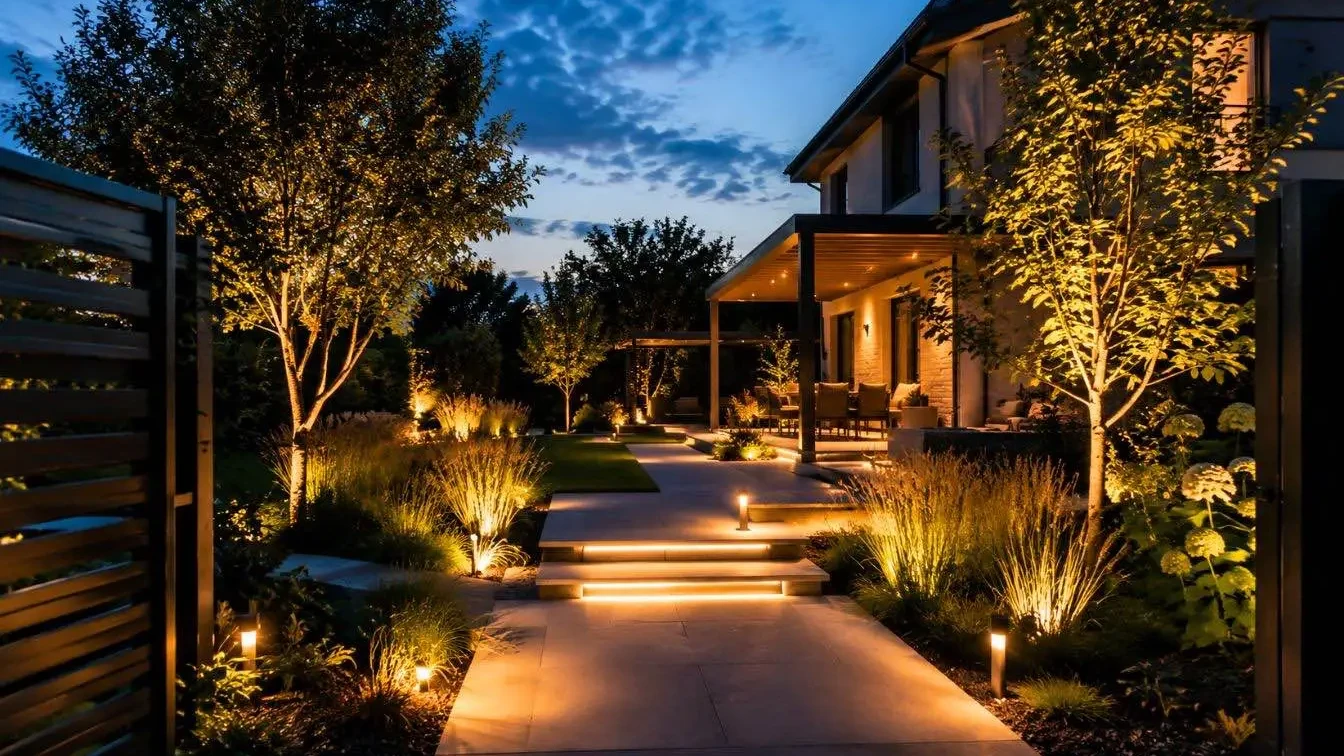
You come home in the evening, open the gate, and the garden lights up before you. Gently illuminated trees, a safely lit walkway, and a patio that feels cozy even after sunset.
That is exactly how a well-designed garden should work.
Many homeowners devote a lot of attention to the house itself, but they don’t address exterior lighting until the very end. The result is often bright spotlights, cheap solar lamps, or mismatched fixtures that, while they provide light, fail to create a pleasant atmosphere.
That is precisely why garden lighting should be part of the process that begins with a high-quality garden design.
Why is lighting an important part of a garden?
Well-designed lighting serves many more purposes than simply providing visibility after dark.
It helps create an atmosphere, improves safety when moving around the garden, and highlights the most beautiful features of the outdoor space. Thanks to it, you can enjoy your garden even in the evening and extend the time you spend outdoors.
If lighting is carefully planned during the design process, it can naturally integrate with the landscaping, patio, walkways, and water features.
How to light stairs and walkways?
One of the most common questions when planning an exterior is how to safely light areas where people walk.
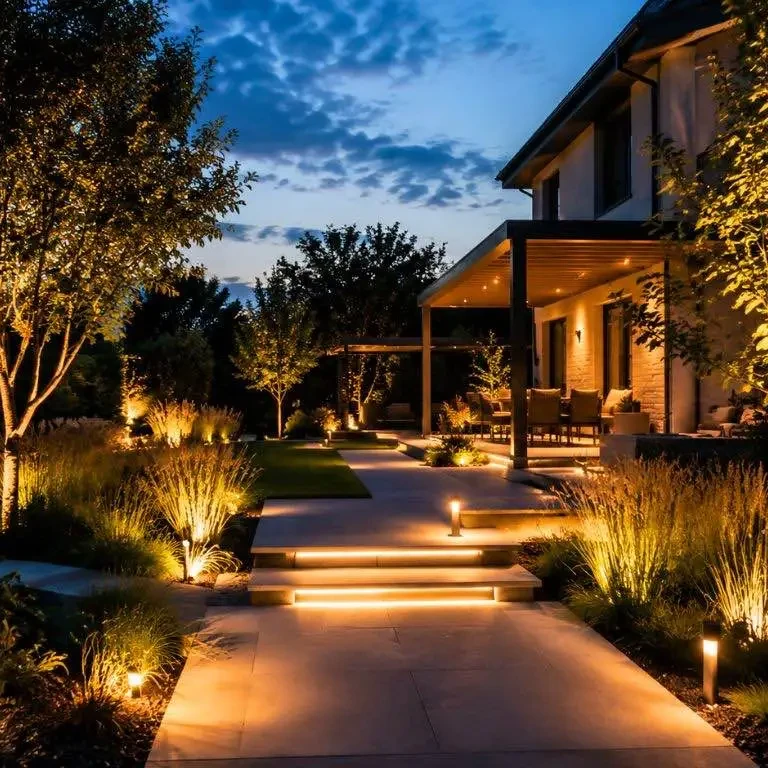
For stairs and walkways, recessed LED lights or under-stair lighting work best. This solution is unobtrusive, does not cause glare, and creates an elegant visual effect.
The result is safe movement around the garden even during late evening hours.
How to illuminate trees in the garden?
Trees are among the most striking features of any garden, and they can create a unique atmosphere, especially in the evening.
We recommend using ground-mounted spotlights with warm light to illuminate them. When placed at the right distance from the trunk, they can beautifully highlight both the tree’s structure and its crown.
This gives the garden a whole new dimension in the evening.
How much light does a patio need?
Less than most people think.
When it comes to relaxation areas, the most common mistake is using lighting that’s too bright. While bright ceiling lights illuminate the entire space, they often create an uninviting atmosphere.
Soft ambient lighting works much better. LED strips, wall sconces, or indirect lighting on a pergola create a pleasant setting for evening gatherings with family or friends.
What kind of lighting should you choose for a pool or pond?
The color of the light plays a major role when it comes to water features.
Lighting that is too warm or distinctly yellow can alter the natural color of the water. That is why neutral or softly warm light is most commonly used for pools and ponds, as it preserves the natural appearance while creating an elegant evening effect.
The most beautiful gardens aren’t the ones with the brightest lights at night
When looking at luxurious garden designs, many people think the secret lies in the number of lights.
In reality, it’s exactly the opposite.
The most beautiful exteriors don’t stand out because of how much light they use, but because of what they highlight with that light. Well-designed lighting creates contrasts, works with shadows, and draws attention to the most important elements of the space.
Less light often creates a much more luxurious effect than an overlit garden.
When should you plan the lighting when designing a garden?
Ideally, right from the start.
In a professional design, we consider cable routing, the placement of light fixtures, future plantings, and the use of individual zones even before construction begins.
That is precisely why a well-designed garden is much more than just planting flowers or laying sod. It is about creating a space that works throughout the day and into the evening.
A turnkey garden also takes the evening hours into account
A well-designed outdoor space doesn’t end at sunset. On the contrary, it’s in the evening that it can truly show its most beautiful side.
If you’re planning a new garden or renovating an existing space, we recommend incorporating lighting into the design process from the very beginning. Only then can you create a harmonious space that is beautiful, functional, and pleasant to use all year round.
At Dream Garden, we have been designing and building gardens for over 20 years. We help clients create turnkey gardens that not only function during the day but also create a unique atmosphere after dark.
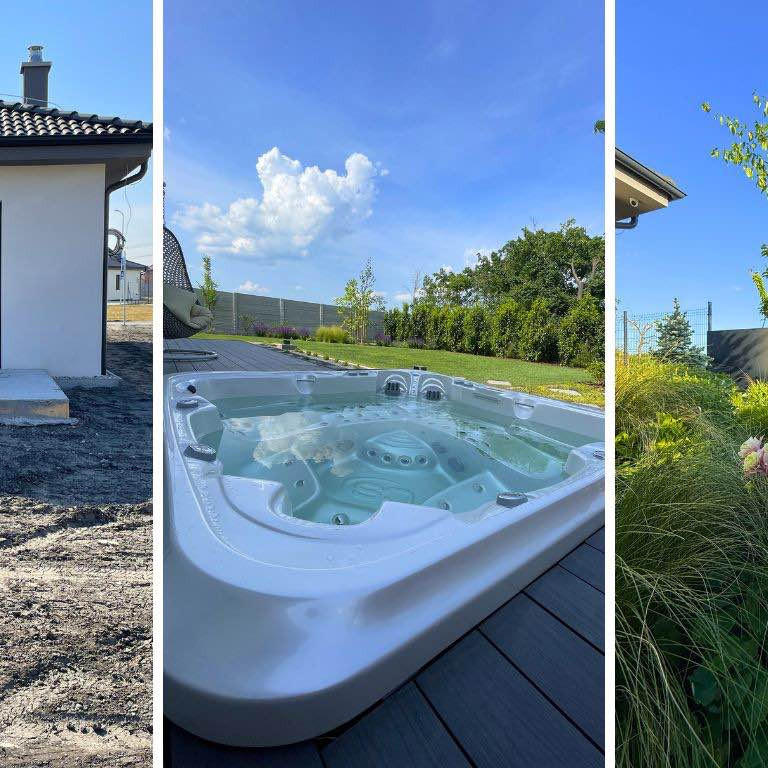
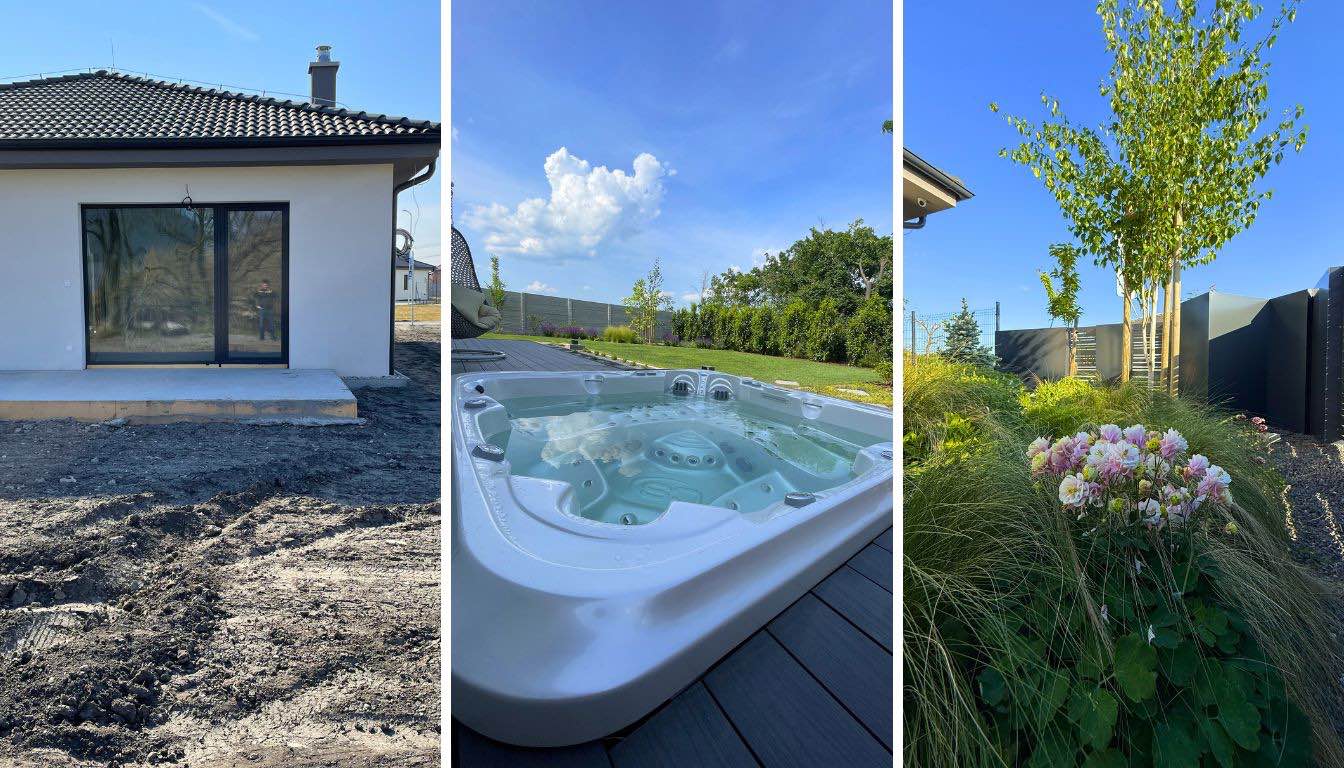
When should you start planning the garden for a new home?
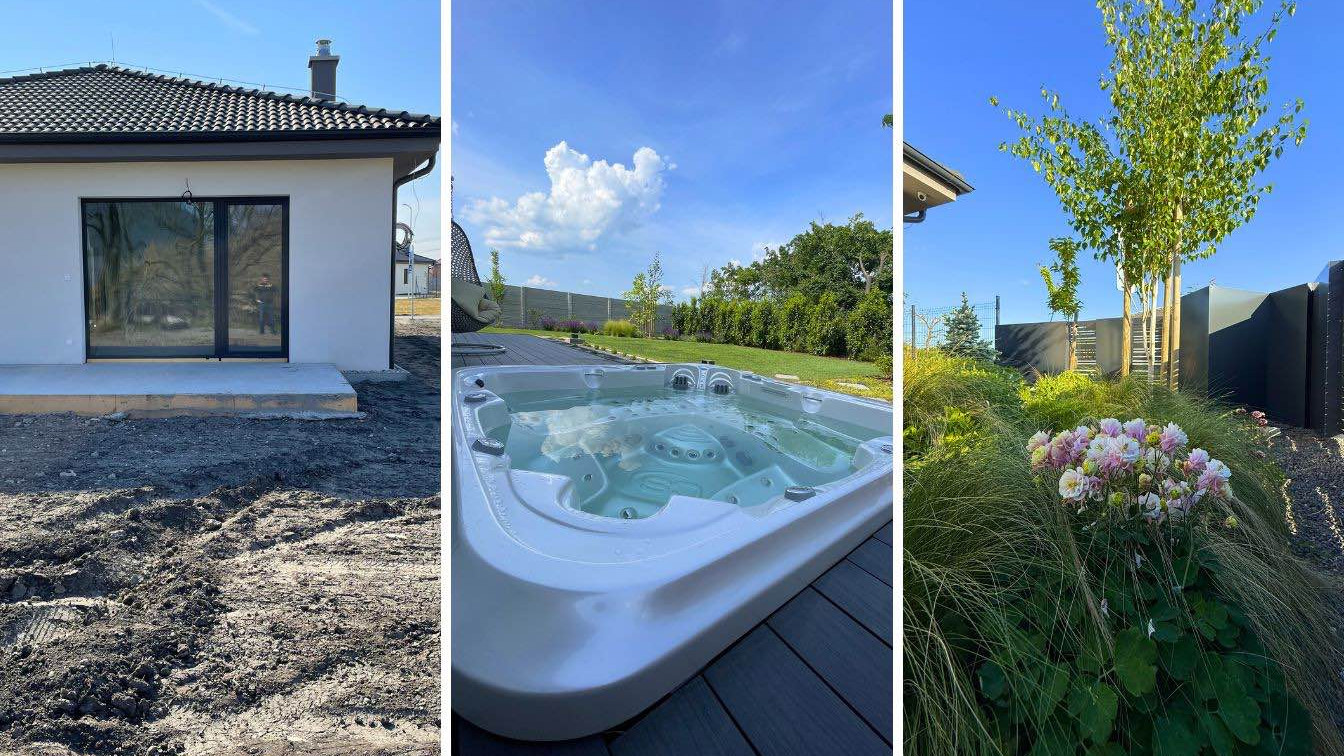
Dominika
When building a house, people naturally focus primarily on the interior—the kitchen, floors, bathrooms, lighting, and facade. The exterior is very often put off “until later.”
And that is often one of the biggest mistakes.
After all, the garden isn’t the final step after the house is finished. If you want the entire space to function as a single cohesive whole, a high-quality garden plan and design should be addressed much earlier—ideally during the construction of the new home.
When is the ideal time to start planning your garden?
The best time to plan your garden is when the house design is being finalized or construction is about to begin.
Why?
Because that is when you can properly plan all the technical and practical aspects:
- ground levels
- land drainage
- irrigation preparation
- outdoor lighting
- patio
- pergola
- pool or pond
- planting large trees
- garden pathways
If these matters are addressed only after the house is completed, unnecessary complications, rework, and higher costs often arise.
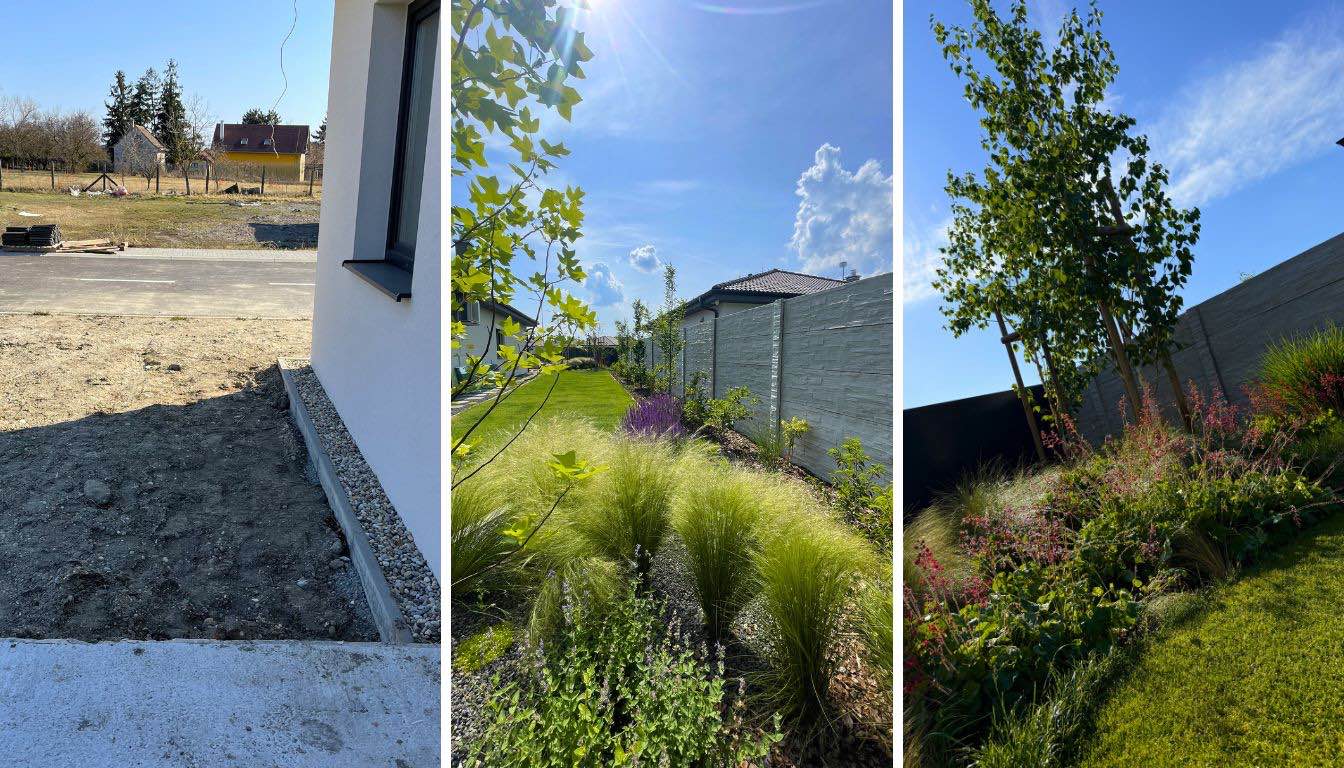
The biggest mistake when building a new home?
“We’ll do the garden later”
This is one of the most common phrases we hear.
However, the reality is often that:
- the property remains dug up for months
- problems with mud and drainage arise
- the technical plans have to be redone
- the patio or walkways are added later
- the entire exterior looks unfinished
And that is precisely why professional garden design is an important part of the entire house project, not just an “afterthought.”
Why start with garden design as early as possible?
A good garden design isn’t just about plants. It considers how you will use the space every day.
During planning, we address, for example:
- where the morning sun and evening shade will fall
- where to create privacy
- how to connect the interior with the exterior
- where the patio or relaxation area will be
- how movement through the garden will flow
- which materials complement each other
The result is a space that doesn’t feel haphazard but naturally complements the architecture of the house.
A turnkey garden saves both time and money
Many people think that planning a garden in advance means a higher budget. In practice, however, it’s often exactly the opposite.
If the exterior is planned from the start, the individual tasks flow naturally into one another. There is no need to redo finished work, technical preparations are handled in advance, and the entire implementation process is much more efficient.
This is one reason why turnkey gardens are becoming increasingly popular today, where both the design and implementation are handled comprehensively and with a clear vision from the start.
What should a modern garden for a new home include?
A modern garden is no longer just about a lawn and a few plants. People want to create a space that will be a natural part of their home.
A high-quality exterior therefore typically includes a patio, a relaxation area, thoughtful planting, lighting, automatic irrigation, and space for family and daily life.
The goal isn’t just to “have a finished garden.” The goal is to create a place where you’ll want to spend time.
How long does it take to complete a garden?
The duration of the project depends on the size of the project and the scope of work. However, many outdoor spaces can be completed relatively quickly, especially if everything is well-planned in advance.
The biggest delays usually don’t arise during the actual construction, but rather from chaotic, last-minute decisions.
That’s why it’s best to start planning your garden well in advance—the whole process will then be smoother, more efficient, and free of unnecessary complications.
The garden is part of your home, not an afterthought
Your home doesn’t end at the patio door.
It is the exterior that significantly influences how you feel at home and how much time you’ll spend outdoors. A well-designed garden can transform the way you live every day.
And that’s why it’s worth planning it from the start, not just when all that’s left around the house is dug-up dirt.
Tip from Dream Garden
At Dream Garden, we’ve been designing and building gardens for over 20 years. We help clients create functional and timeless exteriors that naturally complement the home’s architecture and the owners’ lifestyle.
If you’re planning a new build and wondering when to start thinking about the exterior, the answer is simple:
👉 the sooner, the better.
We’d be happy to help you with both the design and the complete turnkey implementation of your garden.
Similar posts

The most expensive thing about a house isn't the mortgage. It's the space you don't use
Dominika
90% of people have a garden.
But most of them don’t actually spend time there.
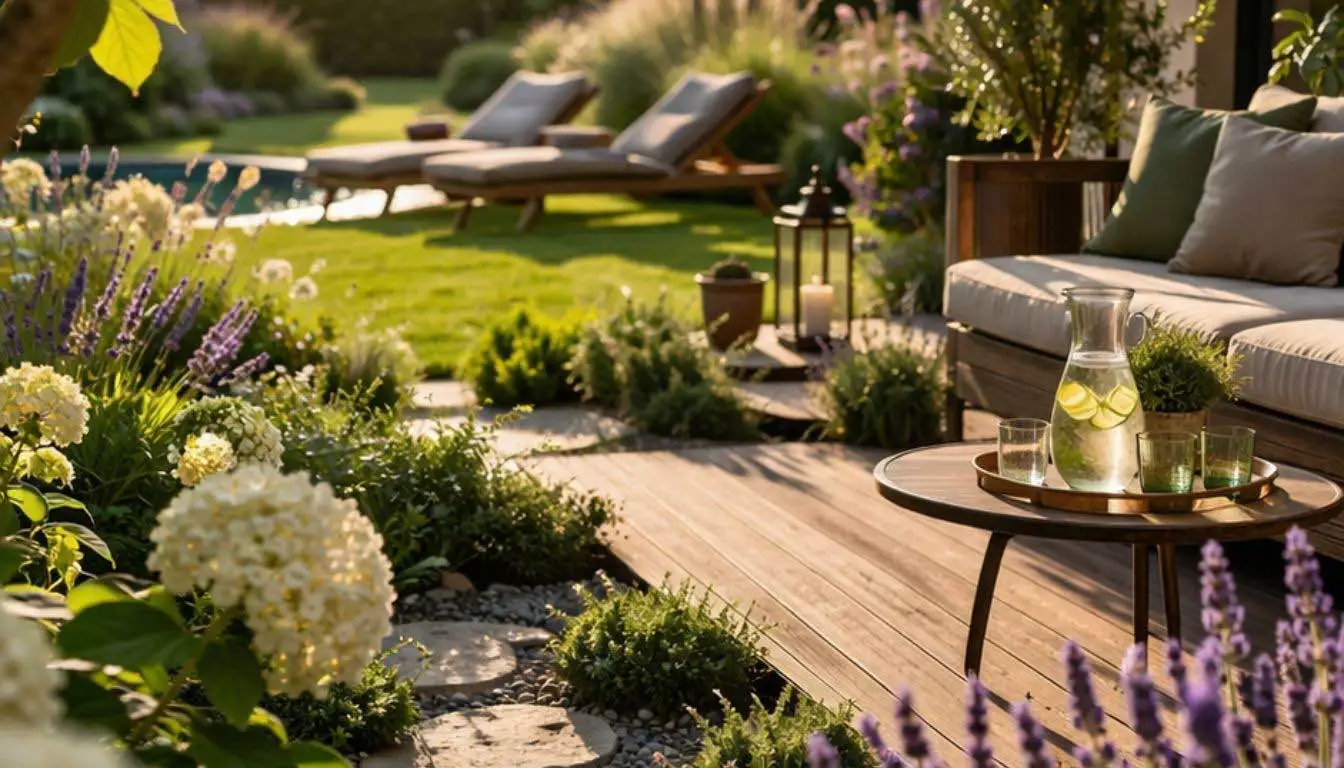
And yet, the outdoor space is often one of the main reasons people choose a house over an apartment. The idea of having your own terrace, peace and quiet, greenery, or summer evenings outdoors sounds ideal. The reality, however, often looks completely different.
The garden exists, but it isn’t lived in.
It’s not that people don’t want to spend time outside. Often, the problem is that the space was never designed for everyday life. It was created “somehow”—without a concept, without a function, and without a well-thought-out use.
A mortgage isn’t enough for the perfect home. Find out why a well-executed garden is the key to a space you’ll actually use.
That’s exactly why a high-quality garden plan and design are far more important than most people realize.
If I could turn back time
Dominika
7 things I would do differently when starting a garden
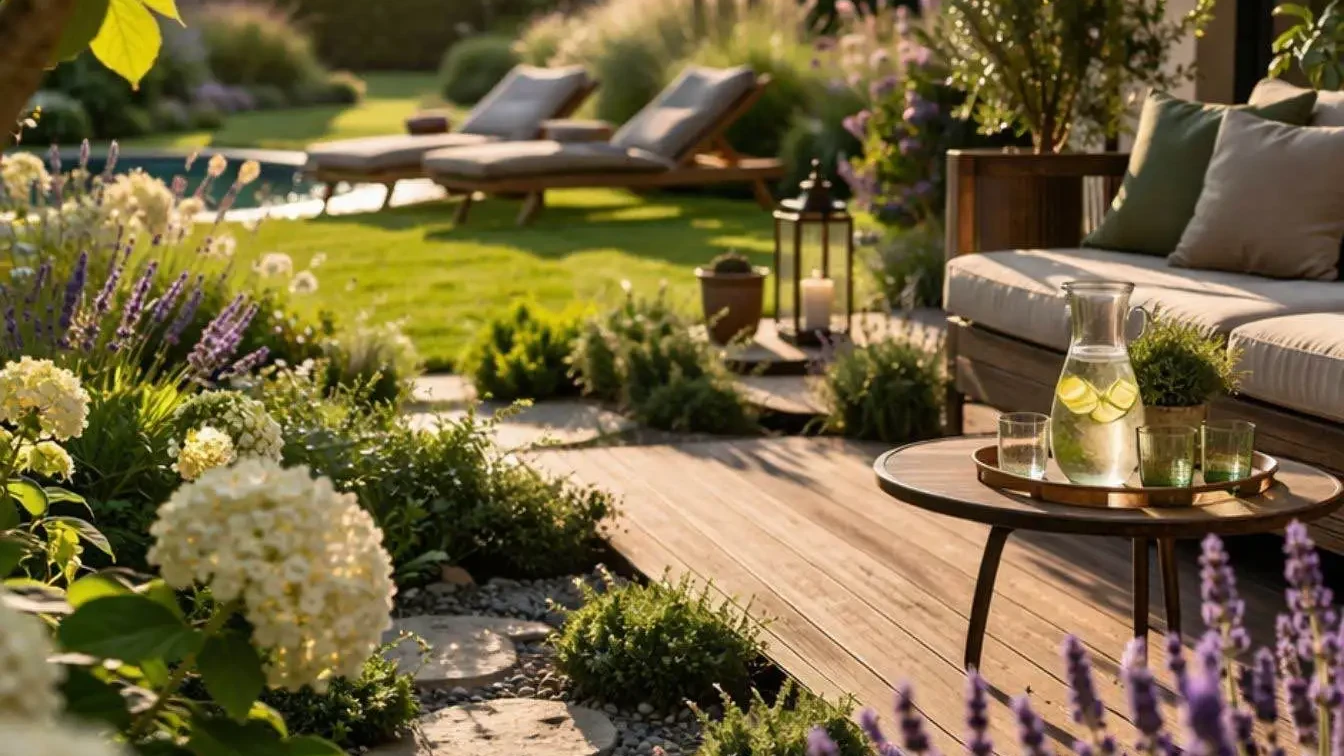
Starting a garden is an exciting process. You imagine your dream garden—a place of relaxation, peace, and beauty. But it’s right at the beginning that most mistakes are made, and these can cost you time, money, and often lead to disappointment.
If we had the chance to start over, we would definitely avoid these things when creating our garden.
1. I would start with a design, not planting
The most common mistake? Starting without a plan.
Many people buy plants one by one without having a well-thought-out garden design. The result is chaos, an impractical space, and frequent rework.
Solution:
Every high-quality turnkey garden starts with a design. It determines the layout of the space, its functions, and the selection of plants.
2. Don’t underestimate the size of the plants
Small plants are cheaper, but…you’ll have to wait years before your garden starts to look good. Professional garden designs often use larger, mature plants that create an immediate impact.
Solution:
Combine smaller and larger plants so that the garden looks “finished” right from the start.
3. I wouldn’t skimp on materials
Cheap pavers, unsuitable curbs, or low-quality elements can ruin the entire look.
Solution:
Choose timeless, high-quality materials that complement both the house and the surrounding area.
4. I shouldn’t feel the need to have everything in there
A pergola, a pond, flower beds, a playground… all at once? The result is often a cluttered, disorganized space
Solution:
Good garden design works with the space. Fewer elements = more peace and quiet.
5. I would give more thought to maintenance
A garden should be a joy, not a second full-time job. Overly demanding plants = frustration
Solution:
When designing your garden, consider how much time you want to devote to it. A modern turnkey garden is both beautiful and practical.
6. I would design the garden as a whole, not in parts
“We’ll do the lawn now, the patio next year, then the flower beds…”
Solution:
The garden should be designed as a single cohesive whole—from the very beginning. That’s the only way to create a true dream garden.
7. I would consult experts sooner
Many clients only come to us after going through a process of trial and error.
Solution:
Working with experts on garden design and implementation will save you time, money, and energy.
A good garden doesn’t start with the work
It starts with decisions.
If those decisions are right, the result is a space that:
- stands the test of time
- looks harmonious
- and brings joy every day
Tip from Dream Garden
If you’re planning to create a garden and want the result to be worth it, the most important thing is a high-quality garden design.
That is what determines whether your garden will last for years.
Do you want to create your dream garden?
We’d be happy to help you with both the design and implementation—from the initial idea to a complete, turnkey garden.
5 things that make a garden look cheap
Dominika
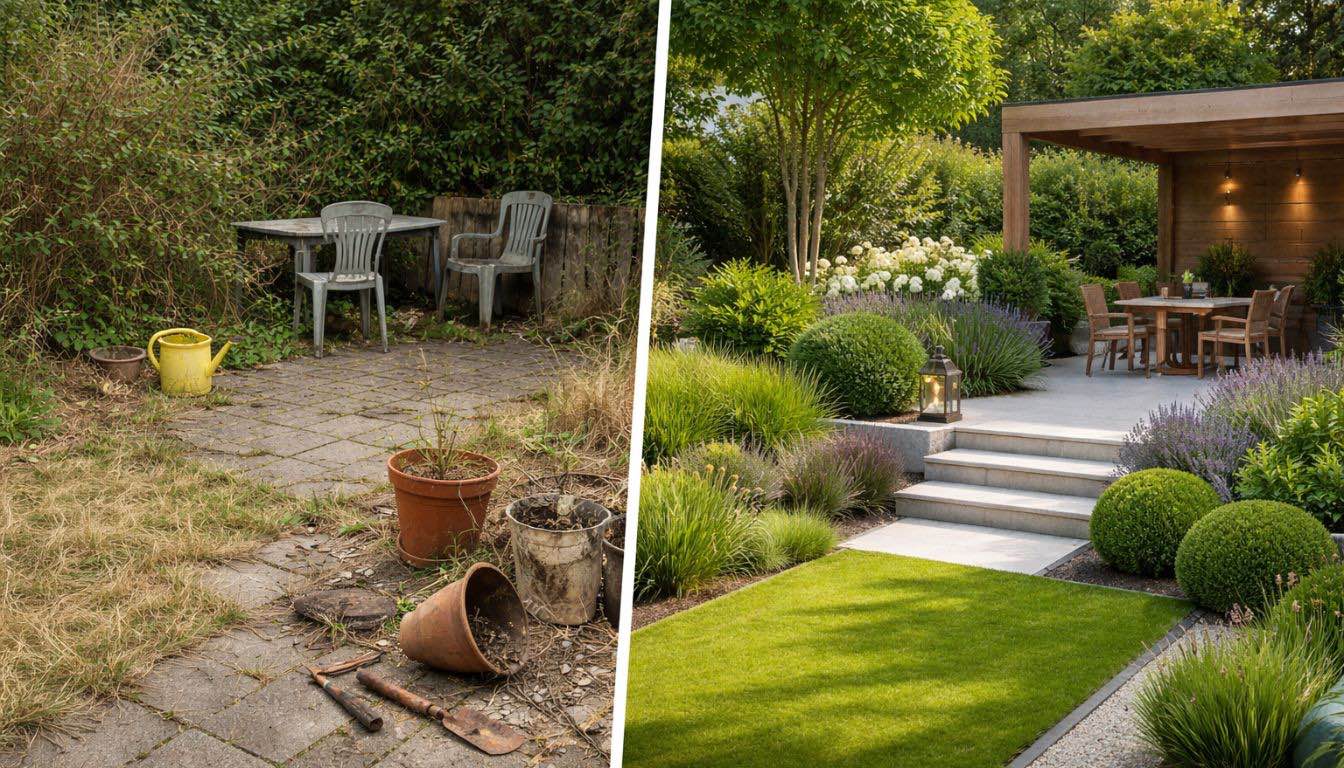
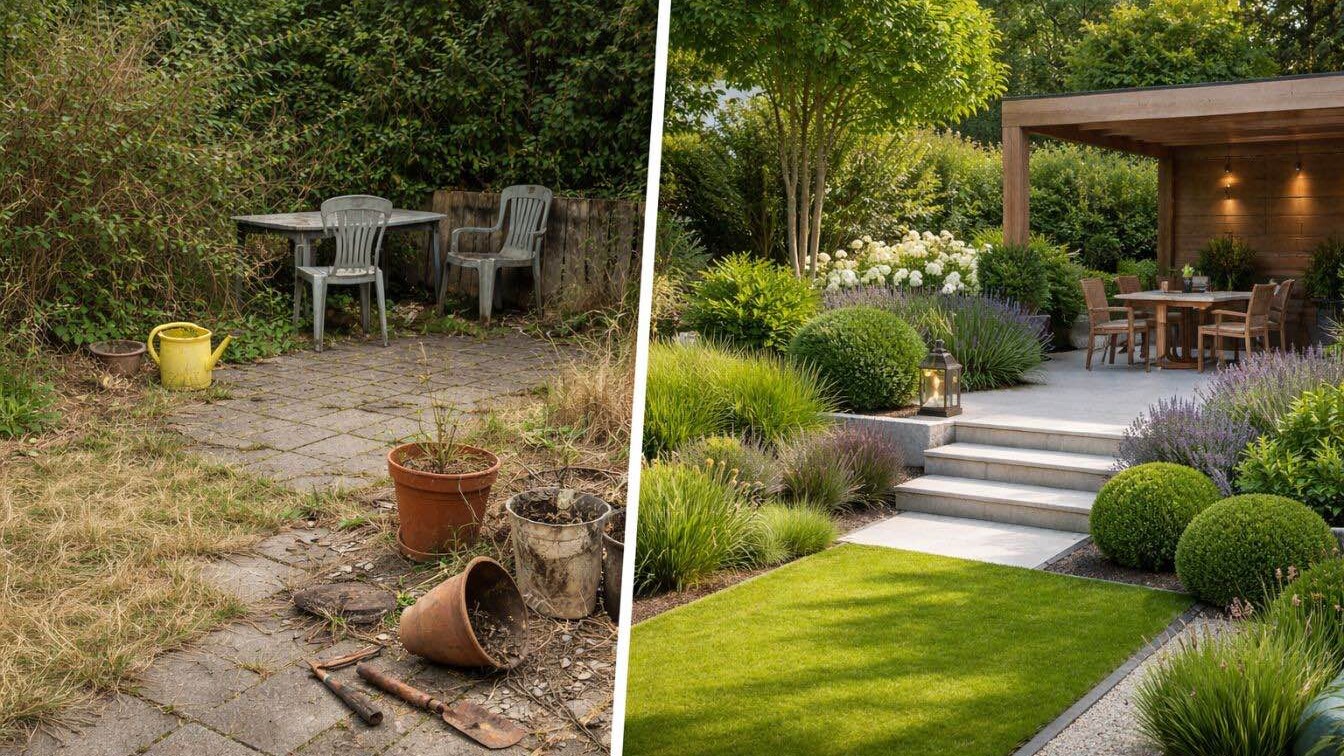
A cheap-looking garden? Not with Dream Garden. Read about the mistakes people often make when designing a garden.
If you want your garden to look harmonious and “more expensive,” simply planting flowers isn’t enough. What matters is the overall concept, the materials, and the way the space is designed.
Here are the 5 most common mistakes that make a garden look cheap—and how to avoid them.
Random planting without a plan
One of the most common mistakes is choosing plants one by one without an overall plan.
The result:
- the flower bed looks chaotic
- the plants don’t go well together
- the garden lacks character
How to do it right:
A garden should have a clear composition—a combination of heights, colors, and textures. Fewer species, but thoughtfully arranged, always look better than a “mix of everything.”
Materials that look cheap
Materials make a huge difference.
Common mistakes:
- low-quality tiles
- cheap plastic elements
- mismatched materials
How to do it right:
Choose materials that complement each other and look natural—wood, stone, high-quality tiles. You don’t need many, but they should be coordinated.
Too many elements in a small space
The common desire to “have everything there” leads to a cluttered space.
The result:
- the garden feels cramped
- nothing stands out
- there is a lack of tranquility
How to do it right:
Let the space breathe. Even empty space has its purpose. Fewer elements often mean a better result.
Neglected maintenance
Even the most beautiful design loses its value if you don’t take care of your garden.
What looks cheap:
- overgrown plants
- dry leaves
- untended flower beds
How to do it right:
Regular maintenance is key. Spring, in particular, determines how the garden will look throughout the season.
Lack of an overall design concept
A garden isn’t just about plants. It’s a living space.
Common mistakes:
- the garden isn’t practical
- there’s no connection to the house
- the space isn’t being utilized
How to do it right:
Think of the garden as a whole:
- where you’ll sit
- where the kids will play
- where there will be shade, privacy, and space to move around
So what makes a garden high-quality?
A garden isn’t high-quality because of its price, but because of careful planning.
- a clear concept
- coordinated materials
- a balanced layout
- regular maintenance
- functional design
Tip from Dream Garden
If you want your garden to look harmonious and thrive for years to come, a high-quality design from the start is key.
Do you want a garden that looks well-thought-out and natural?
We’d be happy to help you with both the design and implementation.
Contact us and we’ll take a personalized look at your space.
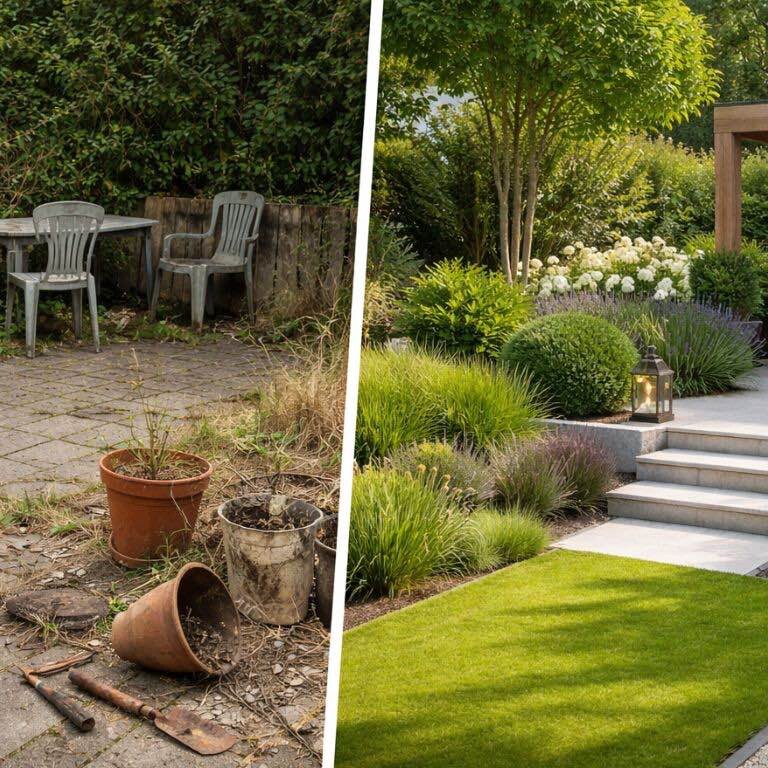
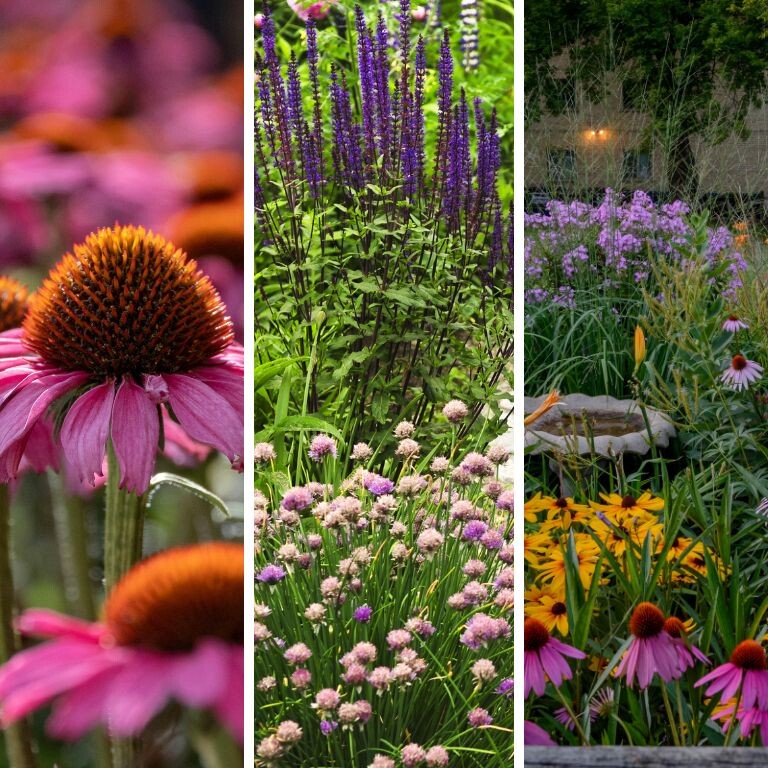

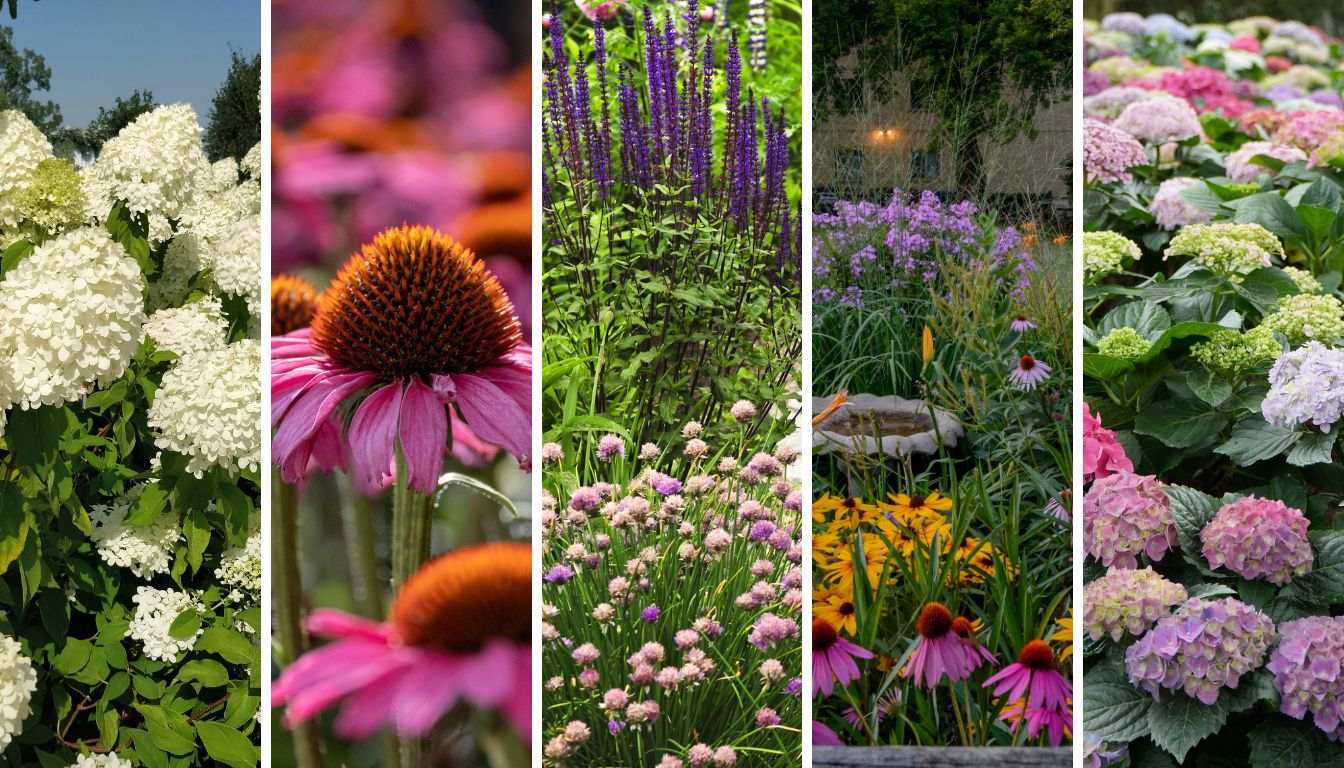
How to Prune Hydrangeas and Perennials: A Complete Guide to a Beautiful Garden
Dominika
Proper pruning is one of the most important steps in garden care. It helps plants maintain a healthy shape, promotes flowering, and extends the life of your flower beds. If you know when and how to prune hydrangeas and perennials, your garden will reward you with abundant blooms and lush growth.
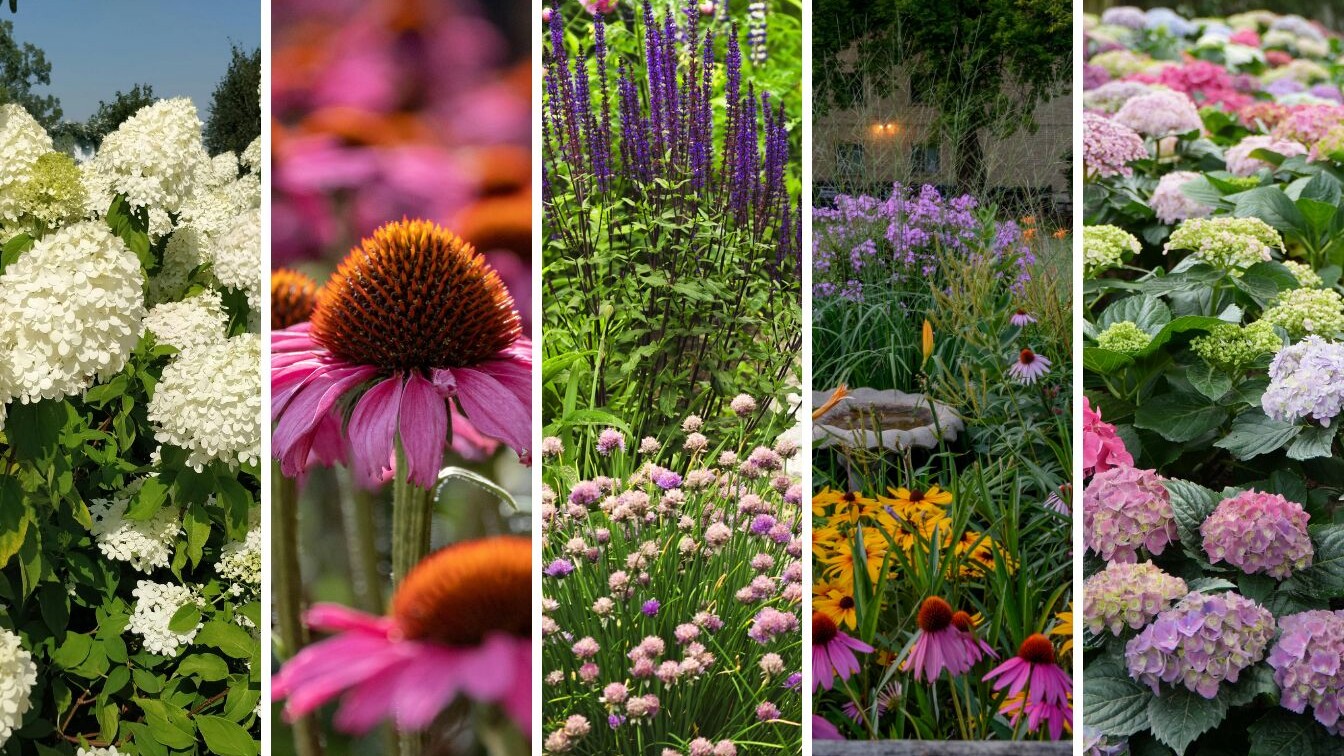
How to prune hydrangeas and perennials? In this article, we’ll look at practical tips for pruning hydrangeas and popular perennials such as echinacea, rudbeckia, catmint, verbena, and sage.
How to Prune Hydrangeas for Abundant Blooms
Hydrangeas are among the most popular ornamental shrubs. However, the proper way to prune them depends on the variety, as some bloom on old wood and others on new growth. Incorrect pruning can prevent the plant from blooming at all that year.
When to prune hydrangeas
Hydrangeas are most commonly pruned in late winter or early spring (February–March), before new growth begins.
This timing is particularly suitable for most hydrangea varieties grown in gardens.
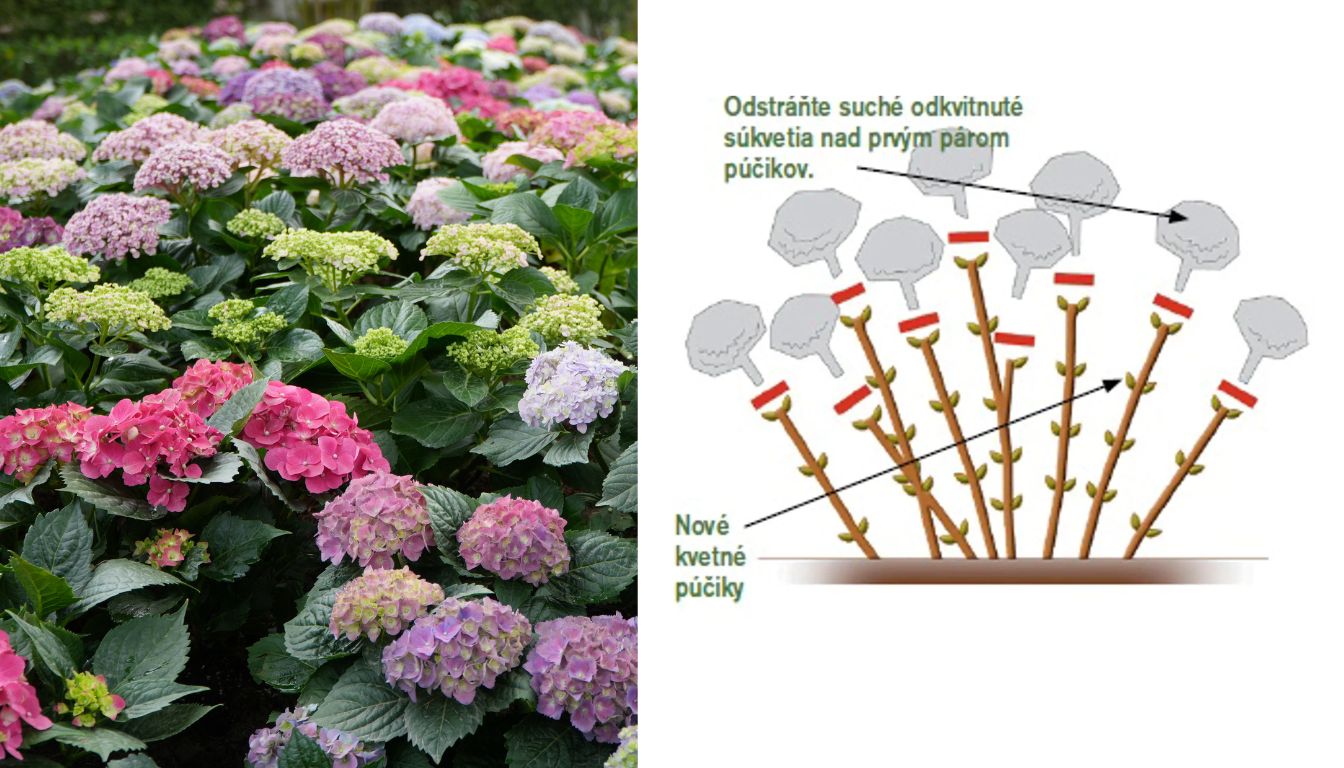
Pruning Hydrangea macrophylla
This type of hydrangea blooms on last year’s wood, so it only needs a light pruning.
Procedure:
- in the spring, remove dry flower heads above the first pair of buds
- remove damaged or weak shoots
- you can cut old branches back to the ground to encourage new growth
- If you prune this variety too deeply, the plant may not bloom that year.
Pruning Panicle and Tree Hydrangeas
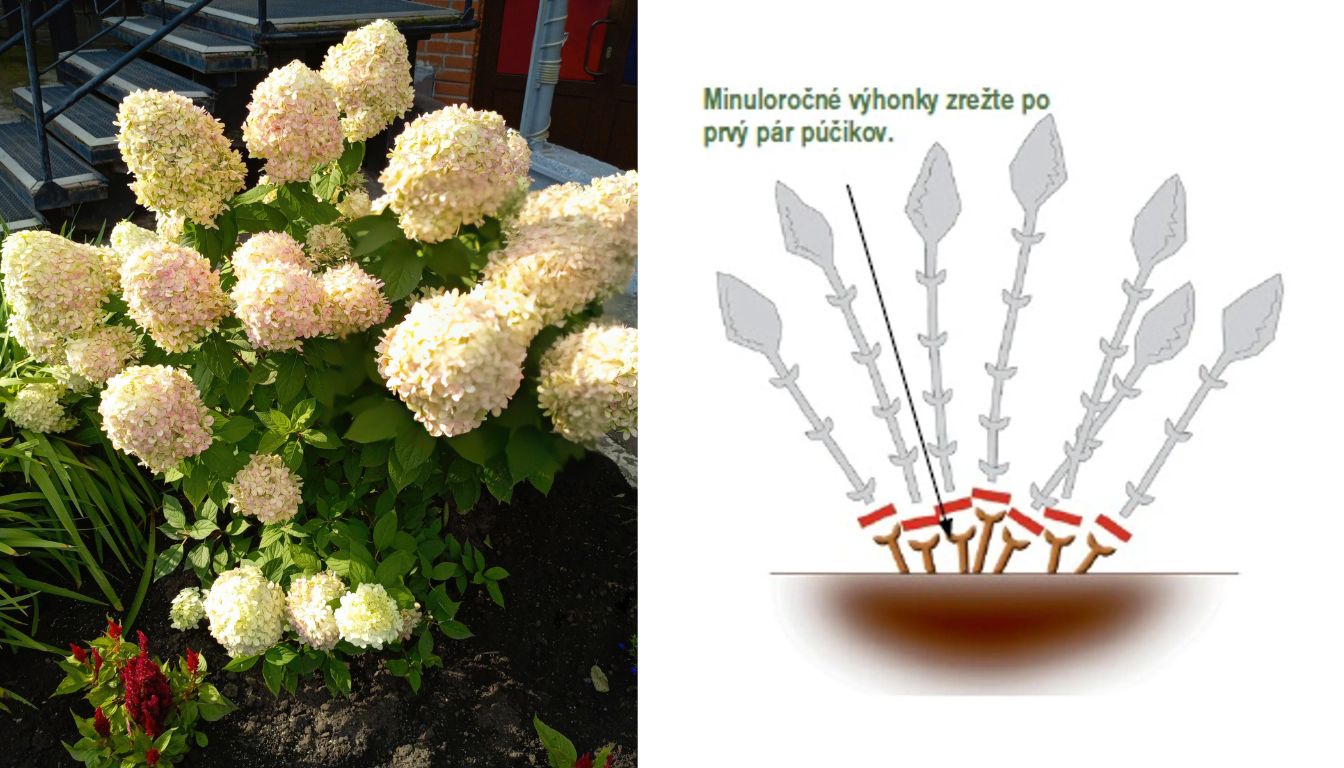
These types of hydrangeas bloom on new growth, so they can tolerate more severe pruning.
How to proceed:
- In the spring, shorten the shoots to 1–2 pairs of buds
- Remove old and damaged branches
- A deeper pruning will encourage larger flowers and strong shoots
- Some gardeners shorten the plant to just 20–60 cm above the ground to help it develop a strong framework.
How to Prune Perennials in a Flower Bed
Perennials are the foundation of a modern natural garden. Proper pruning encourages blooming and helps keep the flower bed neat.
Many perennials are left unpruned over winter because their dry stems provide shelter for insects and food for birds. They are pruned in the spring.
Pruning Echinacea (Echinacea)
Echinacea is an undemanding perennial that blooms all summer and attracts pollinators.
When to prune it
- most often in the spring before new growth begins
- alternatively, you can remove spent flowers during the season
How to prune it
- remove dry stems just above the ground
- during the summer, you can cut off spent flowers to encourage the plant to produce new ones
Pruning Rudbeckia (Rudbeckia)
Rudbeckia is a perennial that should be left in the garden bed even during winter.
Pruning instructions
- Remove dry stems in the spring about 5–10 cm above the ground
- You can remove spent flowers throughout the season
- This type of pruning encourages new shoots and denser growth.
Pruning catmint (Nepeta)
Nepeta is a very rewarding perennial that can bloom repeatedly.
How to prune it
- After the first bloom, cut it back about 5–10 cm above the ground
- This will encourage a second bloom
- Some types of perennials, including catmint and sage, can bloom again after this type of pruning.
Pruning Verbena (Verbena bonariensis)
Verbena is popular in natural and modern gardens.
Procedure
- Leave the dry stems in the bed over winter
- In the spring, cut them back just above the ground
- The plant often self-seeds, so new plants will appear in the bed.
Pruning Salvia (Salvia nemorosa)
Salvia is a perennial that responds very well to pruning.
How to prune it
- After the first bloom, cut the stems back by about half
- This will encourage repeat blooming
- In the spring, remove old, dry shoots
Practical tips for pruning plants
To ensure successful pruning, follow a few simple rules:
- Use sharp garden shears
- Cut above a healthy bud
- Always remove dry and damaged parts
- Never prune plants during severe frosts
Summary: When to prune plants in the garden
| Plant | When to prune |
|---|---|
| Rustic hydrangea spring | light pruning only |
| Panicle hydrangea spring | heavier pruning |
| Echinacea | spring |
| Rudbeckia | spring |
| Catmint | after the first bloom |
| Verbena | spring |
| Sage | after blooming + spring |
Final tip:
If you want your flower bed to look beautiful all year round, combine plants with different blooming seasons. Regular pruning and proper care will ensure that your garden blooms from spring through fall. If you’re unsure about pruning or want to design a new perennial bed, don’t hesitate to contact us.