How to Prune Hydrangeas and Perennials: A Complete Guide to a Beautiful Garden
Month: March 2026
Proper pruning is one of the most important steps in garden care. It helps plants maintain a healthy shape, promotes flowering, and extends the life of your flower beds. If you know when and how to prune hydrangeas and perennials, your garden will reward you with abundant blooms and lush growth.
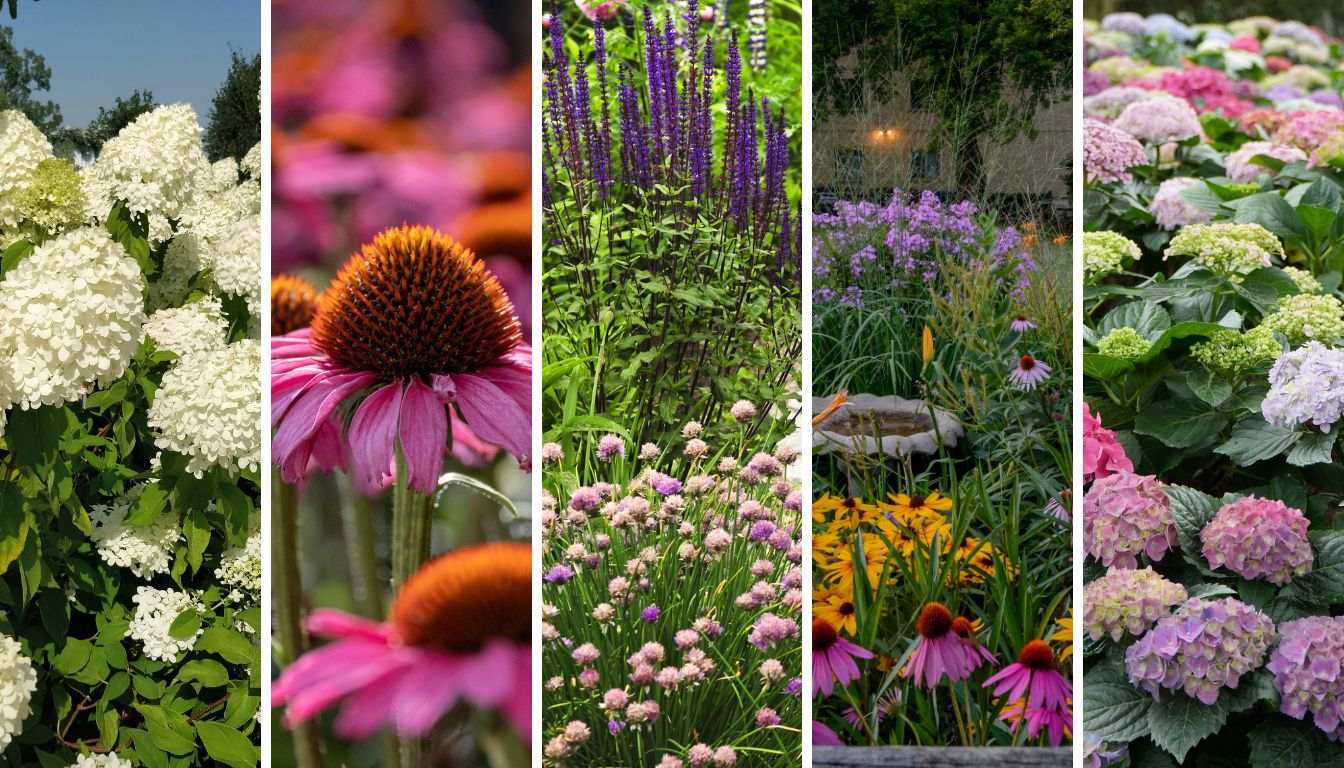
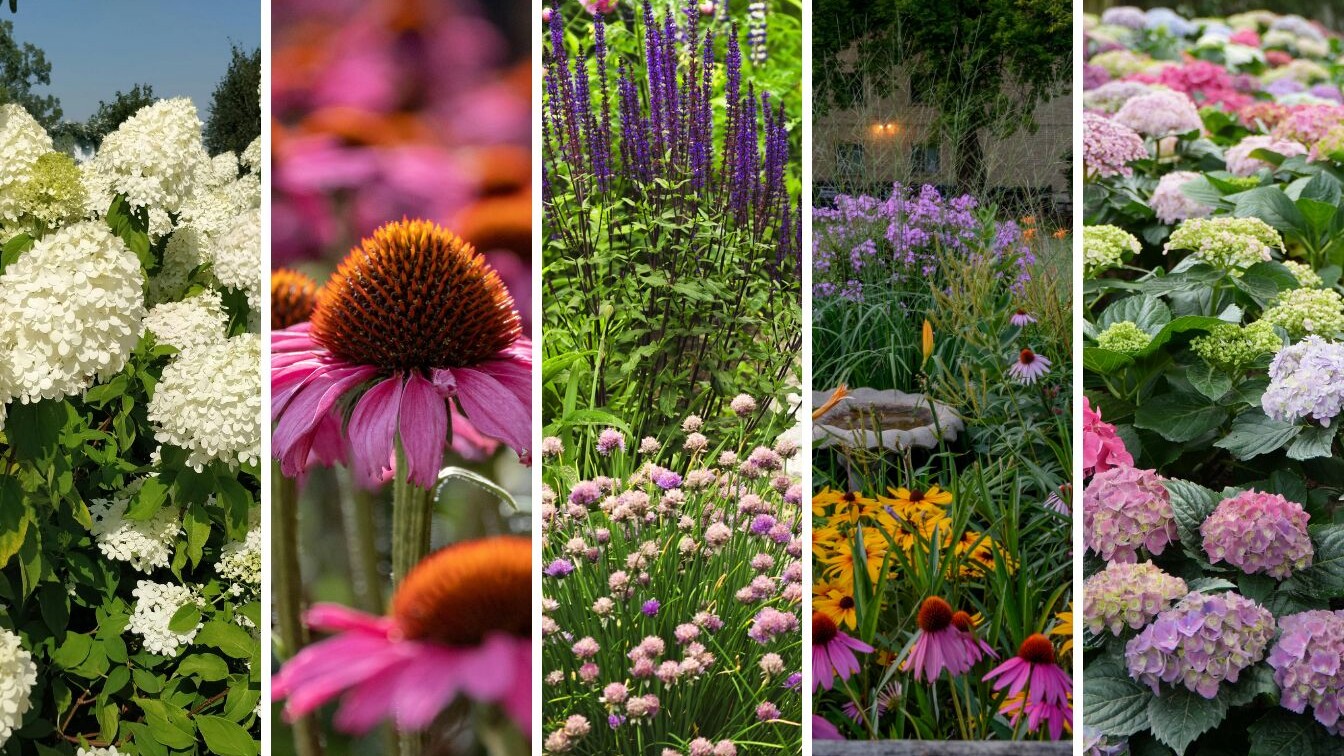
How to prune hydrangeas and perennials? In this article, we’ll look at practical tips for pruning hydrangeas and popular perennials such as echinacea, rudbeckia, catmint, verbena, and sage.
How to Prune Hydrangeas for Abundant Blooms
Hydrangeas are among the most popular ornamental shrubs. However, the proper way to prune them depends on the variety, as some bloom on old wood and others on new growth. Incorrect pruning can prevent the plant from blooming at all that year.
When to prune hydrangeas
Hydrangeas are most commonly pruned in late winter or early spring (February–March), before new growth begins.
This timing is particularly suitable for most hydrangea varieties grown in gardens.
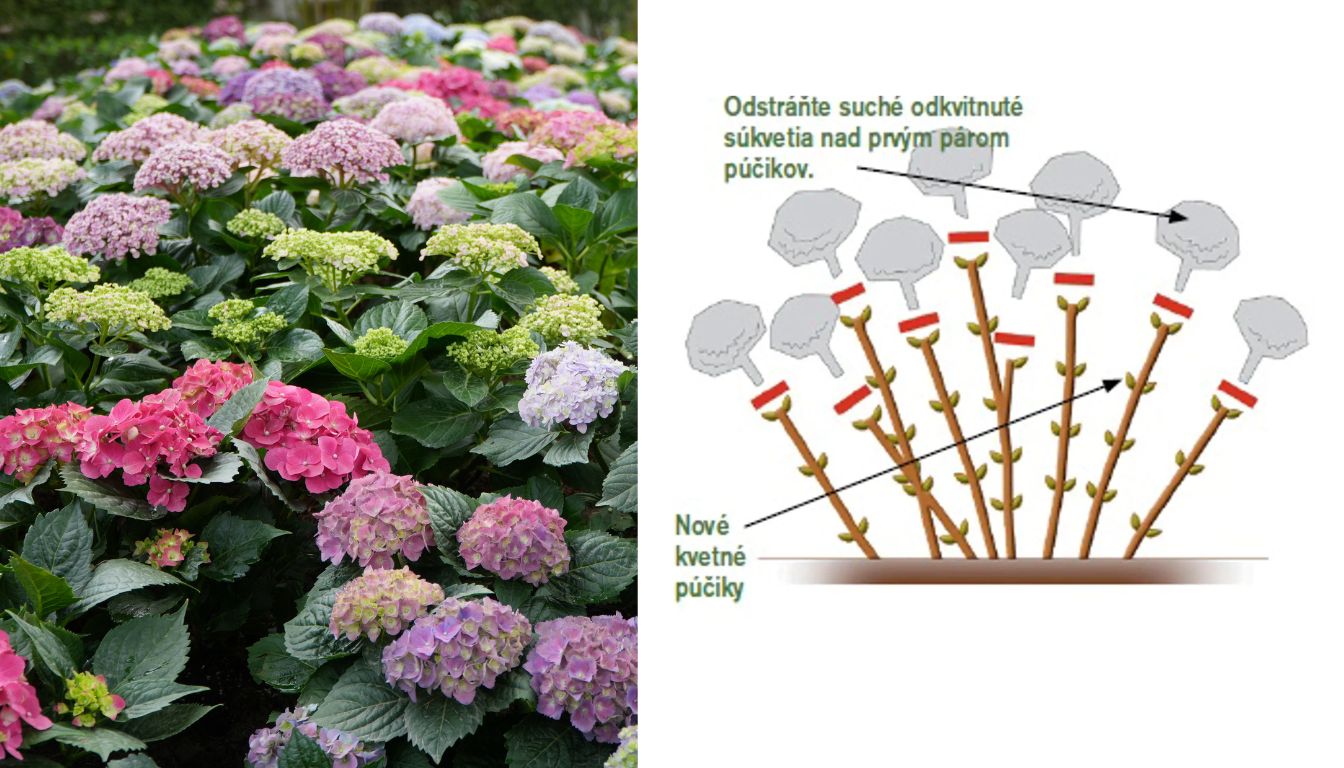
Pruning Hydrangea macrophylla
This type of hydrangea blooms on last year’s wood, so it only needs a light pruning.
Procedure:
- in the spring, remove dry flower heads above the first pair of buds
- remove damaged or weak shoots
- you can cut old branches back to the ground to encourage new growth
- If you prune this variety too deeply, the plant may not bloom that year.
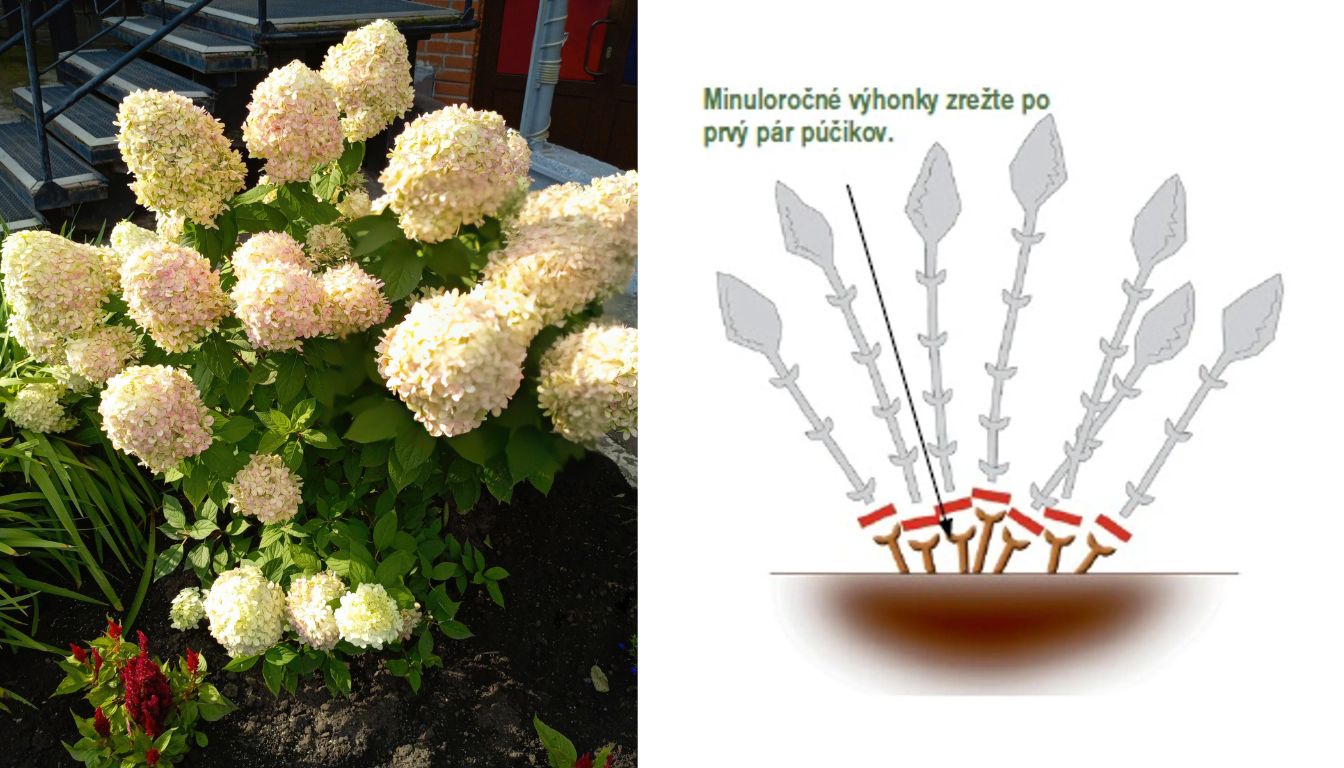
Pruning Panicle and Tree Hydrangeas
These types of hydrangeas bloom on new growth, so they can tolerate more severe pruning.
How to proceed:
- In the spring, shorten the shoots to 1–2 pairs of buds
- Remove old and damaged branches
- A deeper pruning will encourage larger flowers and strong shoots
- Some gardeners shorten the plant to just 20–60 cm above the ground to help it develop a strong framework.
How to Prune Perennials in a Flower Bed
Perennials are the foundation of a modern natural garden. Proper pruning encourages blooming and helps keep the flower bed neat.
Many perennials are left unpruned over winter because their dry stems provide shelter for insects and food for birds. They are pruned in the spring.
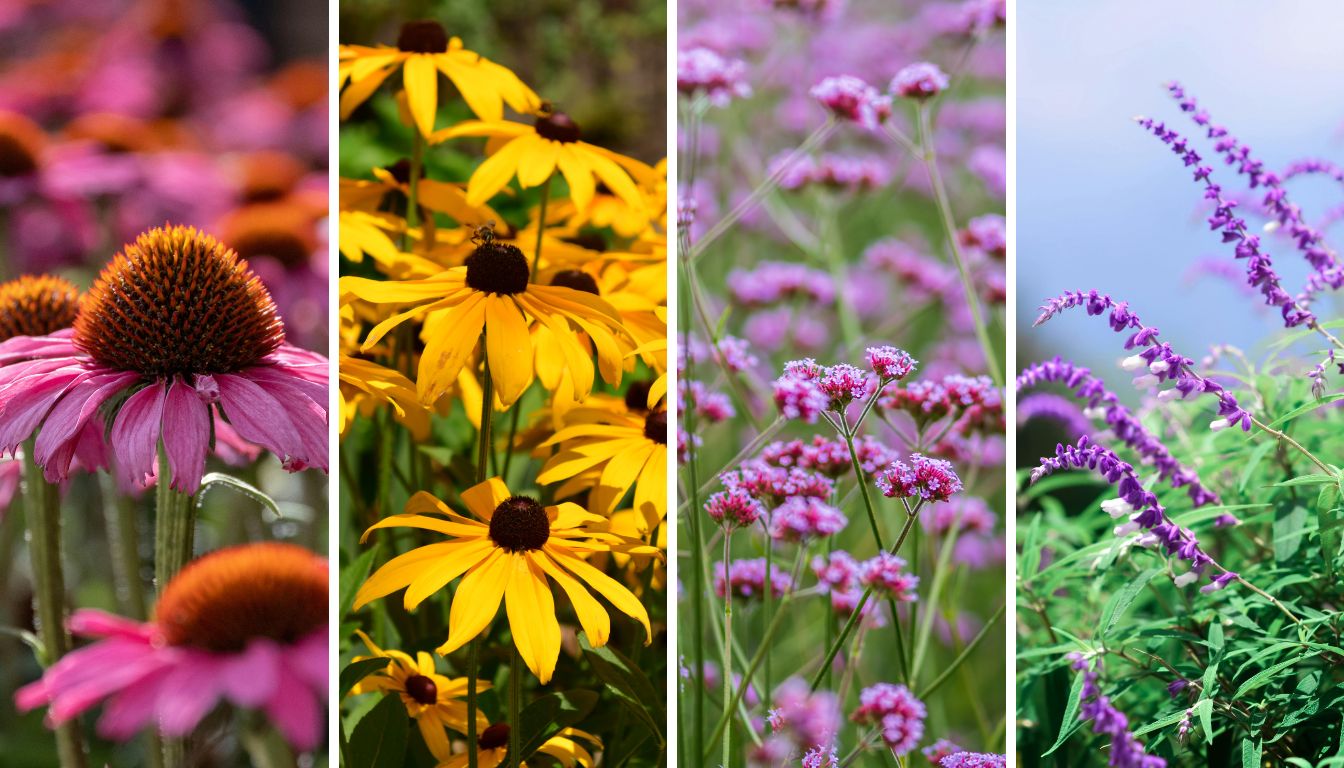
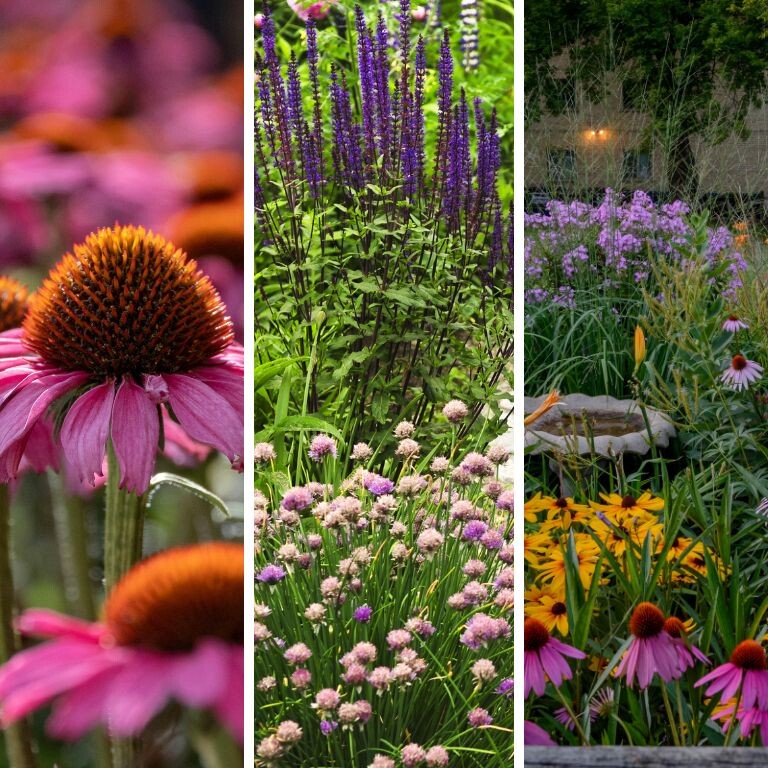
Pruning Echinacea (Echinacea)
Echinacea is an undemanding perennial that blooms all summer and attracts pollinators.
When to prune it
- most often in the spring before new growth begins
- alternatively, you can remove spent flowers during the season
How to prune it
- remove dry stems just above the ground
- during the summer, you can cut off spent flowers to encourage the plant to produce new ones
Pruning Rudbeckia (Rudbeckia)
Rudbeckia is a perennial that should be left in the garden bed even during winter.
Pruning instructions
- Remove dry stems in the spring about 5–10 cm above the ground
- You can remove spent flowers throughout the season
- This type of pruning encourages new shoots and denser growth.
Pruning catmint (Nepeta)
Nepeta is a very rewarding perennial that can bloom repeatedly.
How to prune it
- After the first bloom, cut it back about 5–10 cm above the ground
- This will encourage a second bloom
- Some types of perennials, including catmint and sage, can bloom again after this type of pruning.
Pruning Verbena (Verbena bonariensis)
Verbena is popular in natural and modern gardens.
Procedure
- Leave the dry stems in the bed over winter
- In the spring, cut them back just above the ground
- The plant often self-seeds, so new plants will appear in the bed.
Pruning Salvia (Salvia nemorosa)
Salvia is a perennial that responds very well to pruning.
How to prune it
- After the first bloom, cut the stems back by about half
- This will encourage repeat blooming
- In the spring, remove old, dry shoots
Practical tips for pruning plants
To ensure successful pruning, follow a few simple rules:
- Use sharp garden shears
- Cut above a healthy bud
- Always remove dry and damaged parts
- Never prune plants during severe frosts
Summary: When to prune plants in the garden
| Plant | When to prune |
|---|---|
| Rustic hydrangea spring | light pruning only |
| Panicle hydrangea spring | heavier pruning |
| Echinacea | spring |
| Rudbeckia | spring |
| Catmint | after the first bloom |
| Verbena | spring |
| Sage | after blooming + spring |
Final tip:
If you want your flower bed to look beautiful all year round, combine plants with different blooming seasons. Regular pruning and proper care will ensure that your garden blooms from spring through fall. If you’re unsure about pruning or want to design a new perennial bed, don’t hesitate to contact us.
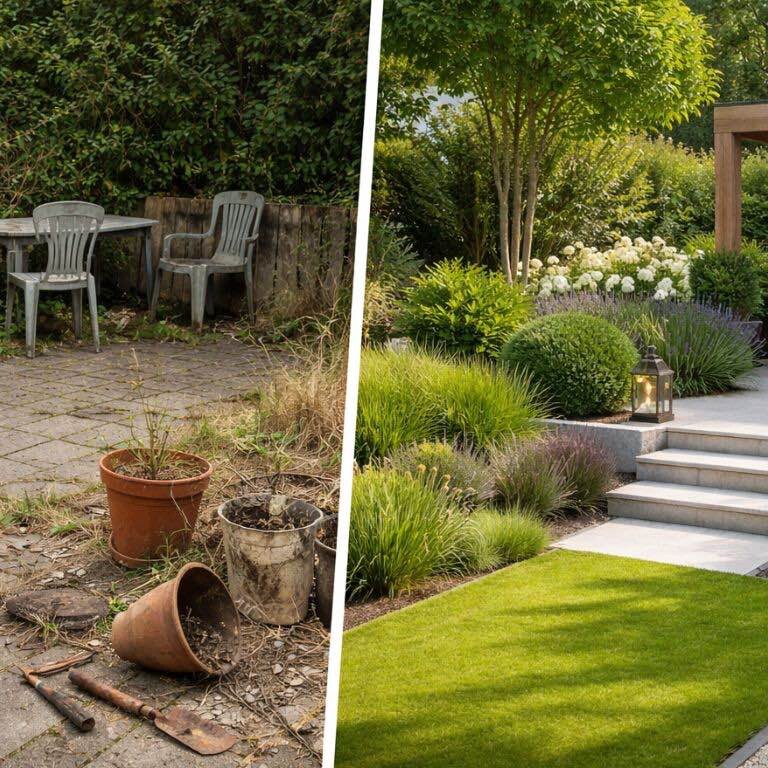


What to do with the lawn in your garden? Are you making this mistake when planning and caring for your garden?
Month: March 2026
For many people, the lawn is the foundation of their outdoor space. It is a green carpet that you can walk on barefoot, where children play soccer, and where you can relax in the summer.
However, the reality is that the lawn is one of the most demanding elements of the garden.
If it is poorly planned, you can expect:
- annual reseeding,
- fighting mold,
- high water consumption,
- and endless mowing.
Let’s take a look at how to properly plan a lawn in your garden—and what to do when it looks miserable after winter.
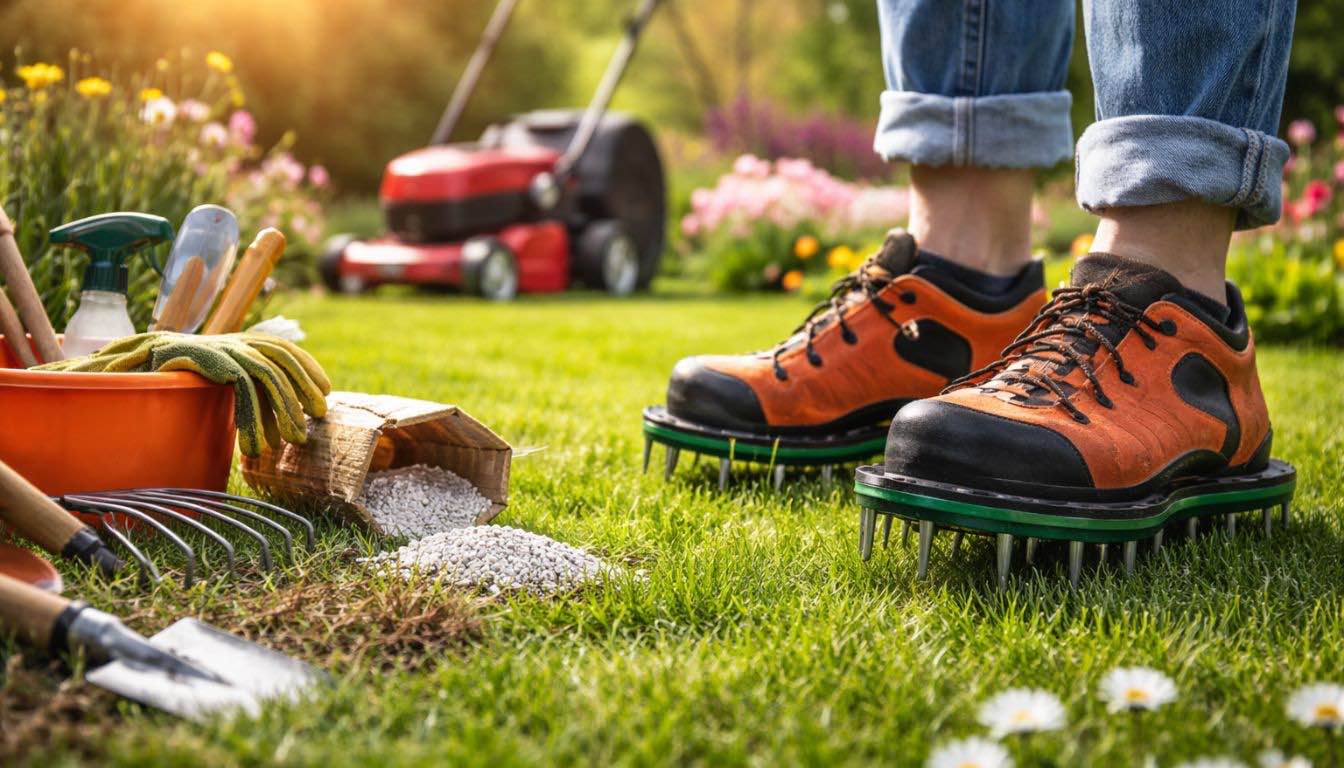
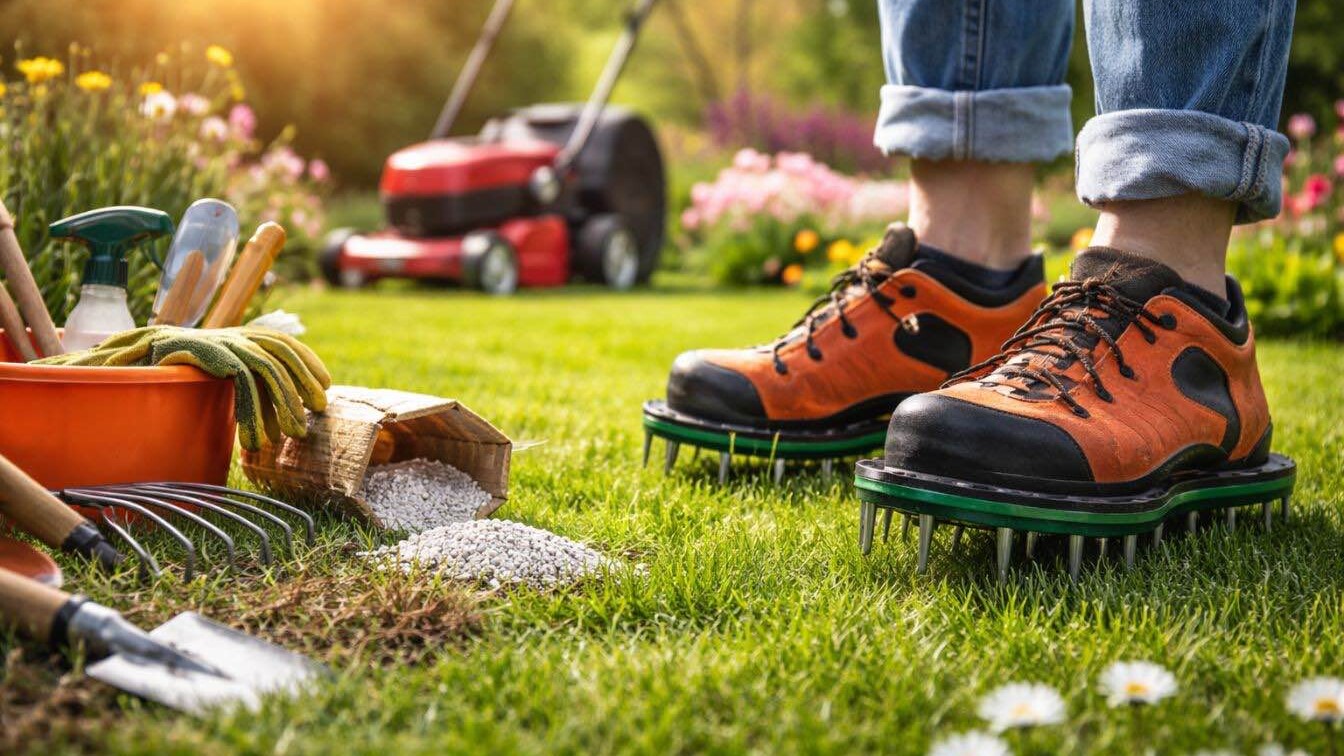
Lawn after winter: what to do in March and early spring
Many people think that lawns hibernate during winter. The opposite is true. Even during winter, they continue to grow and consume nutrients. The end of winter is therefore a critical period.
What to do with your lawn after winter?
- During the thaw (February/March), apply an autumn fertilizer with a higher potassium content.
- Strengthen resistance to snow mold.
- Limit movement on soggy soil.
- Check for compacted areas.
Fertilizing in February/March can ensure that your lawn will be greener 2-3 weeks earlier than the surrounding area.
If you neglect this, spring will be spent on repairs instead of growth.
Is a lawn suitable for every garden?
No.
A beautiful lawn requires:
- regular mowing (often 1-2 times a week),
- fertilization,
- plenty of sun,
- good quality soil,
- regular watering.
If you don’t have the time or conditions, consider a smaller area or an alternative in the form of perennials, ground cover plants, or ornamental grasses.
The right location for your lawn
The right location for your lawn is more important for its quality than the seeds themselves.
Where not to put your lawn
1. North side and permanent shade – Lawn needs sun. In the shade, it thins out and is prone to mold.
2. Enclosed corners without air circulation – Moisture + shade = ideal conditions for mold.
3. Narrow strips between the house and the fence – Mowing is uncomfortable. Perennial plantings are more suitable.
4. Steep slopes – Maintenance becomes difficult and dangerous.
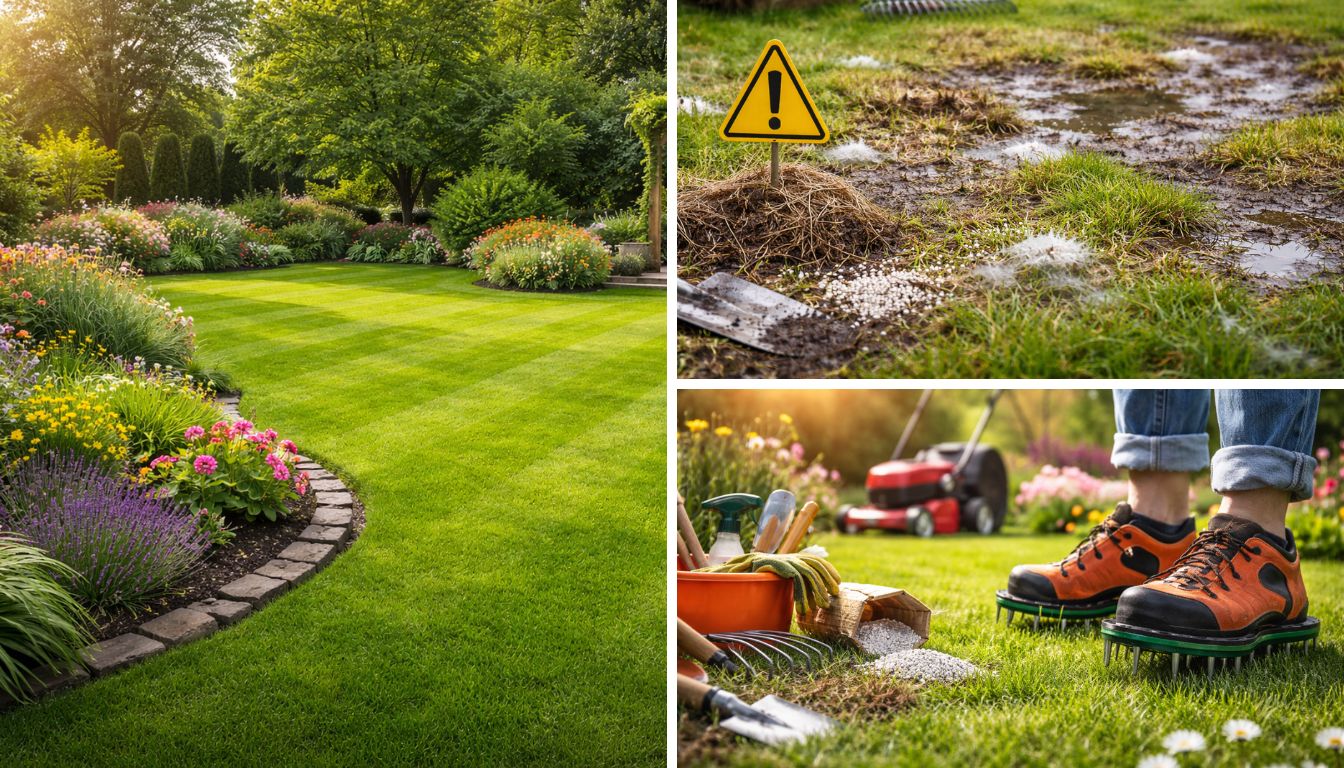
Laying a lawn: what not to forget
Laying a high-quality lawn is an investment for years to come.
Before sowing, it is necessary to:
- till the soil to a depth of at least 20 cm,
- remove weeds,
- prevent compaction with heavy machinery,
- plan irrigation.
Compacted soil means a weak root system and drainage problems.
If you are just planning your garden and don’t know where to start, we recommend starting with the numbers.
Our online garden calculator will help you figure out your budget.
Lawn irrigation: do you have enough water?
Lawn is one of the most water-intensive areas, especially in the first two years.
When planning, ask yourself:
- Do you have a sufficient water supply?
- Does automatic irrigation make sense?
- Are you willing to water with tap water during dry summers?
Without water, even the best-laid lawn will not thrive.
How much lawn is just right?
The size of your lawn should correspond to the amount of time you can devote to it.
- 400 m² = approximately 30 minutes of mowing
- 1,000 m² = an hour or more each week
A smaller, functional area is always better than a large one that you don’t have time to maintain.
How we approach this at Dream Garden
At Dream Garden, we don’t view lawns as filler. We view them as architectural elements.
When designing, we consider:
- Function – what will it be used for?
- Lighting conditions – where will it thrive?
- Size – how much can the client realistically manage?
- Smooth transitions – how will it connect to the terrace, plantings, or paved areas?
- Irrigation and soil quality before implementation.
We often design a combination of:
- an intensively maintained area near the house,
- more relaxed vegetation towards the garden,
- or perennial plantings where a lawn would not work in the long term.
Our goal is not to have the largest lawn. Our goal is to have a functional lawn. One that will be a joy, not an annual repair project.
Summary
If you want to have a beautiful lawn in your garden:
- Plan its location before implementation.
- Consider light, soil, and accessibility.
- Think about water.
- Don’t use it as filler.
- Strengthen it in February/March to prevent spring problems.
A lawn is not a given. It is a conscious decision.