


A fence between neighbors? Under the new rules, it might not be just yours anymore. And what if you don't even need one in your yard?
House and garden
A fence is almost an automatic part of the property when building a new house. But does it have to be there? And does it have to be tall, opaque, and surround the entire garden?
The topic of fences is particularly relevant today due to the upcoming new Civil Code, which introduces changes to neighborly relations and proposes new regulations for shared fences. However, the draft is not yet law.
For us, another question is more interesting: What should a property line look like so that it protects the garden but doesn’t close it off?
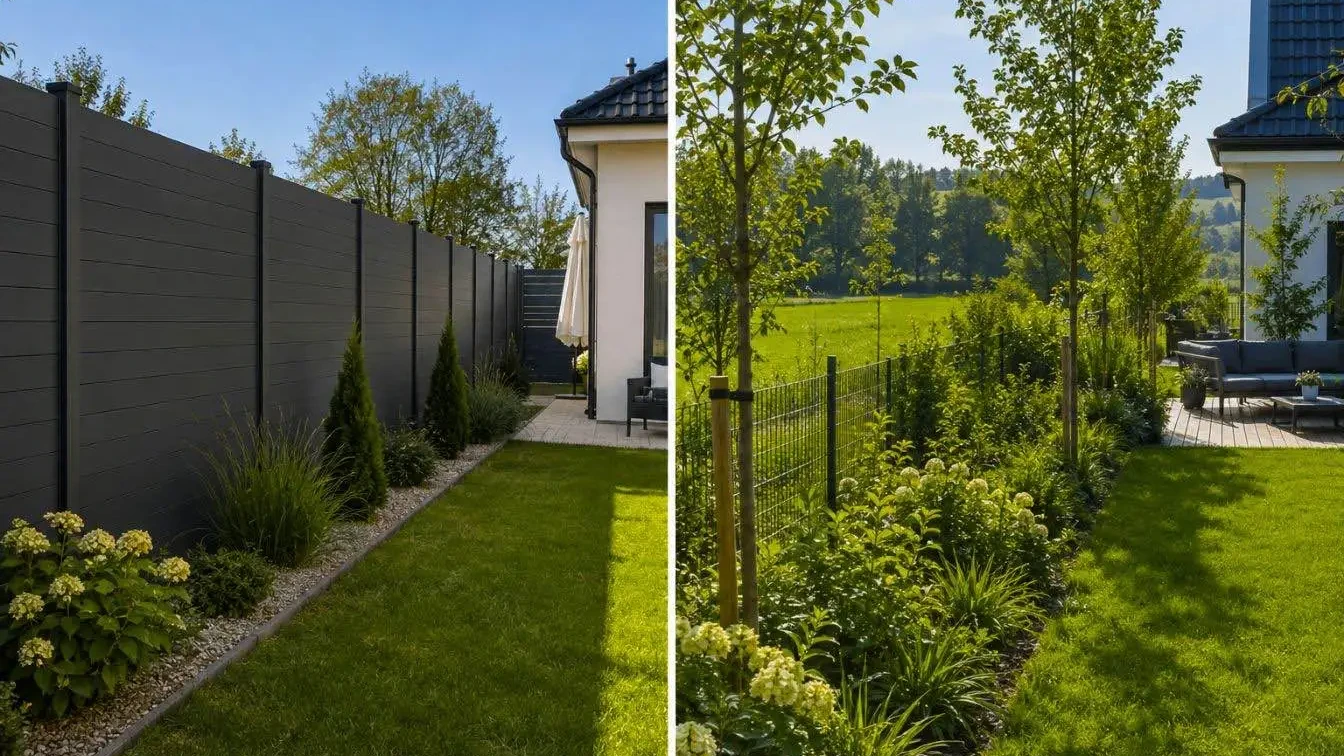
A garden without a fence? Sometimes, yes.
Imagine a plot of land with a view of a meadow, a forest, or the countryside. Now picture a two-meter-high, opaque fence standing between you and that view.
The view disappears.
It is precisely with plots like these that a garden without a prominent fence can work. The boundary can be created, for example, by plantings, trees, a hedge, or a combination of low fencing and greenery.
The result is a space that doesn’t feel like a closed-off plot, but rather continues naturally into the surroundings.
When does a fence between neighbors make sense?
Of course, not every yard can remain open. A fence is important, for example, when you need:
- privacy from neighbors,
- safety for children or a dog,
- separation from a busy road,
- a clear property line,
- protection from prying eyes.
So the question isn’t “fence or no fence?” Rather: “Where do we really need it?”
You don’t have to fence the entire garden the same way
This is often a much more interesting solution when designing a garden. Near the patio, you can create more privacy using a hedge or trees. In the area facing the countryside, you can leave the space more open. And along the street, on the other hand, a clearer boundary may be necessary.
A single garden can thus have several different fencing solutions.
And that’s precisely why a fence isn’t a standalone element. It’s part of the overall garden design.
What about the new Civil Code?
The draft of the new Civil Code also includes provisions regarding shared fences between neighboring properties. Under the proposed provisions, a shared fence would belong to both neighbors, and both would be responsible for maintaining it.
However, it is important to note that the new Civil Code is not yet in effect. After being approved by the government in May 2026, the draft moved to its second reading in June, and its wording may still change.
Therefore, when dealing with a specific fence, one must always base decisions on the currently applicable rules and the specific circumstances of the property.
A fence or greenery?
In our view, the answer doesn’t always have to be one or the other. A fence combined with greenery often works better than a fence alone.
A fence creates a boundary. Greenery softens it.
The result can be a private garden that still feels natural and airy.
That’s why, when designing a garden, we don’t start with the question:
“What kind of fence should we put up?”
But first:
“What do we want this boundary to do?”
Is it meant to protect our privacy?
Preserve the view?
Separate the garden from the street?
Or simply mark the property line discreetly?
Once we know the answer, we can look for the right solution.
A garden without a fence isn’t for everyone
And that’s exactly the point. Some properties need a fence. Others would look better without one.
The important thing is that a fence shouldn’t be built just because “that’s what people do.” Because a well-designed garden isn’t about how many elements you add to it.
It’s about how they work together.
Často kladené otázky
Not always. It depends on the specific situation, the purpose of the land, and the current building and legal regulations.
Yes. A hedge, trees, shrubs, the natural terrain, or a combination of fencing and greenery can help.
Neither one is universally better. Often, a combination of the two works best.
No. As of August 2026, it is still a legislative proposal.



Why do you spend the whole summer sitting on the patio when you have a garden?
House and garden
Take a walk through any new suburban neighborhood and you’ll notice one thing.
Today’s suburban gardens all look suspiciously alike.
A lawn. A patio. A concrete pathway. A fence. A few plants around the house.
And that’s often where the story ends.
At first glance, they look neat and well maintained. But if you take a closer look, you’ll realize they aren’t really lived in. Most of everyday life happens on the patio, while the rest of the garden is simply a patch of grass that needs mowing every weekend.
A garden shouldn’t be a green carpet that you mow once a week. It should be a space you enjoy every single day.
Or, to put it another way:
The most expensive lawn is the one you never walk across barefoot.
This is where most suburban gardens make the same mistake.
People often believe the problem is that their plot is too small.
In reality, they usually have:
- around 250 m² (2,700 sq ft) of lawn,
- a 30 m² (320 sq ft) patio,
- and only one place where they actually spend their time.
That’s the real problem. Not the size of the garden. But its design.
The problem with most suburban gardens isn’t their size
Smaller plots have become the norm in modern residential developments. But that doesn’t mean a suburban garden has to feel cramped or uninspiring.
The biggest mistake isn’t the lack of space.
The biggest mistake is that the garden has only one purpose.
You sit on the patio.
You look at the lawn.
And that’s where your experience of the garden ends.
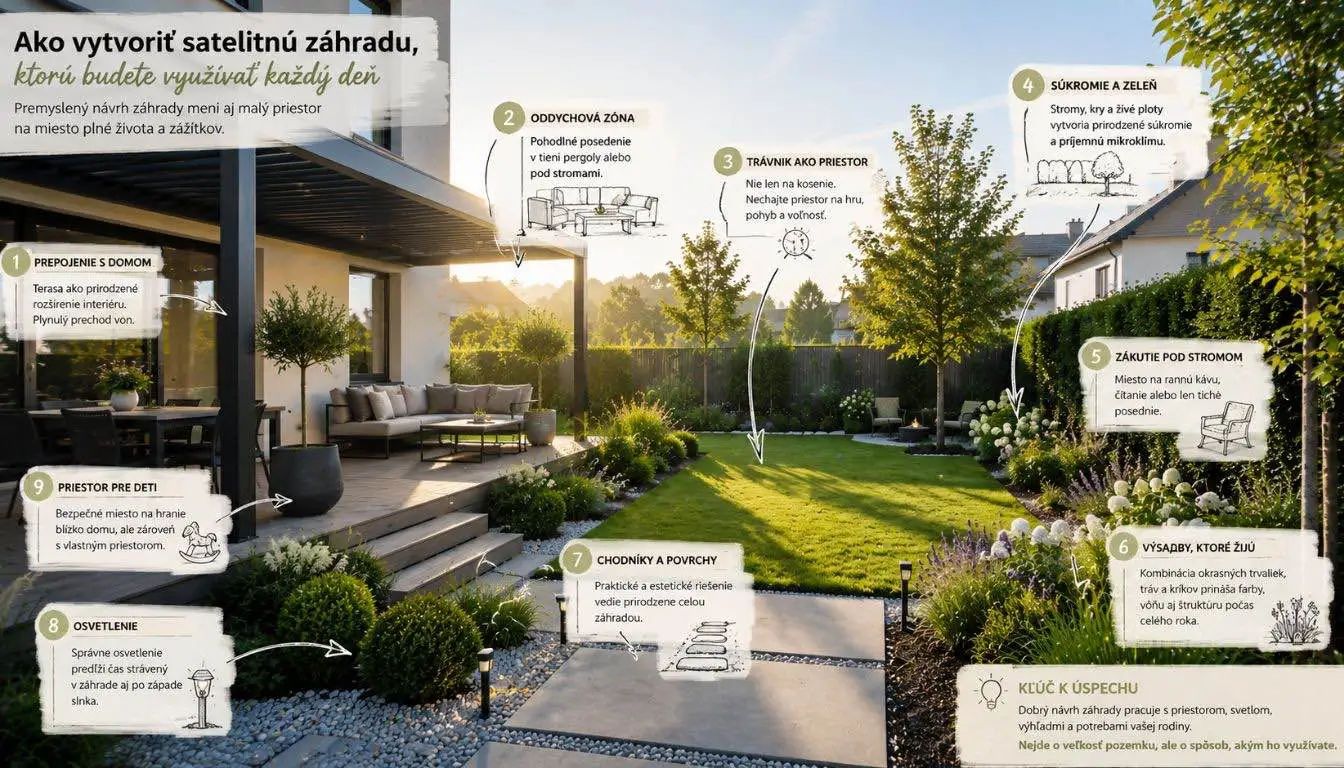
A well-designed garden should naturally invite you to explore. Every path, every corner, every feature should have a purpose.
That’s why a thoughtful garden design is far more important than simply laying turf or planting shrubs.
What makes a small garden feel bigger?
The size of your property isn’t what matters most.
What matters is how many experiences your garden offers.
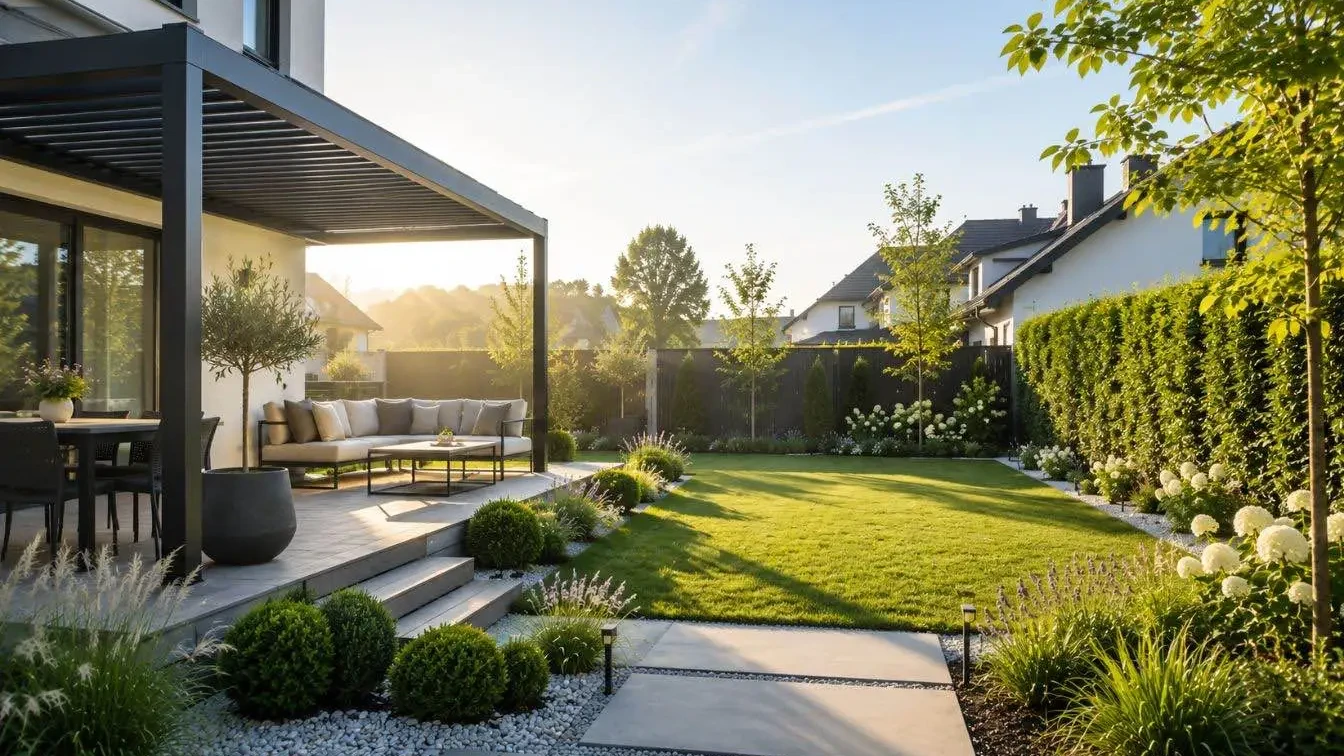
Even a compact suburban garden can include several distinct spaces:
- a spot for your morning coffee,
- shade beneath a tree on hot summer afternoons,
- a cozy area for evening gatherings,
- a quiet reading corner,
- a play space for children,
- raised planting beds,
- ornamental planting that creates privacy.
When designed well, the garden no longer feels like one large open space. Instead, it becomes a place you want to explore and enjoy.
Why do so many garden projects start in the wrong place?
Many homeowners build their gardens step by step.
First comes the lawn.
Then the patio.
A pergola the following year.
A few trees later on.
Finally, outdoor lighting.
The result often looks finished, but it doesn’t function as one harmonious space.
Professional garden landscaping doesn’t begin with laying turf.
It begins with understanding how you want to live in your garden.
That’s why garden design is the foundation of every successful landscaping project.
What does a garden that people actually use look like?
A garden designed for everyday living doesn’t have to be large or expensive.
It simply needs to be thoughtfully planned.
A well-designed garden naturally gives you more reasons to step outside.
Your morning coffee happens in one place.
Your evening glass of wine in another.
Children have their own space to play.
As the sun sets, the garden invites you to stay outside just a little longer.
That’s the difference between a garden that simply looks beautiful and one that’s truly lived in.
Why is garden design more important than landscaping?
Many people believe that construction and installation are the most important parts of creating a garden.
In reality, it’s the garden design that determines whether you’ll still love and use your outdoor space five or ten years from now.
During the design process, every important detail is considered:
- functional garden zones,
- circulation and movement,
- views from the house,
- privacy,
- shade,
- outdoor lighting,
- planting design,
- the connection between the house and the garden.
Once these elements are carefully planned, the landscaping simply brings the vision to life.
A turnkey garden is about more than plants
When people hear the phrase turnkey garden, they often imagine a finished lawn, newly planted trees and an automatic irrigation system.
All of these are important.
But a truly great turnkey garden offers something much more valuable.
A place where you genuinely want to spend your time.
A place that works beautifully in the morning, throughout the afternoon and long into the evening.
A place that becomes a natural extension of your home.
If you feel like your garden ends at the patio, the problem probably isn’t the size of your plot.
Perhaps it simply never had the opportunity to become a place where life happens.
At Dream Garden, we’ve been designing and building gardens for more than 20 years. Every project begins with one goal: creating outdoor spaces that are not only beautiful to look at, but become a natural part of everyday life.
Because the best garden isn’t the one that looks the most impressive.
It’s the one you’ll want to use every single day.
Frequently asked questions about the design and implementation of a satellite garden
The most important thing is not to view the garden as a single large area. Even a smaller plot can feel spacious if it’s divided into several functional zones. A well-designed garden creates a place to relax, a space for children, a cozy corner for morning coffee or evening gatherings, and ensures that you’ll make use of the entire garden, not just the patio.
A turnkey garden is a comprehensive service that includes garden design, planning, selection of suitable materials, planting, and the installation of walkways, patios, irrigation systems, lighting, and other features. The result is a harmonious outdoor space ready for everyday use, without the need to coordinate multiple contractors.
A small garden doesn’t have to feel cramped. Dividing the space into several zones, planting trees and taller plants, creating visual axes, working with varying ground levels, and using well-placed lighting can all help. A well-designed satellite garden often appears larger than it actually is.
The simple answer is that you want to naturally want to spend time there. If you spend most of your time just on the patio and the rest of the property is only used for mowing, your garden is probably not living up to its potential. A well-designed garden naturally encourages you to make use of the entire space throughout the year.
Similar posts
Why is it beneficial to have a single partner for the entire project? The advantages of a general contractor
House and garden
Building a house is one of the biggest investments in life. Despite this, many investors handle the individual parts of the project separately—an architect prepares the house design, a construction company handles the build, another contractor supplies the pool, and the garden design isn’t addressed until after construction is complete.
This often results in unnecessary complications, overpriced modifications, and an exterior that does not come across as a single, harmonious whole.
That is precisely why more and more investors are seeking out a general contractor who can oversee the entire process, from the house design to the turnkey completion of the garden.
Who is the general contractor for the construction project?
The general contractor is the partner who coordinates the entire project from start to finish, through to the handover of the completed work.
Instead of communicating with multiple contractors, you have a single point of contact who handles:
- house design,
- house construction,
- coordination of trades,
- garden design,
- turnkey garden construction,
- swimming pool,
- patio,
- lighting,
- irrigation,
- planting, and ongoing garden maintenance.
You communicate with a single team. We coordinate everything else.
Why do problems arise when the house and garden are planned separately?
A major mistake is when the construction of the house is completed and only then does work on the exterior begin.
In practice, we often encounter problems such as:
- inappropriate terrace elevation,
- complicated pool connections,
- insufficient space for planting,
- unresolved site drainage,
- additional demolition work,
- higher construction costs.
Many of these problems could be eliminated as early as the design phase.
The design of the house and the garden should be developed together
The house and the garden are not two separate projects.
They form a single whole.
A well-designed exterior complements the architecture of the house, respects the views from the interior, and naturally connects the living space with its surroundings.
That is why the garden design should be developed during the initial planning stages of the house. Read more about when to start planning the garden for a new build.
This allows you to properly plan:
- the location of the patio,
- the pool,
- walkways,
- lighting,
- utility lines,
- the irrigation system,
- and the planting of trees and plants.
Having your home and garden built under one roof saves both time and money
One of the biggest advantages of working with a general contractor is the coordination of all trades.
The investor doesn’t have to worry about:
- the schedules of individual contractors,
- communication between trades,
- technical details of the project,
- complaints and liability.
Everything is handled by a single partner.
This results in:
- less stress,
- greater control over the budget,
- a smoother construction process,
- and faster project completion.
Turnkey garden design is not just about plants
Many people think of planting trees and a lawn when they hear the term “garden design.”
However, a modern outdoor space involves much more.
The project may include:
- a patio,
- a pool,
- a pergola,
- garden lighting,
- an automatic irrigation system,
- retaining walls,
- sidewalks,
- tree planting,
- perennial beds,
- and a lawn.
That is why it is important for all elements to be designed according to a single vision.
Frequently Asked Questions
When should you start planning your garden?
Ideally, during the house design phase. This allows the entire property to be designed as a single functional unit.
Is it worth hiring a general contractor for the project?
Yes. Especially for projects where the house, pool, patio, and garden are being built simultaneously. A single partner ensures coordination and takes responsibility for the entire project.
What does a turnkey garden project include?
Everything from landscaping to irrigation, lighting, and planting, right through to the final finishing touches on the exterior. You can read more on our website in the Services section.
Do you also provide garden maintenance?
Yes. Our services also include professional garden maintenance to ensure your outdoor space looks perfect even years down the line. You can find more information about our services on our website.
One partner. The entire project.
From the house through garden design, construction, and maintenance to the pool, patio, and lighting.
We design and build exteriors as a single, well-thought-out whole, in which the house, garden, and every detail work together naturally.
You communicate with one team. We coordinate everything else.
