



What to do with the lawn in your garden? Are you making this mistake when planning and caring for your garden?

Dominika
For many people, the lawn is the foundation of their outdoor space. It is a green carpet that you can walk on barefoot, where children play soccer, and where you can relax in the summer.
However, the reality is that the lawn is one of the most demanding elements of the garden.
If it is poorly planned, you can expect:
- annual reseeding,
- fighting mold,
- high water consumption,
- and endless mowing.
Let’s take a look at how to properly plan a lawn in your garden—and what to do when it looks miserable after winter.
Lawn after winter: what to do in March and early spring
Many people think that lawns hibernate during winter. The opposite is true. Even during winter, they continue to grow and consume nutrients. The end of winter is therefore a critical period.
What to do with your lawn after winter?
- During the thaw (February/March), apply an autumn fertilizer with a higher potassium content.
- Strengthen resistance to snow mold.
- Limit movement on soggy soil.
- Check for compacted areas.
Fertilizing in February/March can ensure that your lawn will be greener 2-3 weeks earlier than the surrounding area.
If you neglect this, spring will be spent on repairs instead of growth.
Is a lawn suitable for every garden?
No.
A beautiful lawn requires:
- regular mowing (often 1-2 times a week),
- fertilization,
- plenty of sun,
- good quality soil,
- regular watering.
If you don’t have the time or conditions, consider a smaller area or an alternative in the form of perennials, ground cover plants, or ornamental grasses.
The right location for your lawn
The right location for your lawn is more important for its quality than the seeds themselves.
Where not to put your lawn
1. North side and permanent shade – Lawn needs sun. In the shade, it thins out and is prone to mold.
2. Enclosed corners without air circulation – Moisture + shade = ideal conditions for mold.
3. Narrow strips between the house and the fence – Mowing is uncomfortable. Perennial plantings are more suitable.
4. Steep slopes – Maintenance becomes difficult and dangerous.
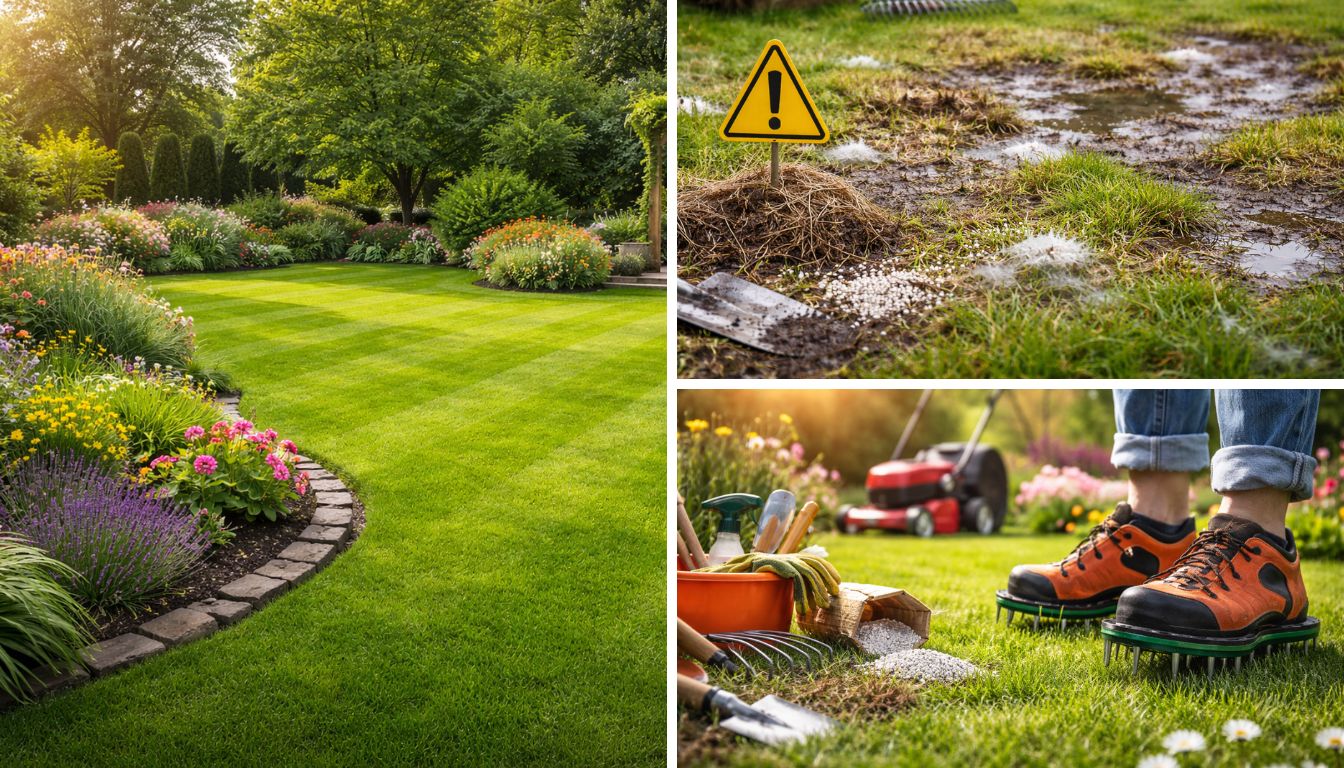
Laying a lawn: what not to forget
Laying a high-quality lawn is an investment for years to come.
Before sowing, it is necessary to:
- till the soil to a depth of at least 20 cm,
- remove weeds,
- prevent compaction with heavy machinery,
- plan irrigation.
Compacted soil means a weak root system and drainage problems.
If you are just planning your garden and don’t know where to start, we recommend starting with the numbers.
Our online garden calculator will help you figure out your budget.
Lawn irrigation: do you have enough water?
Lawn is one of the most water-intensive areas, especially in the first two years.
When planning, ask yourself:
- Do you have a sufficient water supply?
- Does automatic irrigation make sense?
- Are you willing to water with tap water during dry summers?
Without water, even the best-laid lawn will not thrive.
How much lawn is just right?
The size of your lawn should correspond to the amount of time you can devote to it.
- 400 m² = approximately 30 minutes of mowing
- 1,000 m² = an hour or more each week
A smaller, functional area is always better than a large one that you don’t have time to maintain.
How we approach this at Dream Garden
At Dream Garden, we don’t view lawns as filler. We view them as architectural elements.
When designing, we consider:
- Function – what will it be used for?
- Lighting conditions – where will it thrive?
- Size – how much can the client realistically manage?
- Smooth transitions – how will it connect to the terrace, plantings, or paved areas?
- Irrigation and soil quality before implementation.
We often design a combination of:
- an intensively maintained area near the house,
- more relaxed vegetation towards the garden,
- or perennial plantings where a lawn would not work in the long term.
Our goal is not to have the largest lawn. Our goal is to have a functional lawn. One that will be a joy, not an annual repair project.
Summary
If you want to have a beautiful lawn in your garden:
- Plan its location before implementation.
- Consider light, soil, and accessibility.
- Think about water.
- Don’t use it as filler.
- Strengthen it in February/March to prevent spring problems.
A lawn is not a given. It is a conscious decision.

How much will your dream garden cost?

Dominika
Do you feel like your garden is still unfinished and every step costs you nerves, time, and money? You are not alone. Most garden owners face the same problems: maintenance takes up a lot of time, there is a lack of shade or privacy, they don’t know how to finish the project, and often don’t know what to plant where.
If you want to have the garden of your dreams that works on its own and doesn’t surprise you financially, you need to start with the most important thing — a clear plan and a realistic budget.
The most common obstacles to creating a garden
- Maintenance takes a lot of time – Every gardener knows the feeling when the garden looks beautiful for just a few weeks and then everything turns into chaos. The right layout of elements and the appropriate choice of materials can significantly reduce the need for constant intervention.
- Lack of shade or privacy – It often happens that a garden looks empty or is too open. The correct placement of trees, hedges, or pergolas allows you to create comfortable and private spaces.
- We don’t know how to finish it – Many people start a project with enthusiasm but don’t finish it because they lack a clear step-by-step plan. Dividing the garden into zones and visualizing individual elements helps to complete the project without chaos.
- I don’t know what to put where – Combinations of flower beds, paths, trees, terraces, and decorations can seem complicated. A precise plan and an indicative budget give you a clear picture of where and how to place everything.
Calculator: the first step to your dream garden
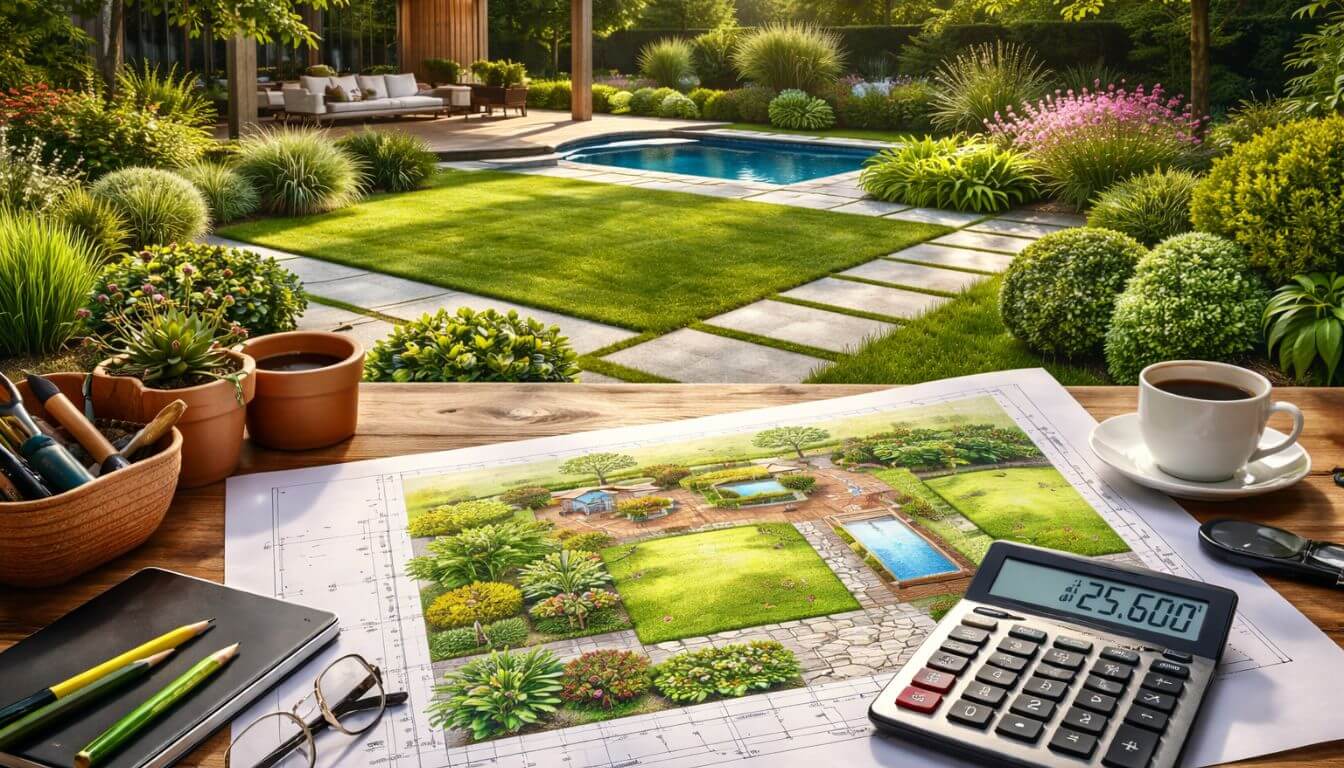
This is where our garden calculator comes in. This practical tool allows you to:
- enter the dimensions of your property,
- select all the elements you want in your garden: flower beds, lawn, paths, terraces, trees, decorations, lighting, or wellness elements,
- get an approximate budget and a visual overview of how the individual elements will fit into the entire space
Thanks to the calculator, you will get a clear idea of how much the garden will cost and how to divide the space so that it is functional, aesthetic, and easy to maintain. You no longer have to guess or postpone decisions.
Practical tips for creating a garden
- Divide the garden into zones – Think about where the relaxation areas, paths, and flower beds will be. Proper division reduces maintenance requirements and increases comfort.
- Choose elements according to their purpose – Trees and pergolas provide shade and privacy, while flower beds and lawns create a visual effect. The calculator will show you how to lay everything out effectively.
- Plan realistically – Don’t be afraid to take time and financial possibilities into account. The calculator will give you an overview of the approximate costs and help you decide what to do now and what to do later.
- Minimize chaos with combinations – The visual layout and calculator recommendations will show you how to combine individual elements into a harmonious whole – your dream garden will look balanced and functional.
Your dream garden without stress
Creating a garden can be easy if you start with the most important things – a clear plan and an approximate budget. Instead of guesswork and stress, use our calculator to help you calculate all the elements, get a visual plan, and be sure that you can complete the project.
Want to get started today?


A garden design is not just an item. It is the basis for the entire implementation.

Dominika
Many homeowners view a garden project as just another item on the budget. Something that must be “had” in order to begin implementation.
Often with the question: “How much will it cost?”
But it is precisely this view that is the reason why many gardens never function as well as they could.
A garden project is not an item. It is the foundation of the entire implementation.
It is a decisive moment that will influence the entire implementation of the garden, its maintenance, functionality, and how you will feel in it in 5 or 10 years.
Why gardens fail even before they are implemented
In practice, we encounter the same scenario:
- the garden is created in parts
- solutions are chosen gradually, according to the current budget
- individual elements do not communicate with each other
- maintenance is difficult and the result looks chaotic
Not because the wrong materials were used. But because there was no high-quality design for the garden as a whole.
Without a clear concept, the implementation of a garden turns into a series of improvisations.
And improvisation is always more expensive than a well-thought-out design when it comes to exteriors.
Garden design vs. garden implementation
(and why they cannot be separated)
A garden design is not a “picture according to which something will be built.” It is a strategic document that addresses:
- the division of the garden into functional zones
- the relationship between the house and the exterior
- the selection of plants with regard to maintenance and microclimate
- technical solutions (irrigation, lighting, paved areas)
- long-term development of the garden
If the design is created without experience in garden implementation, problems arise:
- solutions that are beautiful but unbuildable
- undersized technologies
- unrealistic budgets
Therefore, a turnkey garden only makes sense if the design and implementation are covered by one team.
A turnkey garden is not a shortcut. It is a system.
We often encounter the perception that a turnkey garden is a quick fix. In reality, it is the exact opposite. A turnkey garden means:
- one concept
- one decision
- clear responsibility
- continuity from design to maintenance
Thanks to this:
- there are no unnecessary compromises
- the garden is implemented smoothly
- the budget is transparent
- the garden functions as a whole
Why garden design also determines future costs
Paradoxically, trying to “save money” on garden design often leads to higher costs during implementation. Without a high-quality design:
- solutions change during construction
- finished parts are modified
- work is repeated
- the price and implementation time increase
A good garden design:
- eliminates unnecessary interventions
- allows for phased implementation
- saves costs in the long term
- simplifies garden maintenance
It is not an expense. It is an investment in functionality and peace of mind.
A garden as a process, not a one-time result
A garden is not finished on the day it is handed over. It matures. It grows. It changes. That is why it should be approached as a process:
- the project sets the direction
- the implementation creates the foundation
- garden maintenance ensures long-term quality
When these steps make sense together, the result is a dream garden that functions naturally – without constant problem solving.
Who is this approach intended for?
Not for everyone. It is for people who:
- don’t want to constantly deal with their garden
- perceive the exterior as part of their life
- are looking for a long-term solution, not a quick fix
- want clarity from the outset
If a garden is to be a place of peace, not a lifelong project, it all starts with the right design.
A garden design is not an item in the budget. It is a decision that will influence every subsequent step – from the implementation of the garden, through the turnkey garden, to its daily functioning.
And that is precisely why it is worth approaching it as a foundation, not as an accessory.
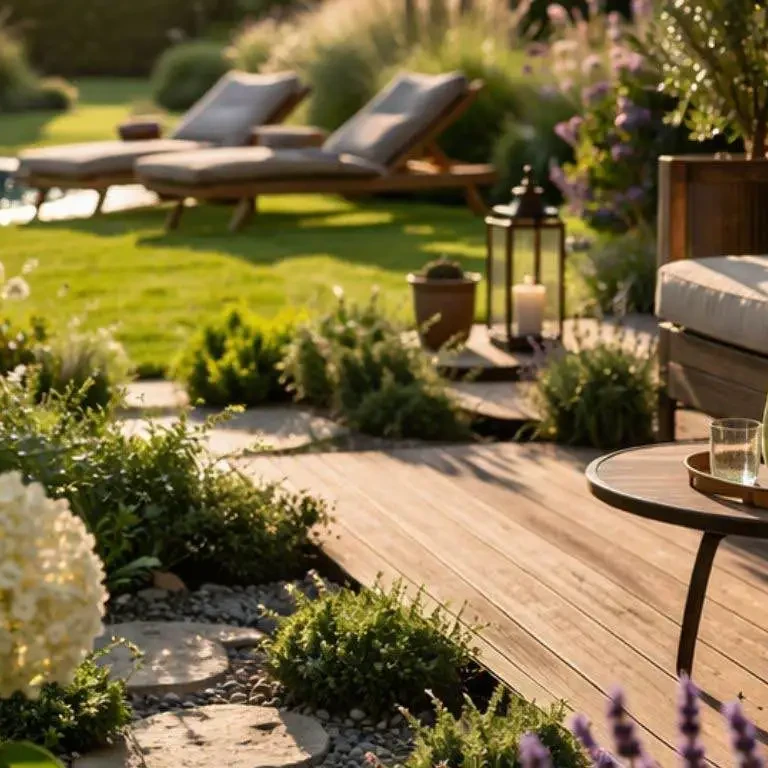


Fewer colors, more peace: why gardens will become refuges in 2026

Dominika
Gardens are undergoing a fundamental change. They are no longer just an aesthetic addition to a house or a place that has to “look good.”
In 2026, one trend is becoming increasingly apparent—the garden as a refuge, a place of peace, slowing down, and balance.
At Dream Garden, we have been aware of this shift for some time. And now it is reaching a new level.
A garden as a refuge from a fast-paced world
Digital noise, constant stimuli, and the pace of everyday life are leading more and more people back to nature.
Not to gardens full of colors, contrasts, and visual effects — but to spaces that bring calm the moment you step inside.
In 2026, the modern dream garden is built on simplicity:
-
fewer colors
-
more tones within a single palette
-
fewer decorations
-
more space to breathe
This approach to garden design doesn’t seek attention.
It feels natural — and that is exactly why it lasts.
Less color, more peace
One of the strongest trends is a return to muted colors and harmonious combinations.
Greenery is no longer just a backdrop — it becomes the main character.
In practice, this means:
-
plantings in a calm, restrained color scheme
-
repetition of the same plant species
-
emphasis on structure rather than contrast
Such a garden realization doesn’t feel tiring even after many years.
On the contrary — it matures over time and gains character.

One space, multiple possibilities
Modern gardens are moving away from standardized solutions.
Instead of ready-made “attractions,” they are becoming natural spaces that adapt to everyday family life.
Children don’t need artificial playgrounds when they have room to explore.
Animals are returning to gardens as a natural part of living.
And gardens are no longer perfectly manicured — they are becoming alive.
This approach to garden design is a process, not a one-time project.
The garden as natural air conditioning
The year 2026 brings a stronger focus on microclimate.
Trees, layered planting, and natural shading are no longer just aesthetic choices — they are essential.
A well-designed garden:
-
reduces overheating of the property
-
creates a pleasant summer climate
-
requires less intensive maintenance
Today, thoughtful garden design means more trees, fewer extremes, and better balance.
A garden that evokes memories
The trend of cold perfection is giving way to humanity.
Plants with a story are returning to gardens — roses, peonies, lilacs.
The garden of 2026 should engage the senses:
-
scent
-
touch
-
silence
This is how a dream garden is created — not only beautiful, but deeply personal.
A garden that goes a step further
At Dream Garden, we don’t see these changes as short-term trends.
They are a natural evolution of how people want to live today.
Why are gardens in 2026 becoming a refuge?
Because a garden is no longer just the result of a project.
It is a relationship. A process. A space that matures over time.
And in 2026, we are taking this approach one step further.
Not towards effect.
But towards meaning.


Year 2026 at Dream Garden: time to take your Dream Garden to the next level

Dominika
A new year naturally brings a desire to slow down, clear our thoughts, and focus on what truly matters. At Dream Garden, we see 2026 as the beginning of a new chapter – a period in which garden construction, garden maintenance, and the overall perception of outdoor spaces move to a higher level.
A garden is no longer just an addition to a home. It is a place of calm, a return to oneself, and a space where the most beautiful moments are created.
The garden as a lifestyle element in 2026
A modern garden is not about trends, but about feeling. About how you experience the space in the morning with a cup of coffee, in the evening after a long day, or during quiet weekend moments. That is why we place even greater emphasis on creating a dream garden that respects the rhythm of its owner’s life.
In 2026, we will focus even more on harmony between the house, the garden, and the surrounding environment. On smooth transitions between interior and exterior. On details that may not draw attention at first glance, yet create an atmosphere that lasts for years.
Garden construction with lasting value
High-quality garden construction is not only about how a garden looks once completed. It is about how it will function in five, ten, or even twenty years.
Every project at Dream Garden is created with an emphasis on timeless design, appropriate materials, carefully selected plants, and a well-thought-out spatial composition.
From concept to a finished garden
Our garden construction process begins with understanding the client – their needs, lifestyle, and vision. This is followed by design, material selection, planting, and the actual construction phase, during which we pay close attention to every detail.
The result is a garden that does not feel ostentatious, but natural. A garden that matures together with its owner.
Garden maintenance as the foundation of long-term beauty
Even the most beautiful garden cannot maintain its value without regular care. Garden maintenance is a key element that keeps outdoor spaces healthy, balanced, and aesthetically pleasing throughout the year.
In 2026, we want to place even greater emphasis on the importance of professional maintenance – not as an obligation, but as a natural part of a garden’s life cycle.
Why professional garden maintenance is an investment
Regular maintenance:
-
supports healthy plant growth,
-
prevents issues that may become costly later,
-
ensures that a garden does not lose its value, but rather increases it over time.
A garden does not age – it matures.
Turnkey gardens – a solution without compromises
For clients seeking peace of mind, continuity, and a clear vision, a turnkey garden is the ideal solution. One partner, one team, one concept – from design to maintenance.
Who is a turnkey garden ideal for
-
for those who want a comprehensive solution without stress,
-
for people who value time and quality,
-
for clients looking for long-term value rather than quick fixes.
A turnkey garden is built on trust – and trust is the foundation of every successful collaboration.

Where we are heading in 2026
For us, 2026 will not simply be a continuation of what we already do. It will be a subtle yet significant shift. Deeper thinking about space as a whole. An even more precise connection between garden, architecture, and home.
Something new is taking shape.
Something that will go one step further.
Something that will connect outdoor space and living into a harmonious whole.
For now, we will leave it at hints. Some things deserve to be revealed gradually.
Conclusion: 2026 as an opportunity to create with intention
If you are considering a new garden, enhancing an existing outdoor space, or looking for a reliable partner for garden construction, garden maintenance, or a turnkey garden, 2026 is the perfect time to begin.
At Dream Garden, we look forward to everything we will create together.
Because a true dream garden is not about trends – but about a feeling that lasts.


The most beautiful moments of 2025

Dominika
The most beautiful moments of 2025. For Dream Garden, 2025 was a year full of stories. Stories about families who dreamed of their own piece of paradise. About people who longed for a place where they could relax away from the world. About moments when an ordinary yard became a home in the deepest sense of the word. And we are extremely grateful that we were able to be there for these moments.
Turnkey garden designs – places where life flows more slowly
Every garden we created this year was a unique story. From the first sketch to the last leaf planted, we created spaces full of peace, joy, and functional beauty. Gardens where life happens – where morning coffee is drunk, children run barefoot, and the evening breeze mixes with the light of lanterns.
Garden maintenance – love that repeats itself every month
We take care of dozens of gardens, where we see how they grow and change thanks to regular care. When we arrive and see that the lawn is breathing, the flower beds are glowing, and the trees are thriving – it is proof to us that every drop of work makes sense.
Garden revitalization – small touches, big changes
Sometimes light, sometimes color, sometimes new planting can completely transform the atmosphere of a space. This year, we have breathed new life into many gardens. And that moment when a client’s eyes light up is the biggest highlight for us.

Garden revitalization – small touches, big changes
Sometimes light, sometimes color, sometimes new planting can completely transform the atmosphere of a space. This year, we breathed new life into many gardens. And that moment when a client’s eyes light up is the biggest highlight for us.
The alphabet of plants – a place where we grow together
Our series on plants has become a wonderful place for shared learning. Roses, weigelas, yuccas, wisterias – together we discovered what to love about them, where to place them, and how to give them the life they need to flourish.
Exteriors for four-legged friends
This year, we also created more spaces for our furry friends – safe, well-designed, and stylishly integrated into gardens. Because home belongs to everyone who lives in it.
Thank you for the most beautiful moments of 2025.
For your trust.
For every idea you shared with us.
For every moment you allowed us to create a space that touches you.
Your stories are the reason we love what we do.
We wish you a Christmas that is soft as snow, peaceful as a quiet night in the garden, and full of light that warms you from within.
May it be full of new beginnings, beautiful changes, and moments worth remembering.
We look forward to every new exterior, every idea, every detail that we will turn into reality together in 2026.
With sincere thanks,
Dream Garden

Return to the garden of dreams in Varín: After three years, it is growing beautifully and gaining a new pergola

Dominika
After three years, we returned to the garden in Varín and were greeted by a completely different exterior – literally a dream garden. Time has shown how thorough implementation and regular maintenance of the garden have paid off in practice: the young lawn has thickened, the raised beds are overflowing with greenery, and the individual plant species and trees have gained volume, vitality, and natural beauty.
A garden that matures like wine
It is amazing to see how garden design works in real life, when individual plants become mature landmarks and the original compositions grow along with the family and the needs of the space. Regular care, high-quality irrigation, and carefully selected plant species have ensured that the exterior has retained its freshness, modern character, and minimal maintenance requirements.
Modernization and new solutions: the pergola as the heart of the garden
In the next phase of the project, we modernized the garden and added a beautiful pergola with a terrace to the entire space. It naturally became a center of relaxation for the family and a space for summer evenings together. The pergola elegantly connects the functional exterior with the relaxation zone and ties in with elements we had already created in the garden in the past – from raised flower beds to stylish lighting and a Hunter irrigation system.
You can find more photos of this dream garden in our projects.

A turnkey exterior that grows with you
This return confirms that a high-quality turnkey garden from Dream Garden means more than just immediate results. Your garden truly grows in beauty and adapts to your needs even after years. Whether you dream of modernizing your exterior, adding new design elements, or taking your garden to the next level, we will be happy to prepare a tailor-made solution for you – from design and planting to final implementation.
Dream Garden – your dream garden grows with you. If you are planning a modernization, planting, or looking for inspiration for a turnkey exterior, we are here for you with expert tips and complete service!

How to involve children in gardening – learning through play and enjoying the results

Dominika
If you want to transform your exterior into the garden of your dreams, don’t forget to involve even the youngest members of your family in the process. How to involve children in gardening? Gardening is a great way to spend time together, teach children new skills, and encourage their relationship with nature. When designing a turnkey garden, we recommend leaving space in the project where children can express their creativity.
Why working in the garden with children is special
How to involve children in gardening? Working together in the garden develops the senses, teaches patience, promotes healthy exercise, and creates unforgettable experiences. Children perceive garden design and its elements through discovery, experimentation, and observation of change—whether it’s growing plants, watering the lawn, creating decorative stepping stones, or regular garden maintenance.
7 tips and activities for getting kids involved in a playful way
- Set aside a separate flower bed: Give children a piece of the garden to experiment with, for example, planting fast-growing herbs or flowering plants.
- Plant Mediterranean plants: Explain to them how overwintering and caring for exotic species works.
- Involve them in watering: Children love working with water, whether it’s caring for the lawn or watering plants.
- Raking hay, leaves, or grass: Combine outdoor exercise with practical tasks that are both fun and beneficial.
- Tasting the harvest: Gardening is not just work, but also the joy of seeing results – fresh fruit or vegetables will delight every little helper.
- Creating decorative elements: Painting stones, making a mini garden, or building wooden steps for a garden house.
- Keeping a garden diary: You will encourage curiosity and creativity and practice writing, drawing, and photographing your own projects.

Learning through play and enjoying the results
Inspire your children with simple little projects that will give them quick results – whether it’s flowering plants, a carpet of grass, or their own mini vegetable garden. Through play, you can teach them the principles of garden design and how all the elements of a garden are connected. If you don’t feel confident about creating a complete garden, consult a professional. Also, don’t forget about regular maintenance and innovations, which can be a motivating experience for children.
When planning and building your dream family garden, keep in mind that the time spent working together with your children is the best investment in the future. With Dream Garden, you can create a space for learning, fun, and beautiful experiences for the whole family.


How to overwinter Mediterranean plants and prepare them for the next season

Dominika
Mediterranean plants bring a holiday atmosphere to our gardens – the scent of the sea, sun, and south. How to overwinter Mediterranean plants? Olive trees, oleanders, lavender, and citrus trees have become an integral part of modern garden design. But while they survive the winter without any problems in the Mediterranean, they need special care here to wake up to their beauty again in the spring.
Why overwintering is important
If you dream of having your own dream garden full of exotic greenery, winter care is key. How to overwinter Mediterranean plants? Mediterranean plants such as oleander, olive trees, citrus fruits, rosemary, and lavender come from warm regions, so they do not tolerate prolonged frosts well. Proper winterization is essential if you want to use them in your garden in our region.
The right conditions for overwintering
- Light and heat: Plants such as oleander and citrus trees require a bright location with a temperature between 5 and 12 °C. Ideally, they should be moved to a winter garden, garage, or basement with a window.
- Watering: Water plants only lightly during winter – the soil should remain slightly moist, not soggy.
- Protection from frost: If the plants are planted in a flower bed, cover them with gardening fabric, straw mats, or a layer of leaves.
- Citrus and olive trees in pots: Bring them indoors before the first frost. In cold areas, it is advisable to grow them in mobile containers that can be easily moved.
Ideal species for a turnkey garden
If you are planning a turnkey garden, Mediterranean plants can transform your outdoor space beyond recognition. Recommended species for Slovak conditions are:
- European olive tree (Olea europaea) – a symbol of the south, suitable for growing in pots.
- Oleander (Nerium oleander) – blooms all summer, but cannot tolerate frost.
- Rosemary (Rosmarinus officinalis) and lavender (Lavandula angustifolia) – more resistant species that can be grown even in soil with minimal protection.
- Lemon tree (Citrus limon) – a popular decorative tree that can bear fruit indoors during the winter.

Stredomorská atmosféra aj počas zimy
Súčasťou profesionálneho záhradného dizajnu je aj plán starostlivosti o rastliny počas celého roka. V Dream Garden pri tvorbe každej záhrady snov kladieme dôraz nielen na krásu, ale aj na funkčnosť a trvácnosť. Pomáhame klientom s údržbou a zazimovaním rastlín tak, aby ich exteriér žil naplno počas každej sezóny.
Pripravíme aj vašu záhradu na zimu
Ak máte v záhrade stredomorské rastliny a nie ste si istí, ako im pomôcť prečkať zimu, obráťte sa na nás. Radi navrhneme riešenie pre ich ochranu alebo sa postaráme o kompletnú realizáciu záhrady na kľúč, ktorá bude krásna a praktická po celý rok.

Types of gardens: find your style and create the garden of your dreams

Dominika
A garden is not only a place to relax, but also a space that reflects the personality of the owner and the style of the house. The right type of garden can completely change the atmosphere of your exterior and create a space where you will feel comfortable every day. Whether you are planning the layout and design of your garden or its complete turnkey implementation, choosing the right style is key.
Family garden
A family garden is ideal for households with children and pets. It combines lawns, safe walkways, a playground, a small pond or pool, and cultivated flower beds. When creating your dream garden, functionality and safety are key so that every member of the family can enjoy the outdoors to the fullest.

Modern garden
A modern garden is characterized by clean lines, geometric shapes, and minimalist flower beds. Materials such as composite, concrete slabs, metal, and glass are used, often complemented by designer lighting and water features. When planning and designing a modern garden, it is important to achieve harmony between the aesthetic appearance and functionality of the exterior.

Minimalist garden
The motto of a minimalist garden is “less is more.” It uses fewer plants, neutral colors, simple materials, and clean lines. Such a garden is not only elegant but also easy to maintain, which is often part of the implementation of a turnkey garden.

Natural garden
A natural garden mimics the wild and promotes biodiversity. It contains native plants, flower meadows, grasslands, ponds, and stone paths. The design and layout of the garden emphasizes ecological balance and sustainability. This type of garden has a relaxed and harmonious feel.

Utility garden
A utility garden combines functionality and aesthetics. It is used to grow vegetables, fruit, and herbs, often supplemented with vertical beds, greenhouses, or aesthetically designed flower beds. Creating a dream garden in this style allows you to have a beautiful and practical exterior.

Classic garden
A classic garden is symmetrical and elegant, often with regular flower beds, hedges, and manicured lawns. When planning and designing a garden, attention is paid to formal appearance and traditional elements that create a harmonious and representative exterior.

Country garden
A country garden has a rustic and cozy feel. It is characterized by loosely arranged flower beds, fruit trees, wooden walkways, and natural decorations. When creating a turnkey garden, we strive to preserve the natural and nostalgic character of the exterior.

Ornamental garden
An ornamental garden focuses on visual effect – colorful flowers, solitary trees, fountains, and garden decorations. When planning and designing a garden, emphasis is placed on aesthetics and harmony of color and shape combinations to create the effect of a “dream garden.”
Each type of garden has its own style, function, and level of maintenance. When creating a turnkey garden, it is important to consider the size of the plot, the owner’s requirements, and the chosen style so that the exterior appears harmonious, aesthetic, and practical at the same time. We are here to advise you and help you create your dream garden, from design to complete implementation.
